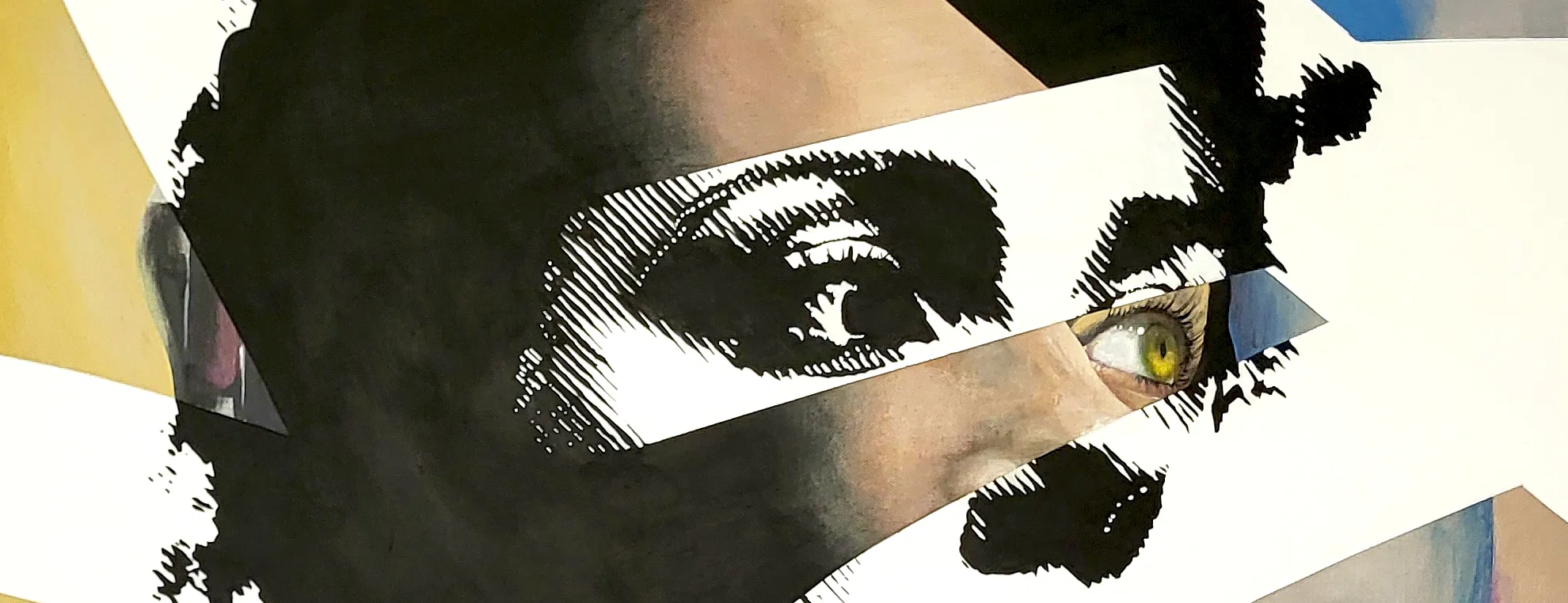
I've recently finished another painting for my upcoming solo exhibition in Hamburg. I'm really pleased with how it's turned out, but there's something about this particular painting that's got me thinking. It took less time to complete than some of my others, yet I'm every bit as happy with the finished result.
It left me wondering whether we sometimes associate the amount of time something takes with how much of an achievement it feels. Because surely it's the finished painting that matters, rather than how many hours I've spent standing in front of it?
Does More Time Mean Better Art?
A painting that takes three weeks isn't automatically better than one that takes three days. Equally, something that comes together quickly isn't necessarily the result of less thought or consideration.
I've had paintings where I've spent ages trying to get a particular area right, changing colours, adjusting shapes and occasionally wondering whether I should have left things alone in the first place. I've also had paintings where everything seems to fall into place relatively easily.
Sometimes things work, sometimes they don't, and sometimes you spend an entire afternoon trying to fix something that probably didn't need fixing. The amount of time involved might tell us something about the process, but I'm not convinced it tells us very much about the quality of the finished work.
Knowing When Something Needs More
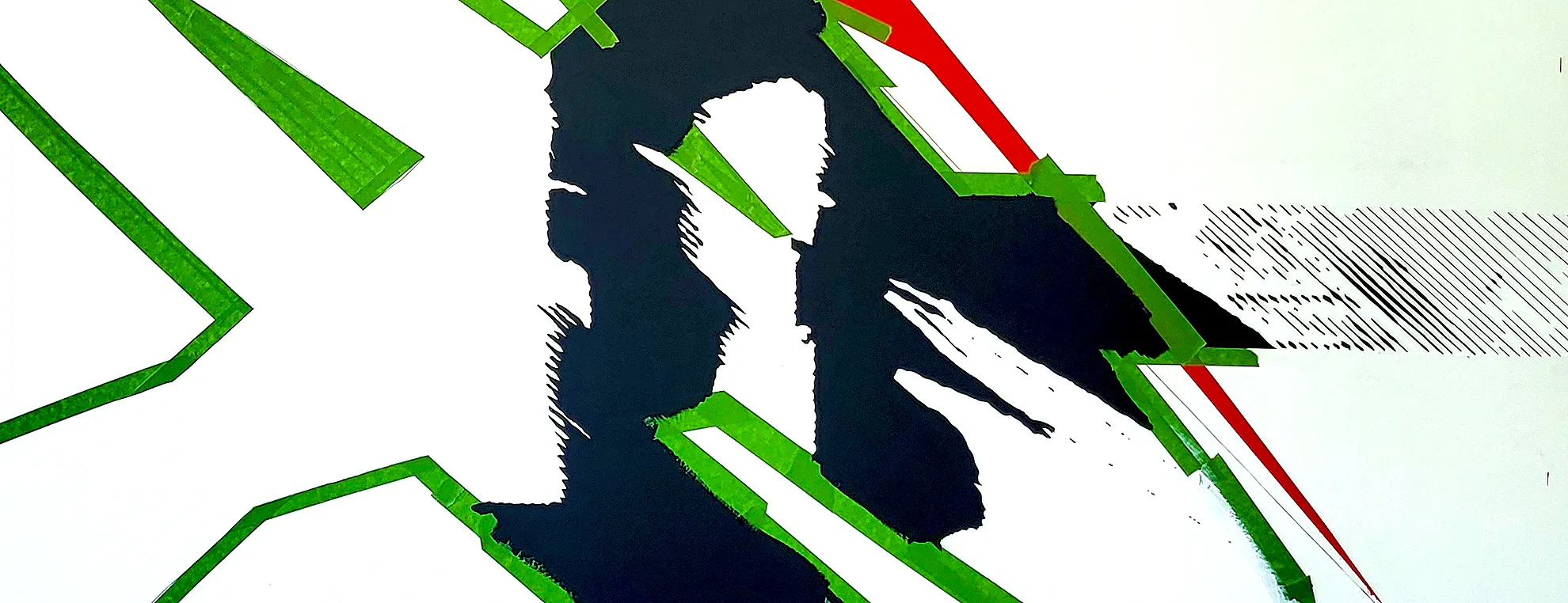
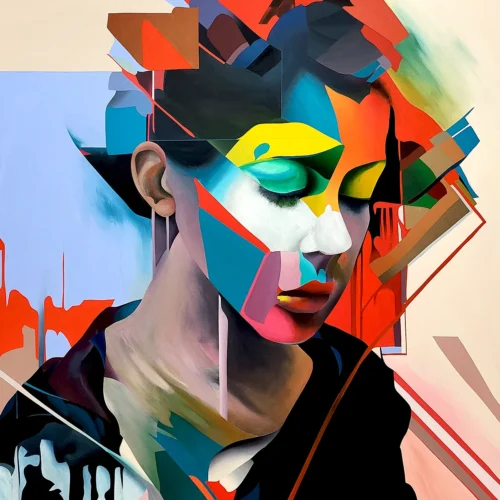
My latest painting is a good example of this. As it was nearing completion, I looked at the large black area forming much of the portrait and felt it was dominating the composition a little too much. It wasn't that I thought the painting needed to be more complicated. I simply felt the balance wasn't quite right.
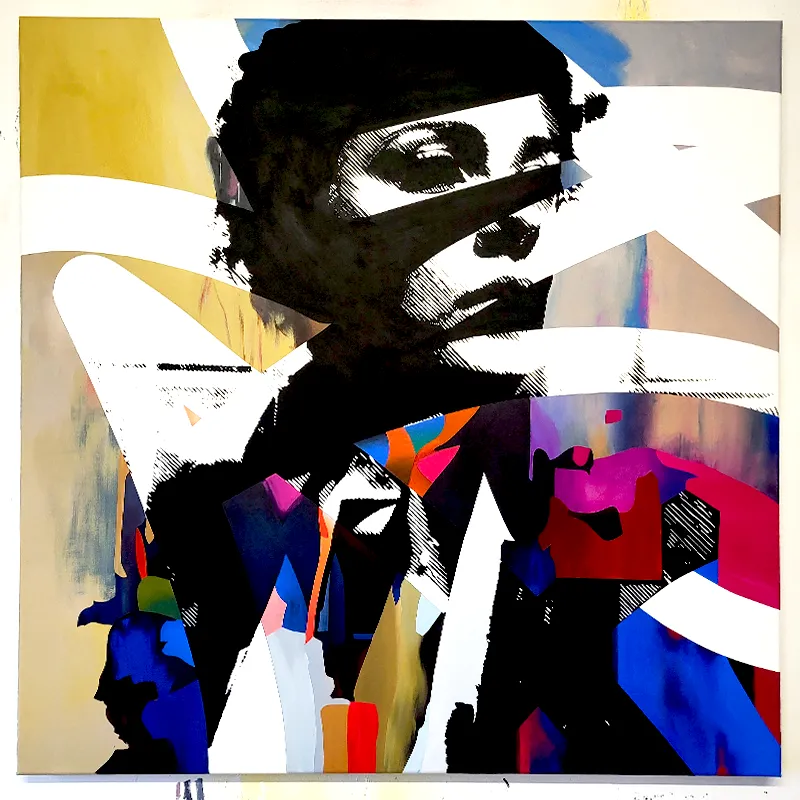
The painting before I introduced additional realistic skin tones to break up the large black area
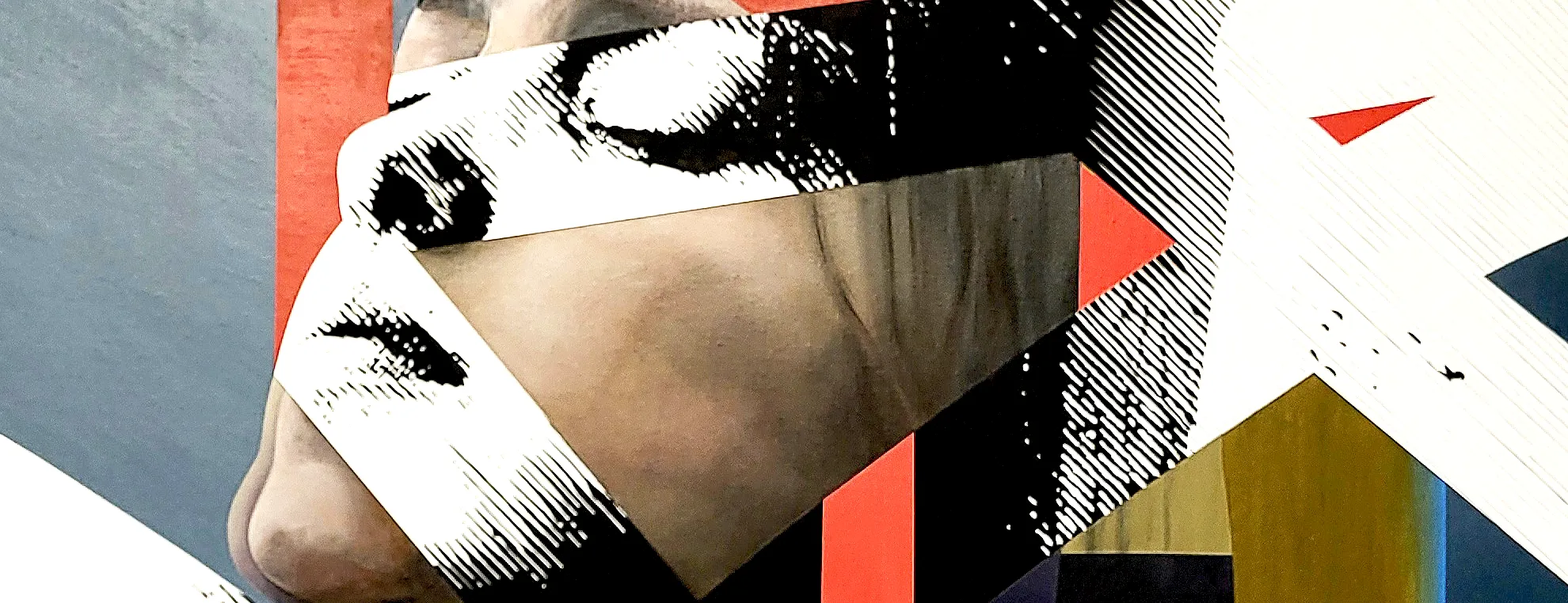
I decided to introduce some realistic skin tones, along with an eye and elements of the nose and lips, allowing parts of the face to emerge between the black-and-white stencil.
For me, those relatively small changes made a significant difference. They broke up the black area while introducing another layer to the portrait, creating a contrast between the graphic stencil and the more realistic features.
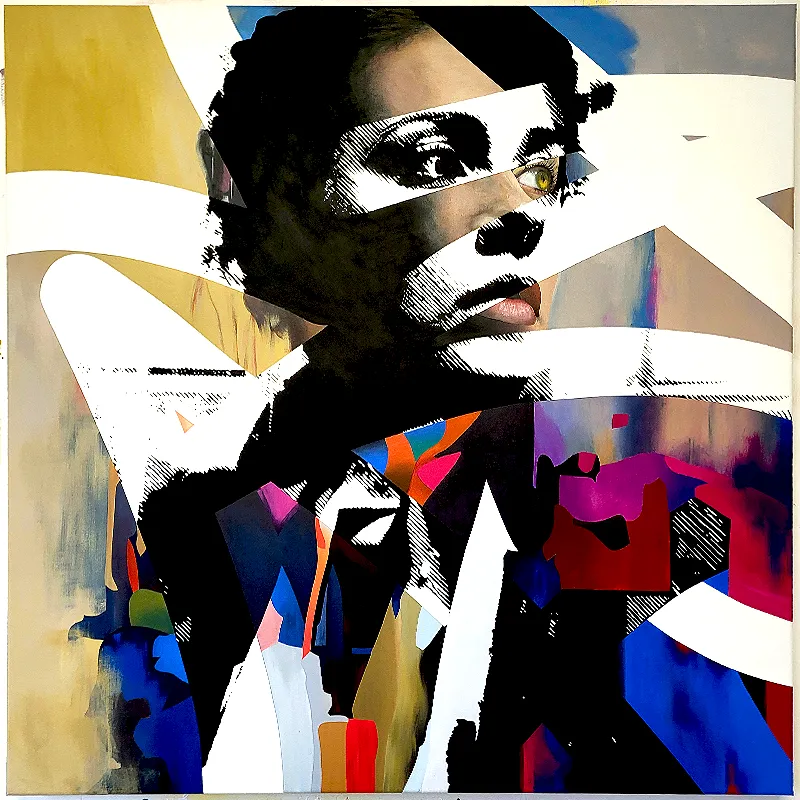
The finished painting, with realistic skin tones and facial features introduced to balance the composition
Spending that additional time on the painting was worthwhile because I genuinely felt the changes improved it. I could have continued working on it, adjusting colours, adding details or changing things simply because I had the time to do so, but would any of that have made it better?
There's always a temptation to keep going, particularly when you've been looking at the same canvas for days or weeks. Sometimes those changes are exactly what a painting needs, while other times you end up wishing you'd left it alone.
I think knowing when to stop is just as important as knowing when to keep going. There's a difference between spending more time on something because you genuinely feel it needs it and spending more time simply because you think you should.
Does Experience Make Things Easier?
I've been painting for years, and during that time I've developed techniques, made countless mistakes and gradually become more confident in certain aspects of my work. Surely some of that experience must influence how quickly I make decisions?
Something that might once have taken me several attempts to work out can sometimes feel more instinctive now. That doesn't necessarily mean I'm putting less thought into it. I might simply be drawing on everything I've learnt along the way.
But becoming more experienced doesn't mean I want everything to become easier. Quite the opposite. Introducing more realistic elements into my paintings, particularly skin tones, is a genuine challenge for me. It's something I'm still learning, but it's also something I find exciting because I want to keep pushing myself to become the best painter I can be.
If that means spending more time on a particular area, or even painting over something and starting again because I'm not happy with it, then so be it. I'd much rather do that and end up with a stronger painting than avoid something simply because I know it's going to be difficult.
Because even if nobody else noticed, I'd know. I'd look at the finished painting and remember that I'd taken the easier option rather than doing what I felt it needed, and I think that would bother me far more than the extra time spent getting it right.
Some things become quicker through experience, while other things take longer precisely because you're trying to improve. And I suppose that's why the amount of time I spend on a painting can vary so much, even when the paintings themselves are a similar size.
How Do You Put a Value on Time?
It's also something I've had to consider when pricing my work. If I create two paintings of the same size, one taking a week and the other taking three weeks, should the second painting automatically cost three times as much? I don't believe it should.
Of course, time has to be considered when you're trying to make a living as an artist. Materials cost money, studios cost money and spending weeks creating work without considering whether it's financially sustainable isn't particularly sensible.
But I don't think pricing a painting can be reduced to a simple calculation of hours worked multiplied by an hourly rate. What about the years spent developing the skills that allow someone to create that painting in the first place? Or the ideas, decisions and experience behind it?
And perhaps more importantly, does the person buying the painting really care how long it took?
I'd imagine most people buy a painting because they connect with it. Something about the image, the colours, the subject or the feeling it creates makes them want to live with it. But interestingly, I think simply telling someone how long a painting took can influence how they perceive it. One person might be impressed by how quickly it was created, while another might question why it took so long. The painting itself hasn't changed, only the expectations of the person looking at it.
Think about the last time you walked around an art gallery. You'll probably have seen paintings accompanied by a small description giving the artist's name, the title, the medium and perhaps the year it was created. But I can't remember ever seeing one that told me how many hours the artist spent painting it.
We can stand in front of a painting, admire it, dislike it, feel something towards it or walk straight past it, all without having the slightest idea how long it took to create. Of course, knowing more about the process might add to our appreciation of the work, but it's interesting that we're perfectly capable of forming an opinion without knowing whether it took a week or a year.
Perhaps Time Isn't the Best Measure
Looking at my recently finished painting, I'm not thinking about the hours I didn't spend on it. I'm looking at the composition, the colours, the balance between the realistic elements and the stencil, and whether I've achieved what I wanted to achieve.
Would I be any happier if it had taken another week? I can't see why I would be. I'm sure the next painting will present an entirely different set of challenges, and I might find myself wishing it would come together quite as easily. But that's all part of painting, and I wouldn't want to avoid those challenges simply to finish something sooner.
The painting still doesn't have a title, by the way, which is slightly ironic considering I recently wrote an entire article questioning whether paintings really need titles. So although I've managed to finish this one quicker than expected, apparently coming up with a title isn't getting any easier.
Related Articles
Finishing Artwork on Your Terms: Why Rushing the Process Undermines Your Growth
Why knowing when to stop, rather than rushing or endlessly reworking, matters to the finished painting.
Scratching the Surface of Pricing Art
Exploring the challenges of pricing original artwork and what contributes to its value.
How Do Artists Approach a Painting? Is There a Right Way?
A look at the different decisions and methods artists use when starting and developing a painting.
What Makes Good Art?
Questioning how we decide whether a painting is good and how personal judgement shapes our response.
Priority Studio Access
I share new paintings, limited edition prints, exhibition news, articles and upcoming projects with subscribers first.
Get updates direct from my studio →
I’m a UK contemporary abstract portrait artist exploring inner noise, quiet pressure and the emotional complexity of modern life through fragmented portraiture and bold colour. I create original paintings and limited edition prints, while also writing about art, exhibitions and the realities of being an artist today. I also share work in progress and life in the studio on Instagram @paulkneenart.



 No spam. Unsubscribe anytime.

