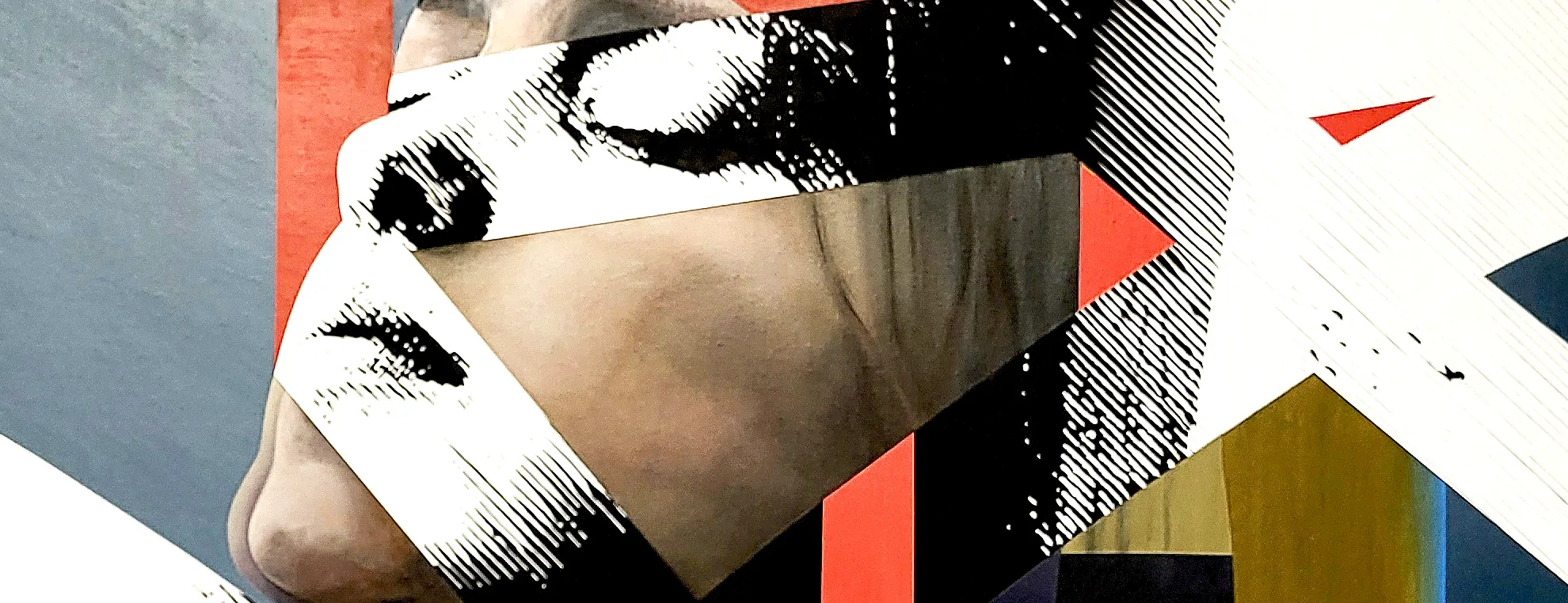
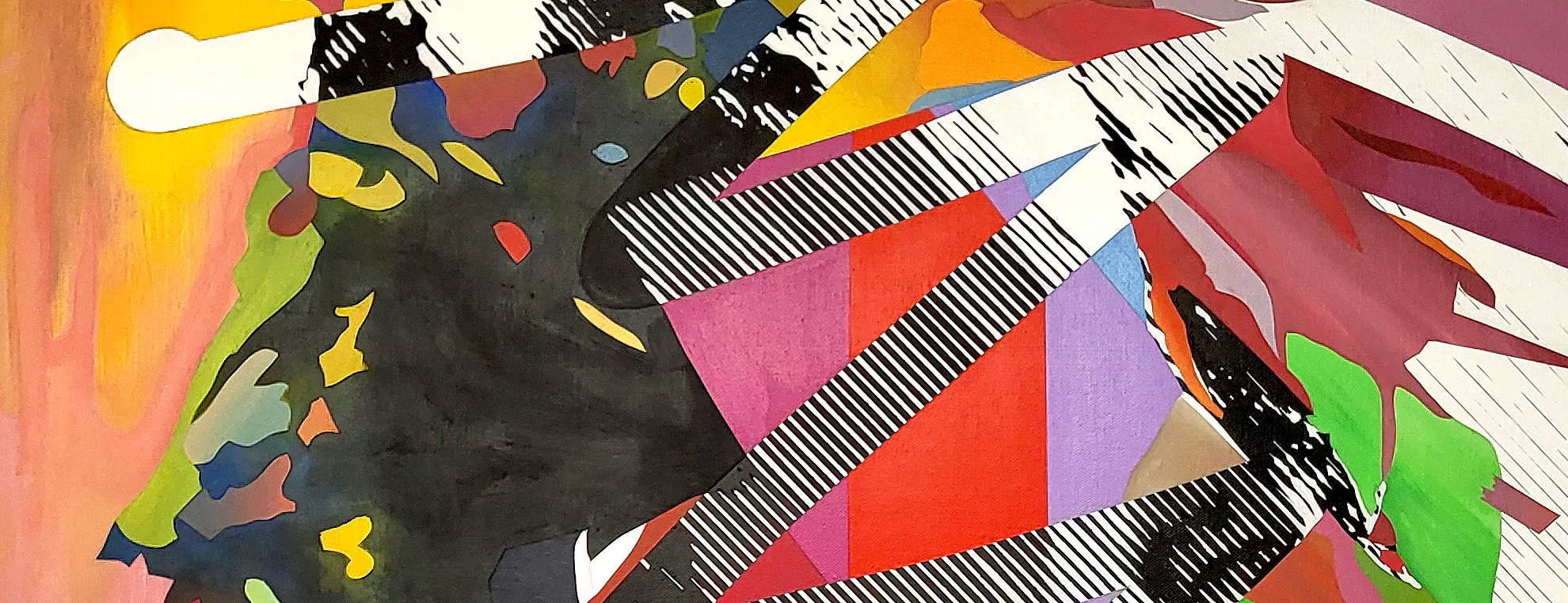
For the last week or so, I've been working on another painting for my upcoming solo exhibition in Hamburg next year. I'm really pleased with how it's turned out, but now that it's finished, I'm left with a familiar problem. What am I going to call it?
Considering the countless decisions I've made while creating it, you'd think coming up with a few words to describe the finished painting would be relatively straightforward. For me, apparently it isn't.
For a long time, I actually hated naming my paintings. Partly because I found the whole thing a little artsy-fartsy. Look through enough painting titles and you could be forgiven for thinking some artists have been consulting a handbook entitled How to Sound All Arty. There seems to be an expectation that a painting needs a suitably profound or mysterious title, preferably something that sounds as though it requires a degree in philosophy to understand.
Of course, there are plenty of wonderful painting titles out there. But my biggest issue with naming artwork has never really been about finding the right words. It's about how those words might influence someone looking at the painting.
Can a Painting's Title Influence What We See?
When I create a painting, I generally have an idea of what it means to me. There might be particular thoughts, feelings or experiences behind it, and those things inevitably influence the decisions I make along the way.
But just because I know what a painting means to me, why should that automatically become what it means to everyone else?
I've always felt that once a painting leaves my studio, it should be allowed to have a life of its own. I want someone to stand in front of it and decide for themselves what they're looking at, what it makes them feel or whether it reminds them of something entirely unrelated to my original intentions.
A title can influence that experience.
Imagine looking at a painting without knowing anything about it. You might see something uplifting, unsettling, peaceful or chaotic. Now imagine discovering that the artist has given it a title that suggests a very particular emotion or experience. Suddenly, you might find yourself looking at the painting differently, searching for the meaning you've just been given rather than trusting your own reaction.
That doesn't necessarily make the title wrong, but it does demonstrate how a handful of words can influence our interpretation of something visual.
And that's where I sometimes struggle with giving my own paintings titles.
Is There a Right or Wrong Way to Interpret Art?
When I held my solo exhibition at Peterborough Museum, I had the wonderful opportunity to be there every day. It meant I could spend time talking to visitors, answering questions and hearing what people thought about the paintings.
One of the things that fascinated me most was how differently people interpreted the same work.
Visitors would occasionally describe something they saw in a painting that had never even occurred to me. Sometimes their interpretations were completely different from what I'd originally intended, yet they made perfect sense when I listened to their reasoning.
What surprised me even more was how some people reacted when they asked what a painting was about and I explained what it meant to me. Occasionally, they'd almost apologise for their own interpretation, saying things along the lines of, "Oh sorry, I don't really know anything about art."
I always found that a little sad, because it was as though they felt their interpretation was wrong simply because it didn't match mine.
I'd explain that this was actually one of the things I enjoyed most about talking to visitors. I wanted to hear what they saw in my paintings, even if it was completely different from what I'd intended. Their interpretation wasn't wrong just because they hadn't seen what I saw.
After all, we're all individuals with different backgrounds, experiences, memories and opinions, so why wouldn't we look at the same painting and come away with different ideas about what it means?
Those conversations reinforced something I'd already felt for a long time. I don't particularly want to explain my paintings to people before they've had the opportunity to form their own opinions.
And that's probably my biggest reservation about giving paintings titles. I don't want a title to become an instruction.
Do We Need to Know a Painting's Title to Appreciate It?
When I visit a gallery, there are always certain paintings that immediately catch my attention. Sometimes it's the subject, sometimes the colours or the technique, and occasionally it's something I can't quite put my finger on.
I remember experiencing this when I visited the National Portrait Gallery in London. Some paintings drew me towards them while others didn't, and those initial reactions happened long before I'd read the titles or any accompanying information.
By the time I look at the label, I've usually already decided whether I like the painting or not.
That doesn't mean the title or the artist's explanation can't add something. Learning more about a painting might help me appreciate a detail I'd overlooked or understand why the artist made certain decisions.
But there's a difference between appreciating the story behind a painting and needing that story to appreciate the painting itself. Personally, I don't believe I need to know what an artist intended before I can decide whether their work means something to me.
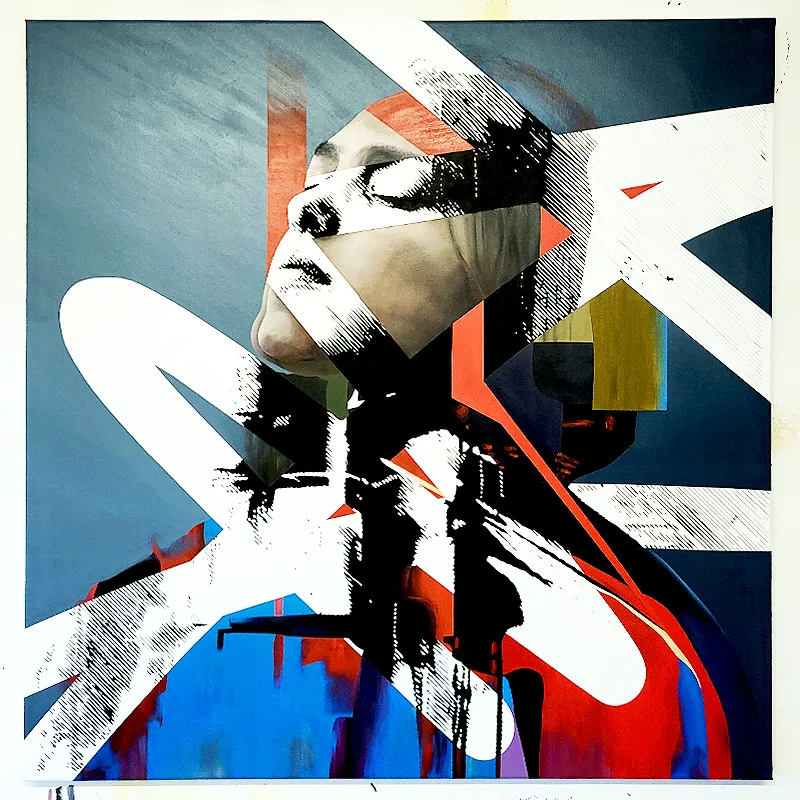
My latest painting for my upcoming solo exhibition in Hamburg. Still untitled.
Why Do Artists Give Their Paintings Titles?
Despite my reservations, I recognise that titles can serve several useful purposes.
From a purely practical point of view, they make life considerably easier. Imagine having twenty paintings on your website, all called Untitled. Someone gets in touch to enquire about one, and instead of simply mentioning its name, they have to describe the colours, the face, the composition or where they saw it.
Titles help distinguish one painting from another, whether you're organising an exhibition, cataloguing work, discussing a particular piece or making it easier for someone to find online. A distinctive title can also help identify an individual painting in search results, although there's obviously much more to being found on Google than simply choosing a name.
Of course, plenty of artists deliberately choose Untitled, sometimes accompanied by a number or date. I can understand the appeal, particularly if they don't want words to influence how their work is interpreted.
But does calling a painting Untitled actually give the viewer more freedom?
I'm not entirely convinced. The painting itself is still full of decisions made by the artist. The subject, colours, composition and countless other elements can all suggest particular ideas or emotions, regardless of what it's called.
And even Untitled is a choice. It tells us that, for whatever reason, the artist has decided not to provide a descriptive title.
There are also artistic reasons for giving paintings titles, and I think these deserve just as much consideration as the practical ones.
For some artists, the title is almost part of the artwork itself. It might introduce humour, create a contradiction, provide historical context or completely change how we interpret what we're looking at. In those circumstances, removing the title could mean losing something important from the work.
I don't see anything wrong with that. It's simply a different approach to my own.
I've also come to appreciate that a title doesn't necessarily have to explain what a painting is about. It can suggest something, introduce an idea or add another layer without dictating how somebody should interpret it.
There's a considerable difference between giving someone something to think about and telling them what to think.
Does a Title Change How You Experience a Painting?
My latest painting is finished, but as I write this, it still doesn't have a title. I know what it means to me, and eventually I'll probably find a few words that feel right without trying to explain every aspect of it.
There's something I'd encourage anyone visiting a gallery to try.
The next time a painting catches your attention, spend a little time looking at it before reading the title. See what you make of it, what draws you towards it and whether it brings anything to mind.
Then read the title.
Does it change how you see the painting? Does it introduce something you hadn't considered, or does it simply confirm what you were already thinking?
Perhaps it makes no difference whatsoever.
I don't think there's a right or wrong answer, and I'm certainly not suggesting that artists should stop naming their work. But I do wonder how often we allow a few words on a gallery wall to influence something we've already experienced for ourselves.
And perhaps that's worth thinking about before we read the label.
In the meantime, I'd better get back to trying to think of a title for my latest painting.
Related Articles
Why I Leave Room for You in My Abstract Portraits
Why I leave space for viewers to bring their own experiences and interpretations to my abstract portraits.
What Makes Good Art?
Exploring how personal taste, context and experience influence the way we judge artwork.
How to Choose Art: Are There Really Any Rules?
Why choosing art is ultimately about personal connection rather than following prescribed rules.
Can Abstract Portraits Feel More Real Than Realism?
How abstract portraits can communicate emotion and meaning without relying on photographic realism.
Priority Studio Access
I share new paintings, limited edition prints, exhibition news, articles and upcoming projects with subscribers first.
Get updates direct from my studio →
I’m a UK contemporary abstract portrait artist exploring inner noise, quiet pressure and the emotional complexity of modern life through fragmented portraiture and bold colour. I create original paintings and limited edition prints, while also writing about art, exhibitions and the realities of being an artist today. I also share work in progress and life in the studio on Instagram @paulkneenart.





 No spam. Unsubscribe anytime.
