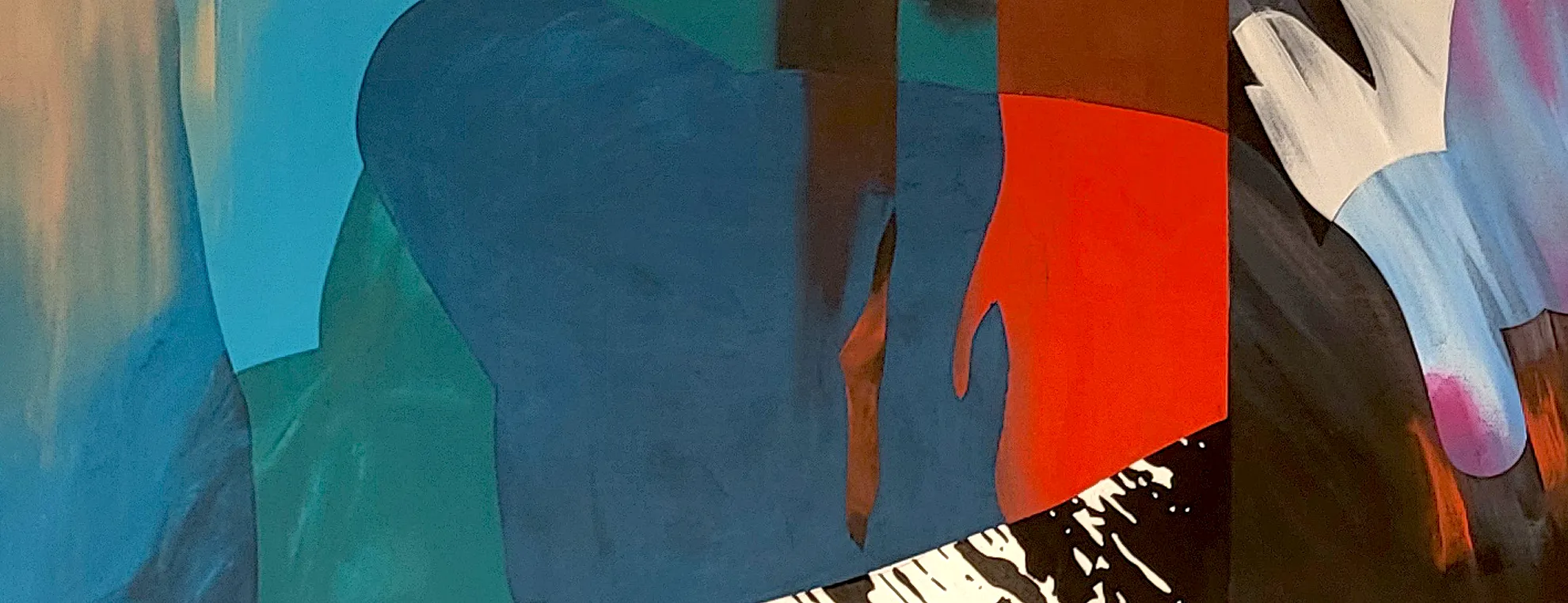
Search for advice on how to choose art for your home and it doesn't take long before rules start appearing:
Your artwork should be a certain size in relation to your furniture.
It should hang at a particular height.
Colours should complement the room.
Large paintings can overwhelm small spaces.
Don't overcrowd a wall.
Give the artwork room to breathe… on and on it goes to the point where there seems to be a rule for almost everything.
Now I'm sure the advice is given with the best intentions, and I'm certainly not suggesting it's all wrong. But what I do wonder is whether having so many rules can make choosing art feel far more intimidating than it needs to be. Suddenly you're not simply deciding whether you love a painting; you're wondering whether it's the right size, whether the colours work with the room, whether you've got enough space around it and whether you're going to hang it in the 'right' place.
Buying art shouldn't feel like an exam, it should be an exciting and emotive experience because you might just be choosing something that will hang in your home for years, perhaps even decades. Surely how you feel when you look at it matters more than whether you've followed somebody else's rules.
Size, colour and where a painting hangs will obviously affect how it works within a room, but that doesn't mean there's only one way to get it right. A large painting might dominate a small space, clashing colours might demand attention and filling a wall with artwork might make it feel incredibly busy. But what if that's exactly the effect you want? Sometimes the very thing you're being told not to do might be the reason it works.
After all, in spite of all these 'rules', who says a painting has to match your sofa?
A Painting Doesn't Have to Match Your Sofa
There's absolutely nothing wrong with choosing a painting because its colours work beautifully with the room it's going into. If you've spent time creating a particular look for your home, it makes perfect sense to consider whether the art works with it. But sometimes contrast is what makes something interesting. A painting can introduce completely different colours, create tension or become the focal point rather than quietly fitting in with everything around it.
I suppose my problem comes when that consideration becomes a reason not to buy something you genuinely love. If your immediate reaction to a painting is that you want to live with it, it seems a shame to then talk yourself out of it because you've read somewhere that it's slightly too large for the wall or the colours don't quite match the cushions.
Perhaps we're also asking the wrong question when we describe a painting as being 'too big' for a room. Too big to physically fit is obviously a problem. Too big because it dominates the room is something completely different. Who decided that a painting dominating a room is necessarily a bad thing?
The same goes for colour. If a painting clashes with everything around it, perhaps that's precisely why you can't stop looking at it. If it becomes the first thing you notice when you walk into the room, maybe that's exactly what you want.
This is where I think the difference between a rule and an effect becomes important. A large painting might dominate a room and contrasting colours might demand attention, but neither of those things is necessarily a problem. They're simply effects, and whether you like those effects is entirely up to you.
When Advice Becomes a Rule
Giving artwork room to breathe is another piece of advice that makes perfect sense. A single painting on an otherwise empty wall can look fantastic. Nothing competes with it and the painting becomes the focus, but I've also seen walls absolutely covered in art that look equally fantastic.
Gallery walls and traditional salon-style deliberately put paintings, prints, drawings and photographs close together. Individual pieces might have less room to breathe, but the collection as a whole becomes something completely different. If someone has spent years buying work they love, I quite like the idea that their home reflects that rather than worrying about whether every painting has the prescribed amount of empty wall around it.
So maybe the problem is the word 'rule'. A lot of these rules are simply someone’s advice about how to achieve a particular look. Yes certain proportions can create balance, space around a painting can give it more individual presence and coordinating colours can create harmony, but none of those outcomes is automatically better than the alternative.
Advice can be useful and expertise can be useful too. An interior designer may be able to look at a room and immediately understand relationships between colour, scale and proportion that most of us wouldn't notice. They might tell you that a particular painting will dominate the room, that two colours will clash or that putting another six pictures on the wall will make it feel very busy, and they may be absolutely right. What they can't decide for you is whether you actually like the result.
If you love busy walls, being told that yours will look busy isn't much of a warning. If you want a painting to dominate the room, being told it's too dominant isn't necessarily a problem. The advice might accurately predict what will happen, but whether that's good or bad is ultimately far more personal.
Artists deal with much the same thing when we're creating art. We're taught about composition, colour theory, perspective, proportion, balance, focal points and negative space because understanding those things can be incredibly useful. Artists also routinely choose to ignore them. Faces are distorted, compositions are deliberately unbalanced and colours are put together that supposedly shouldn't work. Sometimes breaking one of those established principles is precisely what makes the finished work interesting.
There's a difference between not knowing why something is usually done a certain way and understanding it before choosing to do something else. I think the same applies to buying and displaying art. Listen to the advice, understand what it's trying to achieve and then decide whether that's actually what you want.
There Isn't a Correct Way to Enjoy Art
Perhaps one reason all these rules bother me is that art can already feel intimidating enough without adding another list of things people are supposedly doing wrong. There's sometimes a sense that you need to know something about art before you're entitled to have an opinion about it. You should understand the artist, the movement, the historical context or why a critic considers a particular piece important.
All of those things can add enormously to our understanding of art, but they don't determine whether we're allowed to like it.
It makes me think of Fight Club. When Brad Pitt and Edward Norton later accepted an award for the film, part of their speech involved reading out some of the terrible reviews critics had given it when it was released. The film went on to develop a huge following, and I like the story because it demonstrates something quite simple. A film critic can explain exactly why they think something doesn't work. They may know considerably more about cinema than I do and reading their review might even help me notice things I'd never considered, but if I watched the film and loved it, their opinion doesn't suddenly mean I didn't.
I don't think art is really any different. An art critic can provide context, an interior designer can explain how scale, colour and proportion will affect a room, and an artist can explain what they were trying to communicate when they created a painting. That knowledge can enrich our experience and sometimes it might even change our opinion, but it doesn't get to dictate our experience.
There isn't a correct way to enjoy art, and perhaps remembering that makes choosing something for your own home considerably easier.
Think about the practical things, of course. Does the painting physically fit? Where are you going to hang it? How will it work within the space? Do you want it to sit comfortably within the room or completely command attention? Those are useful questions, but eventually you have to come back to your own reaction.
Do you keep coming back to the painting? Does it make you feel something? Can you imagine living with it? Would you be disappointed if somebody else bought it tomorrow? You don't necessarily need to understand why you like something, and you certainly don't need somebody else to confirm that you're right to like it.
Buying art can be a significant decision, particularly when you're considering an original painting, but that doesn't mean it needs to become an intimidating one. There will always be advice about what you should buy, how big it should be, where you should put it and what colours it should contain. Some of that advice might be incredibly useful, but ultimately it's still just advice.
Your sofa might last ten years. You might repaint the walls next summer and the cushions will probably change considerably sooner than either. A painting you love could be with you for the rest of your life.
So perhaps choosing art for your home doesn't need quite as many rules as we're led to believe. Listen to the advice if it's useful, ignore it if it isn't and remember that there isn't a correct way to enjoy art.
Related Articles
What Makes Good Art?
Exploring how skill, taste, context, reputation and personal experience shape the way we judge art.
Why I Leave Room for You in My Abstract Portraits
Why leaving space for the viewer can make a painting feel more personal, open and alive.
Selling a Painting Is Just the Beginning
An artwork’s story can often become more interesting after it leaves the studio.
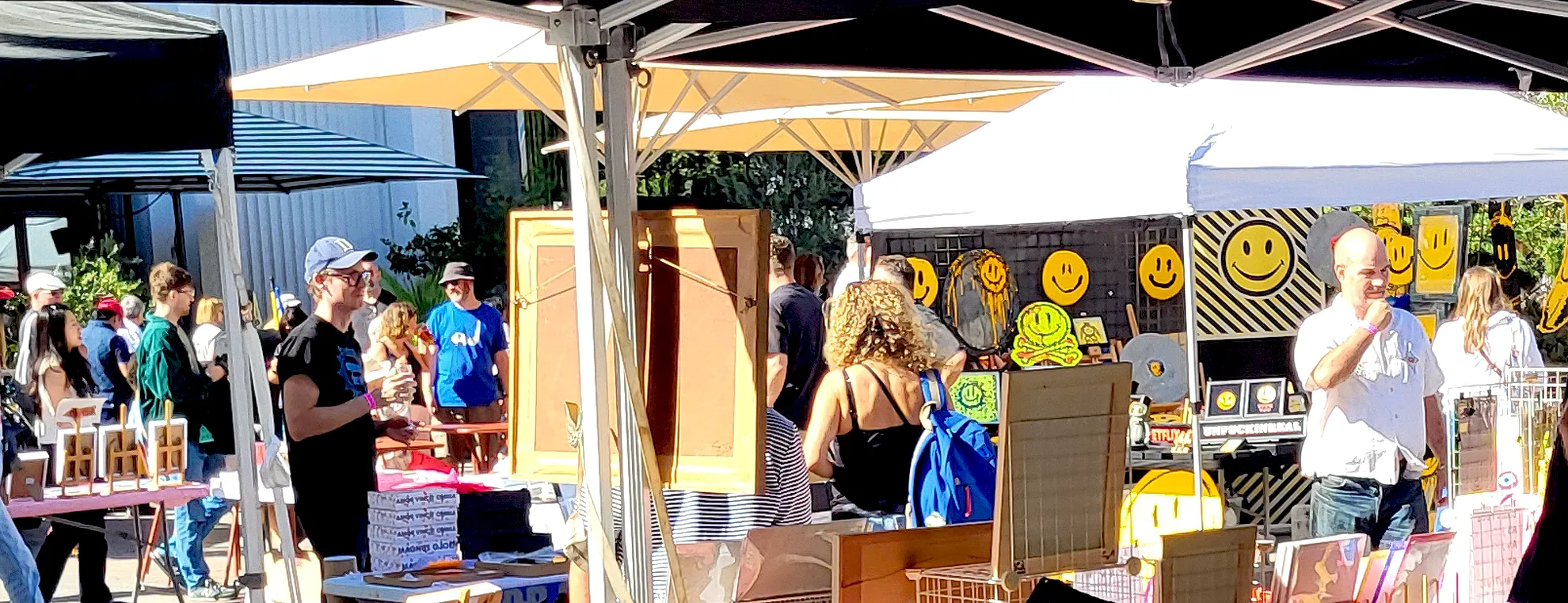
Art Car Boot Fair 2026: When Buying Art Becomes an Experience
Exploring artist encounters, participation and how an experience can change the way art is remembered.
Priority Studio Access
I share new paintings, limited edition prints, exhibition news, articles and upcoming projects with subscribers first.
Get updates direct from my studio →
I’m a UK contemporary abstract portrait artist exploring inner noise, quiet pressure and the emotional complexity of modern life through fragmented portraiture and bold colour. I create original paintings and limited edition prints, while also writing about art, exhibitions and the realities of being an artist today. I also share work in progress and life in the studio on Instagram @paulkneenart.




 No spam. Unsubscribe anytime.
