What actually determines the value of a painting?
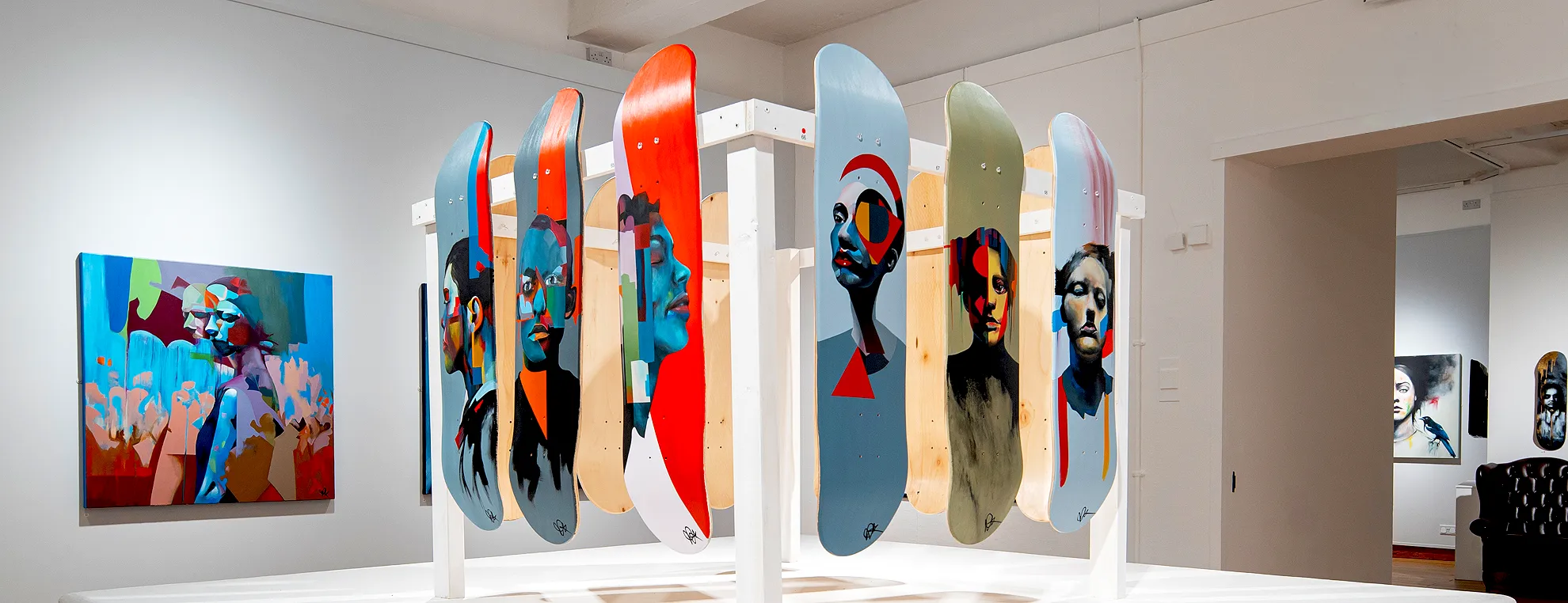
Recently, I found myself preparing to add a handful of original hand-painted skateboard decks to my website. Although I had a good sense of where I wanted them to sit within the wider pricing of my work, the process brought me back to a question I thought about a great deal in the earlier stages of my artistic career:
What actually determines the value of art?
Over the years, I have found that certain materials seem to carry different expectations when it comes to value, and skateboard decks are a good example. Speak to enough artists or look around online and you begin to notice a pattern. Original hand-painted decks often seem to sit within a certain range and, however strong the artwork may be, there appears to be a point at which people begin to view the work differently.
I have never fully understood why.
After all, the work is still original. Whether I am painting on canvas or a skateboard deck, the ideas, emotion and visual language that sit behind my abstract portrait work remain exactly the same. It still takes thought, skill and years of experience to create. Yet surfaces, materials and expectations seem to shape perception more than we perhaps realise.
Is Pricing Art Really Just Time + Materials?
If you search online for how to price artwork, how much should artists charge for paintings or how to value original art, you will quickly find plenty of advice. Often, it sounds surprisingly straightforward: add up material costs, work out how many hours you spent creating it and add a little on top for profit.
On paper, that sounds logical but in reality, pricing art rarely feels that neat.
Of course, materials matter. Time matters too. But the more I thought about the skateboard decks, the more I found myself questioning whether pricing artwork is ever really just about paint, canvas and hours spent in the studio.
Because if artists priced work purely by time, experience would almost become a disadvantage.
A newer artist might spend twenty hours wrestling with a painting. A more experienced artist, after years of experimentation, failure and development, may create something stronger in five.
Surely that does not automatically make the second painting worth less.
In fact, if artists priced purely by hours worked, experience would almost become a disadvantage. The better and faster you become, the less your work would apparently be worth.
That never quite made sense to me.
Artists are not simply charging for the hours spent creating a single artwork. They are also charging for years of learning, failed experiments, technical development, exhibitions, mistakes, breakthroughs and the ability to create the work in the first place.
That does not mean pricing should become detached from reality, but it does suggest that valuing art is more complicated than simply multiplying time by an hourly rate.
And this is where I found myself returning to the skateboard decks.
Because if pricing is not simply materials plus time, what exactly is influencing how value is perceived?
The decks kept bringing me back to the same thought:
How much do materials quietly shape the way we view art?
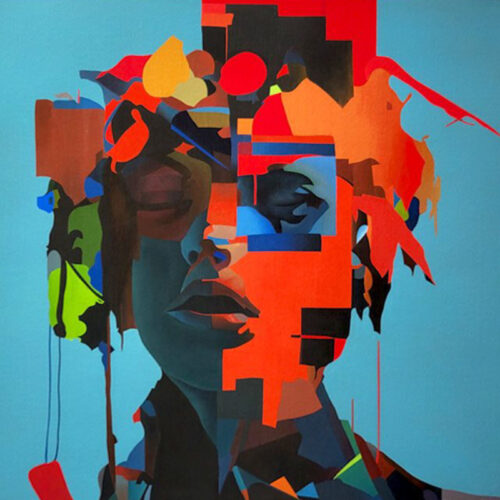
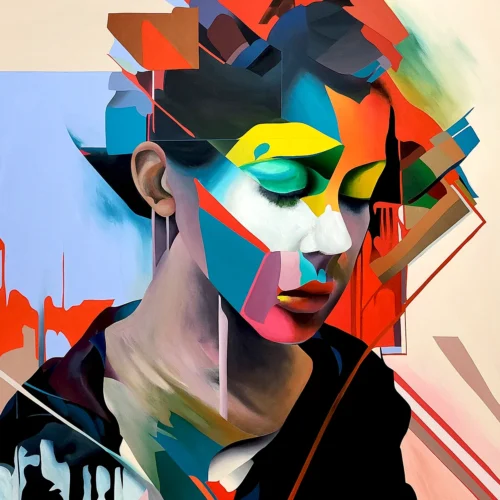
During my solo exhibition at Peterborough Museum & Art Gallery, one of the questions I was asked repeatedly was what medium my abstract portrait paintings were created with. Interestingly, many visitors were unsure whether the work was oil or acrylic.
For years, oil painting has carried a certain prestige within the art world. Historically, many of the great masters worked in oils and, whether consciously or not, I think that history still shapes assumptions around value.
Yet many people looking at my work could not immediately tell the difference.
That felt telling.
The reality, of course, is more nuanced than simply saying one medium is somehow “better” than another. Acrylic suits the way I work. Its faster drying time allows me to build layers and create the sharp masked sections that have become such an important part of my abstract portrait paintings. Because much of my process involves carefully masking and building the work section by section, working in oil would feel far slower and more restrictive.
For me acrylic paint serves the work and yet, it is difficult to ignore the idea that materials quietly influence perception.
A friend of mine recently made a similar observation about his own work. He creates original pieces using Posca pens on recycled cardboard and openly admitted that he sometimes feels people do not view those materials in quite the same way as a painting on stretched canvas, despite the work itself being entirely original and no less considered.
Again, I found myself returning to the same question.
Why does the surface seem to shape how we value the art?
Would we instinctively value the exact same image differently if it were painted on canvas rather than cardboard? On wood rather than metal? On a skateboard deck rather than stretched linen?
I suspect many of us would, even if we are not entirely sure why.
And perhaps that is where pricing art becomes psychologically interesting.
The Difficult Balance Between Confidence and Selling
Artists naturally want to value their work properly. At the same time, they also want to actually sell work. Those two things can sometimes sit in uncomfortable tension.
If pricing is shaped by more than time and materials alone, then it becomes much harder to find a formula that feels completely right.
Price too low and the work risks feeling undervalued. Price too high and doubt inevitably creeps in.
Then comes the difficult part: patience.
When something does not sell immediately, it can be tempting to assume the price must be wrong. Sometimes that may be true. But often, art simply takes time. The right person may not have found it yet. The visibility may not yet be there. Or someone may deeply connect with a piece but simply not be ready to buy.
Art is rarely an impulse purchase, which perhaps explains why pricing often feels like a balance between confidence and patience — having enough confidence to stand by the value of your work, while also understanding the realities of the market you exist within. Much like rejection, it often requires patience and the willingness to continue anyway before the right people find the work.
And, much like the work itself, pricing tends to evolve over time.
Why Pricing Gets Easier Over Time
In the earlier stages of an artist’s career, pricing can feel surprisingly uncertain. Many artists quietly ask themselves the same questions: Am I charging too much? Too little? Will anyone pay this?
Over time, however, things gradually become clearer. Sales help. Exhibitions help. Conversations help. Representation helps.
In my own case, exhibiting work through AntiKult Gallery in Germany has helped bring greater structure and consistency to pricing. Galleries naturally introduce context — what collectors respond to, where work sits within a broader market and how pricing evolves over time.
That does not mean someone else suddenly decides what your work is worth. But it can help move pricing from instinct alone towards something more informed.
Which brings me back to the skateboard decks.
So, How Do You Actually Price Art?
After a lot of thought, I eventually settled on a price that felt fair within the wider context of my work. Not because I believe the artwork itself is somehow worth less than a painting on canvas, but because art never exists in a vacuum. Materials, context, audience and expectations all quietly shape the way work is perceived.
The whole process reminded me that pricing art is rarely as straightforward as people imagine. There is no universal formula and, despite what some online advice might suggest, there probably never will be.
Over time, I have come to think of pricing less as finding a perfect formula and more as finding a point that feels fair — fair to the time, experience and thought behind the work, but also realistic within the context in which you are showing and selling it… that balance will look different for every artist.
Experience matters.
Context matters.
Believing in the value of your work matters too.
But perhaps most importantly, pricing art often comes down to finding the point where what feels fair to you meets the people who genuinely connect with what you create.
For artists earlier in their journey, that balance can feel difficult to find. I know it certainly did for me. And maybe that is why pricing remains such an interesting part of being an artist. It is not static. It evolves alongside the work, the experience and the understanding of where your art sits in the world.
Related Articles
When Art Competitions Become Popularity Contests
A look at what happens when visibility, audience size and artistic merit become tangled together.
Fame, Art & Authenticity: Robbie Williams and the Rise of Celebrity Artists
Questioning how fame, identity and public perception influence the way we judge art.
Are Pay-to-Enter Art Competitions Worth It? A Shift in Perspective
My thoughts on paid competitions, opportunity, rejection and what artists are really paying for.
Vanity Galleries: Exposure, Exploitation, or Something In Between?
A closer look at paid art opportunities and the difficult line between exposure and exploitation.
Priority Studio Access
I share new paintings, limited edition prints, exhibition news, articles and upcoming projects with subscribers first.
Get updates direct from my studio →
About Paul Kneen
I’m a UK contemporary abstract portrait artist exploring inner noise, quiet pressure and the emotional complexity of modern life through fragmented portraiture and bold colour. I create original paintings and limited edition prints, while also writing about art, exhibitions and the realities of being an artist today. I also share work in progress and life in the studio on Instagram @paulkneenart.




 No spam. Unsubscribe anytime.
