I've always wanted to be an artist. There were years when painting wasn't my full-time profession, but art remained a constant. If I wasn't creating, I was visiting galleries, reading about artists or thinking about the next piece I wanted to make.
What wasn't constant was the work itself.
Throughout childhood, college and into adulthood, I was constantly drawing, painting and experimenting, but if I'm honest, my work was all over the place. One week I'd be producing a painting, the next I'd be creating a stencil or trying something completely different. At the time, it felt perfectly natural.
In fact, I actively resisted the idea that an artist should have a recognisable style. Creativity, I believed, meant freedom. Why should I limit myself to one way of working when each new idea might demand a different medium or a different visual approach? If an idea suited spray paint, I'd use spray paint. If it worked better as a painting, I'd paint it. To me, that was what being creative was all about.
The Conversation That Stayed With Me
When I lived in South Africa, I regularly visited a local art market where I got to know one of the artists. She created beautiful abstract landscapes that genuinely stood out from everything else around her. I loved them. Yet every month she seemed to arrive with something completely different.
Eventually I asked why.
She explained that she was trying to figure out what people wanted to buy.
I understood why she was doing it. Making a living as an artist is difficult, and when sales are slow it's only natural to wonder whether changing direction might produce a better result. At the same time, I couldn't help thinking she already had something special. Rather than chasing different audiences with different styles, I found myself wishing she'd continue developing the work she was passionate about and focus on finding the people who loved it.
The strange thing is, I didn't realise I was describing myself.
Although I wasn't changing my work to satisfy customers, I was still moving from one idea to another without ever really building on what came before. My stencil work often explored global issues and social commentary. Each painting revolved around a new concept, a new message and a new visual solution. I enjoyed creating them, but after every finished piece it felt as though I was starting from scratch again, searching for the next clever way to discuss another subject.
Over time, those paintings began to feel less like a body of work and more like a series of individual ideas sitting alongside one another.
A Question I Could No Longer Avoid
The real shift came after I returned to the UK and was offered a solo exhibition at Peterborough Museum. Preparing for that exhibition forced me to ask a question I had subconsciously avoided for years.
Who did I want to become as an artist?
For the first time, I wasn't thinking about individual paintings. I was thinking about an entire exhibition. I didn't want visitors wandering around wondering whether they were looking at work by several different artists. I wanted the collection to feel connected. More than that, I wanted someone to see one of my paintings and instinctively know it had been painted by me.
I also understood that if I wanted to build a sustainable career, whether through galleries or independently, people needed something they could recognise. Not because every painting should look the same, but because they should all feel as though they belonged together.
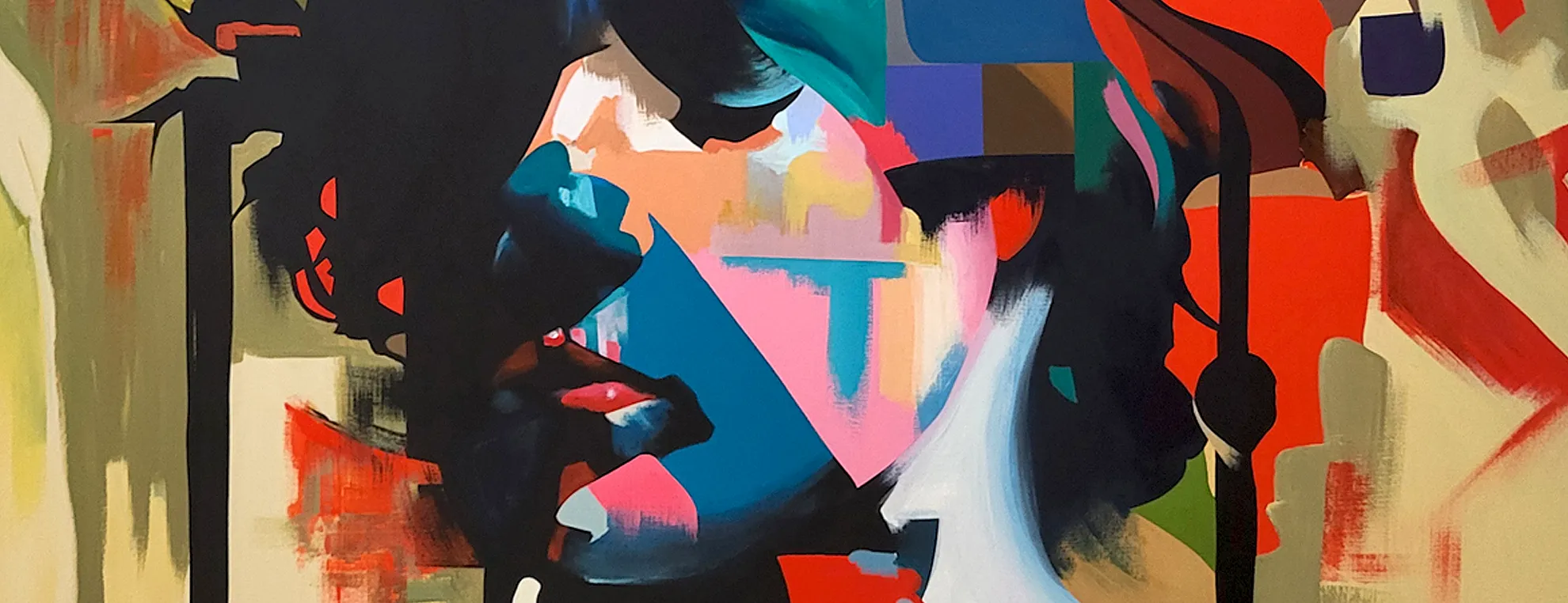
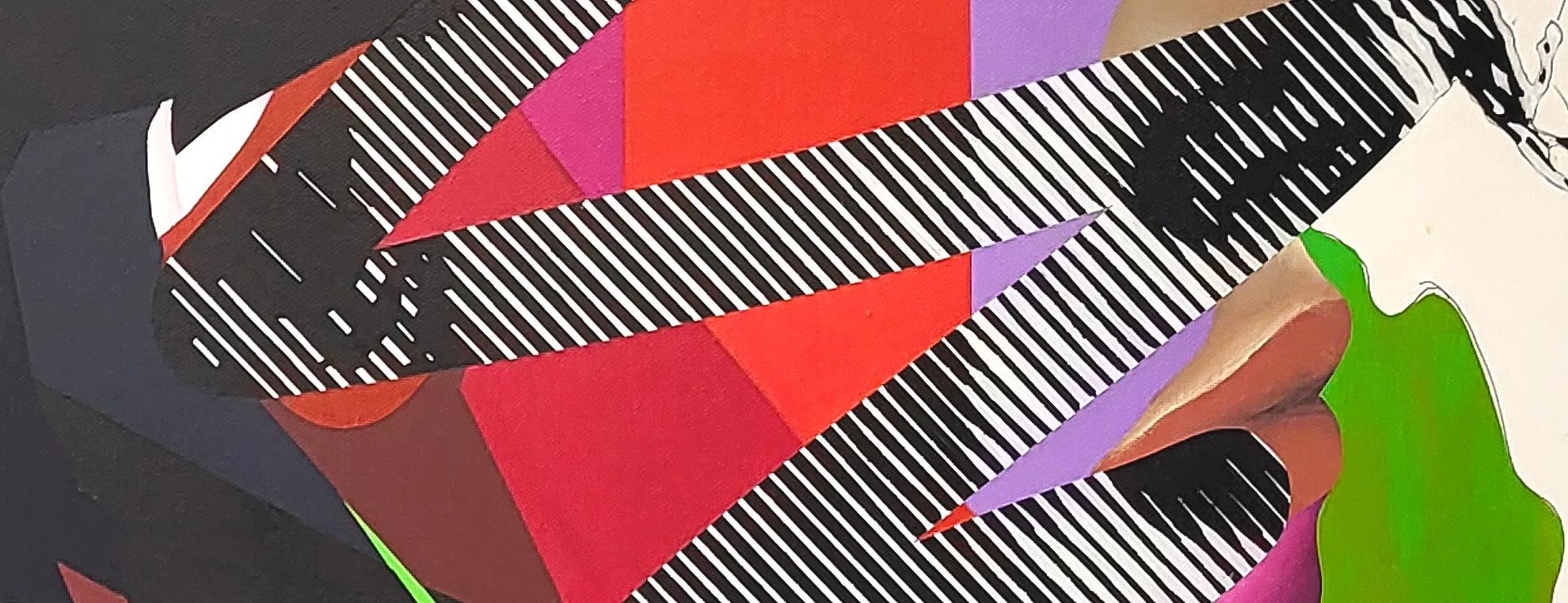
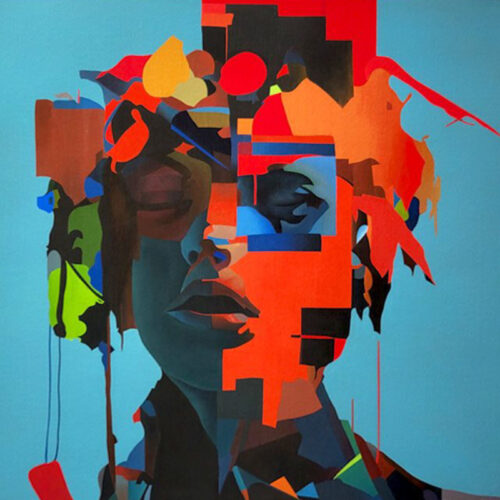
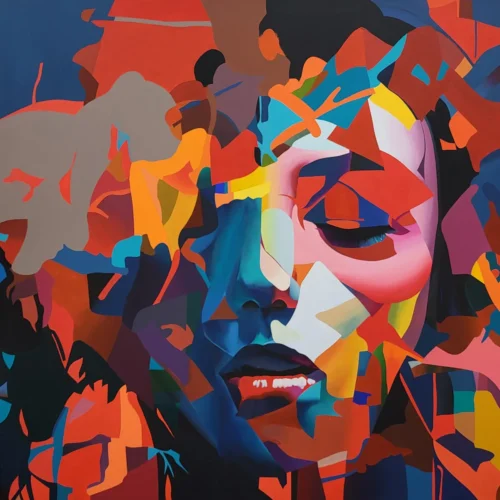
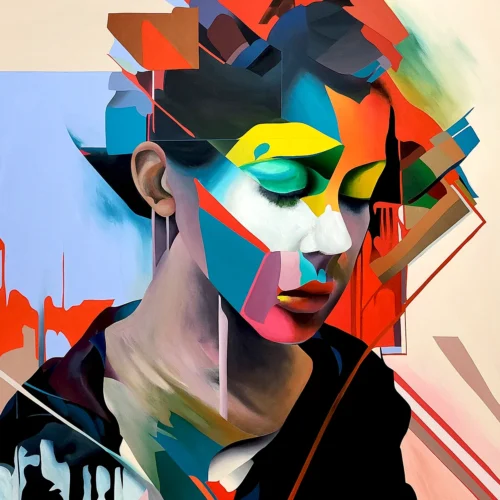
As I developed the work for the exhibition, my focus gradually shifted away from commenting on the world around us and towards exploring how we experience it. Instead of asking what was happening in society, I became more interested in how people were carrying the weight of modern life. Anxiety, resilience, uncertainty, hope and quiet determination became the conversations I wanted my paintings to have, and it was during this period that my abstract portraits began to emerge.
Keep Moving Forward
Ironically, choosing a clearer direction didn't make me feel more certain. It made me nervous. People had bought my earlier work and I had no idea whether they would understand why I was changing direction or even like the new paintings. Equally, I didn't know whether anyone discovering my work for the first time would connect with them either. Changing direction always sounds exciting when people talk about it afterwards, but while you're living through it, it feels like a risk.
That didn't mean all my doubts disappeared. One of my biggest fears was producing the same painting over and over again. I still don't want that. I want to experiment, test new ideas and keep pushing my work forward. The difference is that I'm no longer searching for a completely new identity every time I begin a painting. Instead, I'm exploring new ideas within a visual language I've spent years developing.
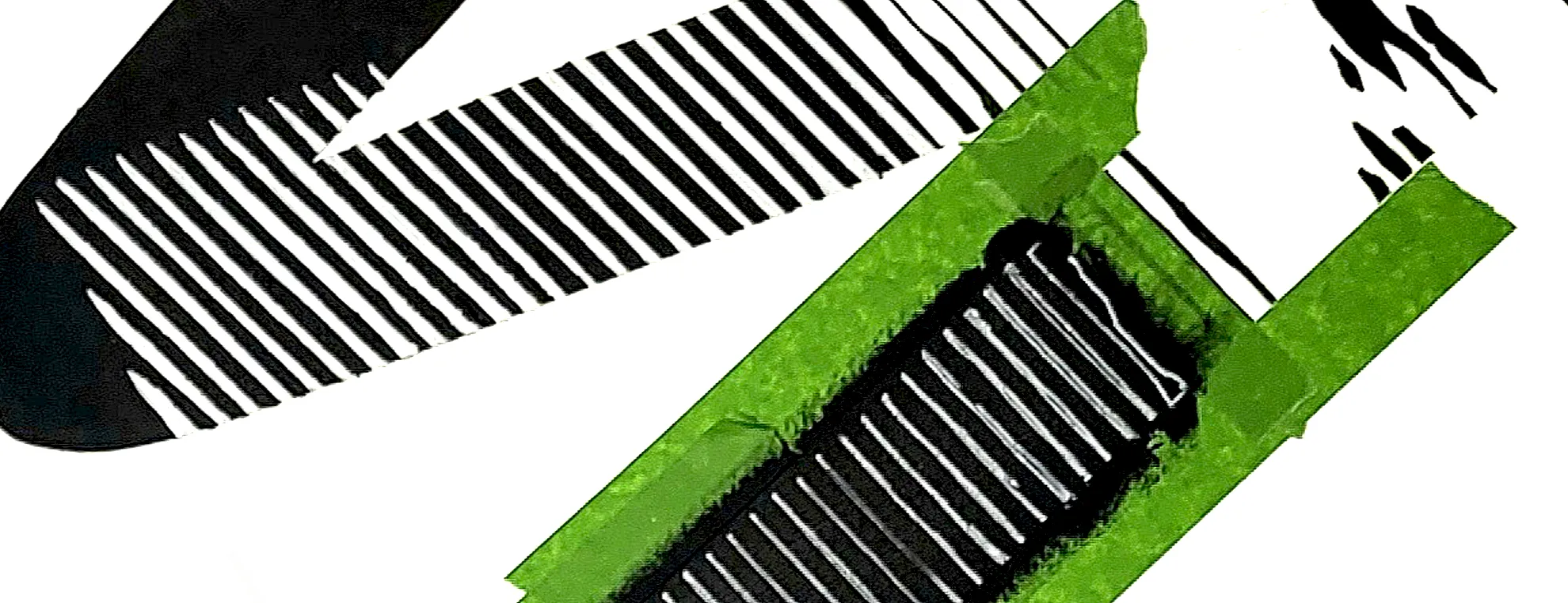
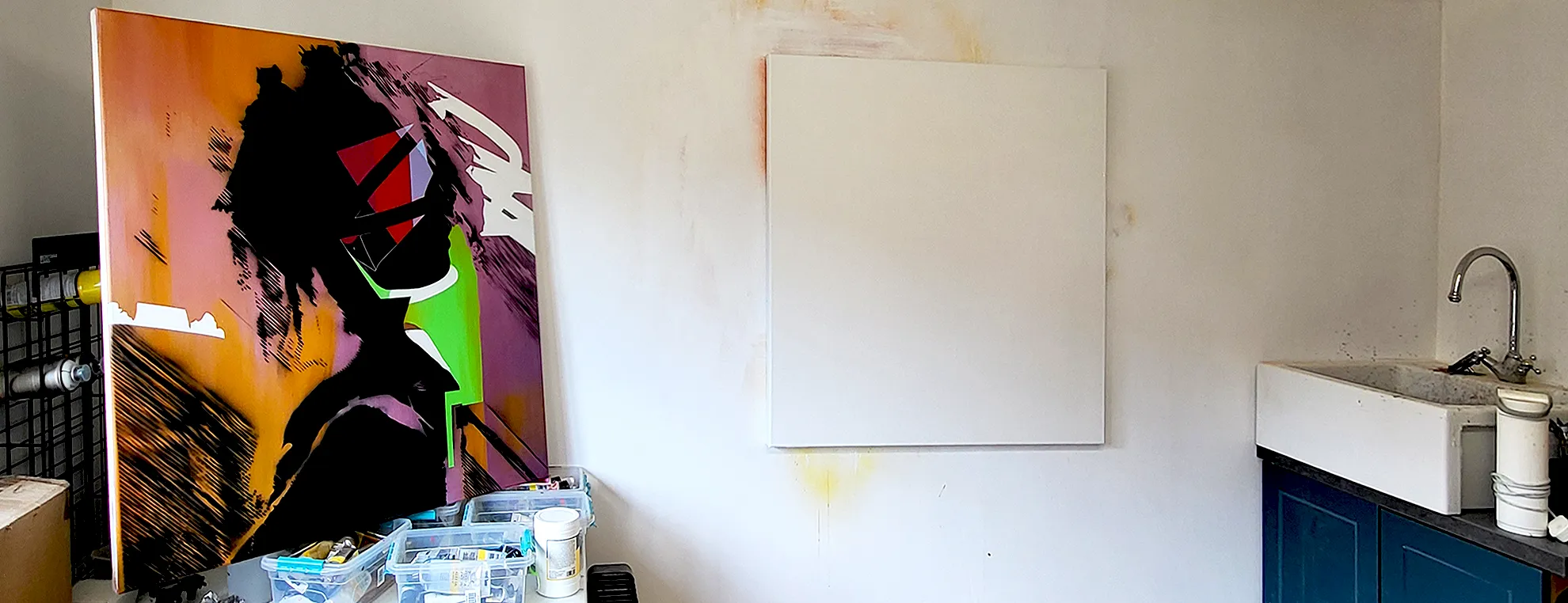
That change in thinking helped me appreciate that artistic development isn't about abandoning everything that came before. Many of the things I learnt while creating stencil work are still with me today. In fact, the painting I'm currently working on reintroduces stencils in a completely different way, while the masking tape that has become such an important part of my process almost feels like an evolution of those earlier techniques rather than a replacement for them.
Nothing has been wasted. Some ideas have stayed with me. Others disappeared for years before quietly finding their way back into my work. I've learnt to keep what helps me move forward and leave behind what no longer serves me, knowing that even the discarded ideas have shaped the artist I've become.
A Foundation, Not a Box
That's why I no longer see having a signature style as putting myself in a box. Instead, I see it as a foundation. Once that foundation exists, there's nothing wrong with exploring new directions. Musicians do it throughout their careers. They experiment, collaborate and evolve, but the strongest ones establish a voice before they start stretching it. Their audience follows because, despite the changes, the identity remains intact.
I think painting works in much the same way.
Looking back, I can now see my career as a series of stepping stones. At the time, I rarely recognised them for what they were. It was only after I'd moved on that I realised how important each stage had been. Every painting, every experiment and every wrong turn taught me something, even if I didn't understand it at the time.
Perhaps that's why my artistic journey reminds me so much of the way I build my abstract portraits. Neither begins with a finished picture. Both are created layer by layer, decision by decision. Sometimes I cover things up. Sometimes I reveal what came before. Sometimes an old idea unexpectedly finds its place in something new. The painting slowly discovers what it wants to become, and in many ways, so has my career.
I used to think a recognisable style would limit my creativity.
Now I see it differently. It isn't a box to stay inside. It's the foundation that gives me the confidence to keep exploring without ever losing sight of who I am.
Related Articles
Why I Paint Abstract Portraits: Exploring Emotion Through Structure
Discover why I chose abstract portraiture and how finding a clearer artistic direction changed my work.
What Makes Good Art?
Exploring why artistic value is subjective and why originality means different things to different people.
Artist Inc: When Painting Isn't the Only Job
A reflection on balancing painting with the countless unseen tasks involved in building a sustainable art career.
Why I Still Use Masking Tape in My Paintings
How a simple technique became an essential part of my process and evolved alongside my artistic style.
Priority Studio Access
I share new paintings, limited edition prints, exhibition news, articles and upcoming projects with subscribers first.
Get updates direct from my studio →
About Paul Kneen
I’m a UK contemporary abstract portrait artist exploring inner noise, quiet pressure and the emotional complexity of modern life through fragmented portraiture and bold colour. I create original paintings and limited edition prints, while also writing about art, exhibitions and the realities of being an artist today. I also share work in progress and life in the studio on Instagram @paulkneenart.


 No spam. Unsubscribe anytime.
