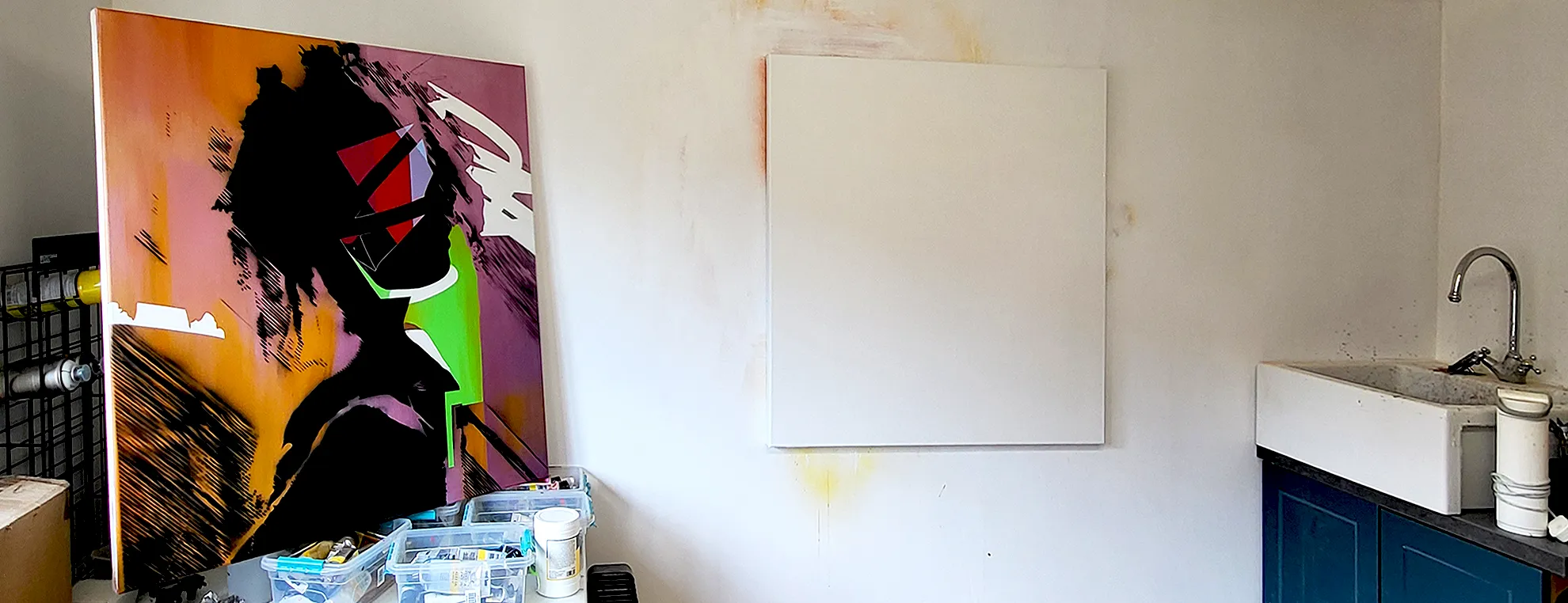
I recently decided to introduce a little more looseness into my work. I've always been drawn to paintings where drips, splatters, overspray and previous layers are allowed to remain visible. It's one of the things I admire in artists like Conor Harrington and Tim Fowler.
The strange thing is that when those same things appear in my own work, I seem to have an almost automatic urge to tidy them up. What I can admire and accept as part of somebody else's painting, my brain seems to interpret as a mistake when it's on mine and I've never completely understood why.
Maybe the neatness and structure is simply part of my visual language. Or maybe I've become so comfortable with the way I paint that anything outside it feels wrong.
So this time I tried to resist the urge to tidy everything up, using spray paint alongside my usual acrylics and allowing some of the overspray, splatters and imperfections to remain.
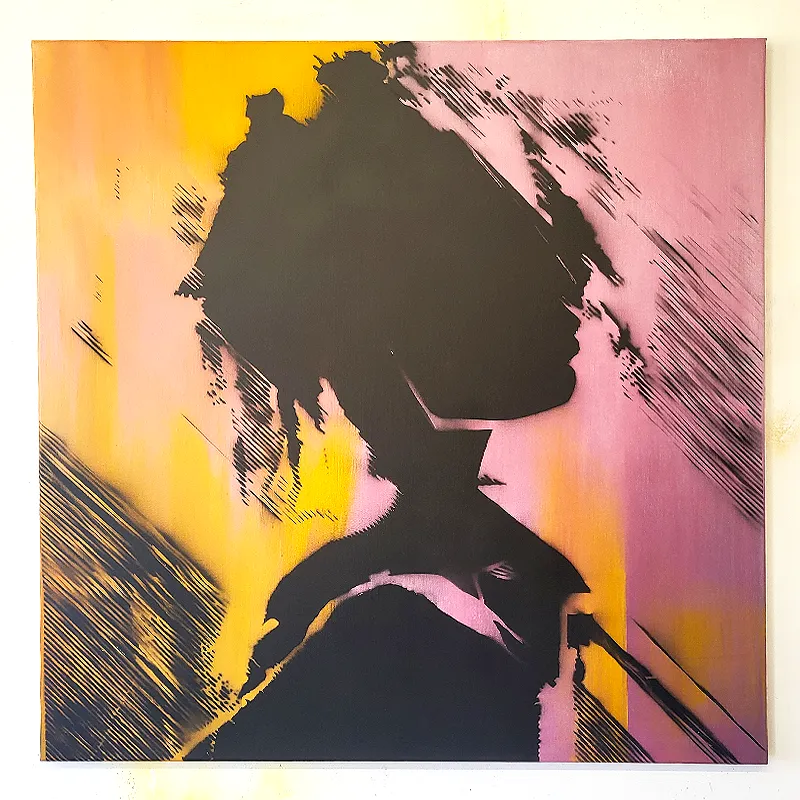
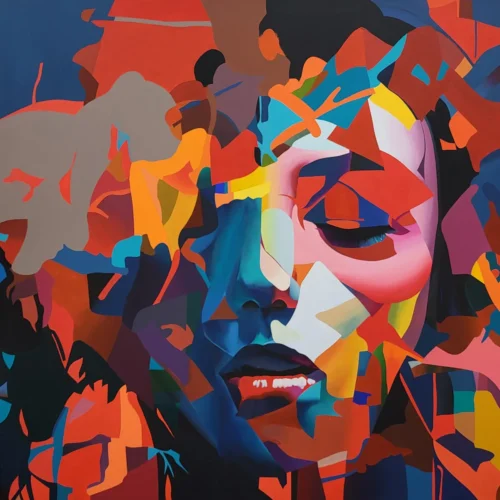
The painting at the point where I was still happy with how the experiment was developing
Initially, I liked where it was going. The problems started when I introduced masking tape, something that has become an important part of my normal process. When I removed it, sections of acrylic began peeling away from the sprayed surface underneath. Instead of the clean edges I was expecting, some areas looked as though they'd been hacked at with a blunt knife.
I tried to work with it for another couple of days, but by day three I found myself standing in front of the painting wondering what to do next. I could keep going and see whether all of this eventually became part of something interesting, or accept that this particular experiment wasn't working and start again.
How do you know when to stop working on a painting?
In the past, I probably wouldn't have thought about it quite so much. I used to believe that it's only paint. If something isn't working, paint over it, change it and keep going until eventually something begins to make sense. To an extent, I still believe that, but is it really only paint?
There's the canvas, the materials and, most importantly, the time already spent on it. Continuing means investing even more of all three.
I've had plenty of paintings that looked terrible in their early stages before gradually coming together. Sometimes one decision changes everything and suddenly you can see where the painting needs to go. Perhaps that's what would happen with this one. Another day might be all it needs. The element currently frustrating me could eventually become the part that makes the painting interesting.
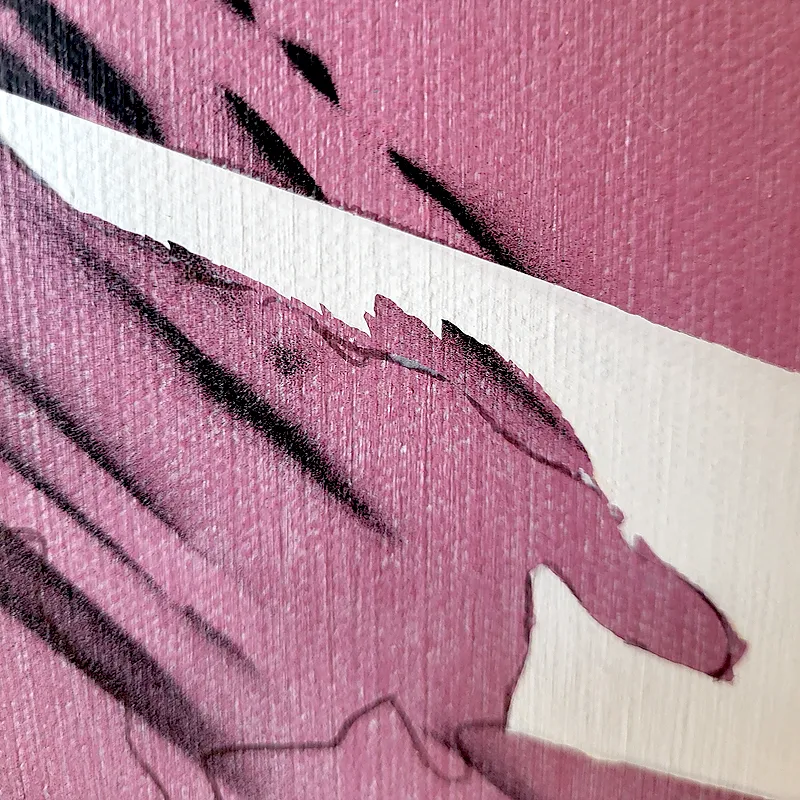
Maybe the peeling could become an interesting part of the painting. Or maybe it wouldn't
But the opposite is equally possible. I could spend another two weeks trying to rescue it, using more paint, more materials and more time before eventually reaching exactly the same conclusion.
There's a motivational image I've seen several times over the years showing someone digging through rock looking for gold or diamonds. Eventually they become exhausted, put down their tools and walk away, unaware that they were only inches from breaking through to what they'd been looking for. The message is obvious: don't give up because you might be closer than you think.
I've always quite liked the sentiment, but there's a problem with it. What if there isn't any gold?
The image only works because we can see something the person digging can't. We can see that they're one swing away from finding what they've been looking for, so from our perspective walking away is obviously the wrong decision. But the person holding the pickaxe doesn't know that. They don't know whether they're one swing away from finding something or whether they could keep digging for another ten years and find absolutely nothing.
In reality, neither do we.
I can ask myself whether another day might change everything, but how many days do I give it? At what point does perseverance become stubbornness? If I carry on, am I pushing myself or simply refusing to accept that an experiment hasn't worked?
I don't think any of those questions have a definitive answer, which means at some point I have to trust my own judgement.
Confidence or comfort?
Years of painting have given me a better sense of judgement than I had when I started. I understand my materials better than I used to and I know how they are likely to behave when I make certain decisions. That experience gives me confidence, and I think that confidence helps me make better work.
But at what point does confidence become comfort?
There is nothing wrong with knowing what you're doing. In almost any other situation we'd call that experience. The problem is that experience naturally encourages us towards the things we know will work and away from the things that might not.
That could be part of what I'm fighting against when I try to introduce more looseness into my paintings. When something doesn't look right, my instinct is usually to correct it, but is that instinct coming from years of experience or simply from being more comfortable when everything feels under control?
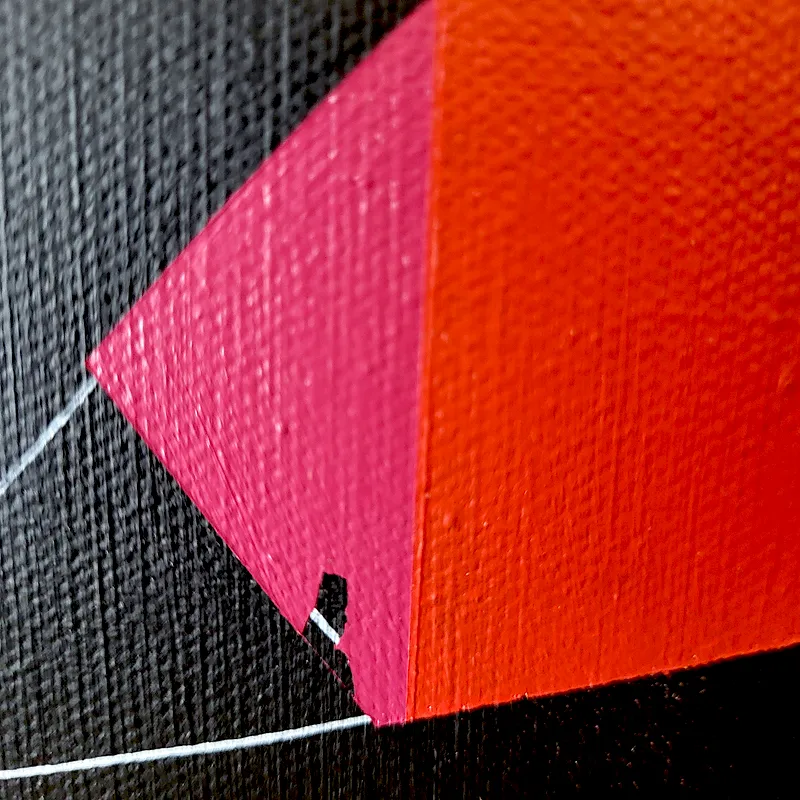
Does imperfect always mean wrong?
Maybe the bigger mistake is assuming that evolution always requires changing the way I paint. Perhaps pushing the work forwards isn't about adding more techniques or introducing things I admire elsewhere, but finding new ways to push what I've already developed.
Then again, how would I know that without occasionally challenging it?
Experimentation has a cost
It's easy to say that we should push ourselves, take risks and not be afraid to fail. It's slightly different when failing costs something.
If I had unlimited time, paint and canvases, perhaps I'd continue with this painting purely to find out what happens. I could put it to one side, start another and return to it whenever I wanted.
But I don't have that luxury.
With a solo exhibition approaching, a week spent fighting with one painting is also a week I could have spent working on another. That doesn't necessarily make the experiment a waste of time. Even something that doesn't work can teach you something, but there is still an opportunity cost.
Every decision to continue with one thing is also a decision not to spend that time somewhere else.
"Never give up" sounds great until you ask what you're giving up in order to keep going.
Perhaps the question isn't simply whether something might eventually work. Almost anything might. Maybe we also have to ask how much we're prepared to invest in finding out.
A lot of the experiments that don't work remain largely invisible. Social media is particularly good at presenting a beautifully edited version of the process. We see finished paintings, carefully selected studio photographs and short videos showing a piece apparently coming together from beginning to end. We see much less of the experiments that went nowhere, the paintings put to one side or the materials bought for ideas that sounded much better in our heads than they looked on canvas.
We don't always see the uncertainty either. Experience hasn't removed that from my work. I understand what I'm doing far better than I did years ago, but I still try things that don't work and occasionally stand in the studio wondering what on earth I'm doing.
The finished work might eventually look resolved, but the route to it often isn't.
The painting in the corner
So after three days of staring and questioning, I've decided to stop working on the painting.
It has been relegated to the corner of the studio. Maybe I'll come back to it in a few weeks and maybe I won't. But for now, my attention is focused on a fresh white canvas.
Is it the right decision? I don't know and probably never will.
Related Articles
How Do You Know When a Painting Is Finished?
A reflection on knowing when to stop working on a painting and learning to trust your own judgement.
Why I Still Use Masking Tape in My Paintings
Discover how the process behind my paintings became connected to the ideas they explore.
Finishing Artwork on Your Terms: Why Rushing the Process Undermines Your Growth
Why slowing down and trusting the process can matter more than forcing a painting to finish.
Artists Should Never Give Up: Why Persistence and Self-Belief Matter
Why continuing through doubt, rejection and uncertainty is often part of building an art career.
Priority Studio Access
I share new paintings, limited edition prints, exhibition news, articles and upcoming projects with subscribers first.
Get updates direct from my studio →
I’m a UK contemporary abstract portrait artist exploring inner noise, quiet pressure and the emotional complexity of modern life through fragmented portraiture and bold colour. I create original paintings and limited edition prints, while also writing about art, exhibitions and the realities of being an artist today. I also share work in progress and life in the studio on Instagram @paulkneenart.



 No spam. Unsubscribe anytime.
