I've been fairly slack with social media recently, partly because so much of my attention has been going into my website and trying to improve its visibility on Google. The problem is that concentrating so heavily on one way of getting my work seen has resulted in me neglecting other potential opportunities.
I was reminded of this recently whilst watching a Facebook Reel from a guy who runs a page called Creative Flair. He explained that, out of more than 900 posts he'd shared, only two had gone viral. He didn't see the other 898 as failures or a waste of time because without them, he would never have made the two that eventually took off. More importantly, he had no way of knowing beforehand which ones would be successful.
That uncertainty is really the point. A post might disappear almost unnoticed, reach thousands of people or simply be seen by one person who takes a genuine interest in the work, and there's no way of knowing which it will be before you post it. What you can be certain of is that if you don't put anything out there at all, nobody new is going to discover it.
Social media may only be one way of getting my work in front of people. There's also my website, Google, mailing lists, exhibitions, galleries and all the other routes available now. Concentrating too heavily on any one of them can potentially mean neglecting others, so surely the best chance of getting my work seen is to use as many of those routes as I can.
Waiting to Be Discovered
The alternative, of course, is to do very little about any of them and hope that somehow the work gets discovered anyway. There's something quite appealing about the romantic idea of an artist working away in a studio, concentrating entirely on making brilliant work until eventually the right person finds them. Unfortunately, I'm not convinced it's a particularly sensible career strategy.
There must be incredibly talented artists producing extraordinary work that most of us will never encounter simply because we don't know it exists. Making good art and making sure people know that art exists are two very different things, and being particularly good at the first doesn't automatically take care of the second.
Historically, artists had far fewer options for doing anything about that themselves. Before the internet, galleries and dealers were one of the few established routes through which an artist could reach a wider audience and build a successful career. A gallery could provide exhibition space, introduce work to collectors and help build an artist's reputation.
More Ways to Be Seen
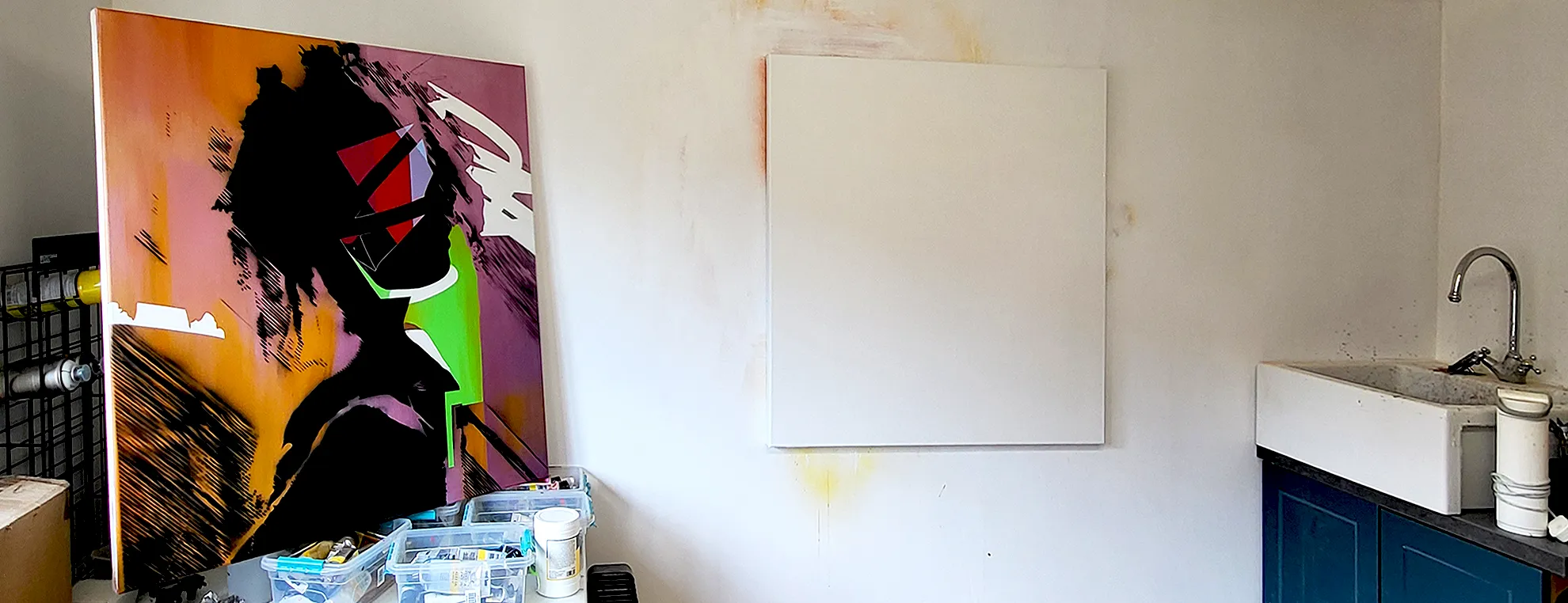
Today, the situation looks very different. I can finish a painting in my studio in Stamford, photograph it and potentially have somebody on the other side of the world looking at it within minutes. I can have my own website containing every available painting, information about my work, exhibitions and articles without needing anybody else's permission to publish any of it.
Someone who has never heard my name can type something into Google and end up reading one of my articles. From there they might read another, visit the originals page or sign up to my mailing list, while someone else might encounter a painting through Instagram, at an exhibition or on a gallery wall.
There are also open calls, art fairs, competitions, art consultants, interior designers, direct approaches and probably plenty of other possibilities I haven't considered. None is guaranteed to lead anywhere, but collectively they give an artist far more chances of being discovered than relying on a single route.
That represents quite a significant shift. We still can't decide who will take an interest in what we make, but we have far more say over how many opportunities people have to encounter it.
Looking at the Extra Work Differently
Creating those opportunities does, however, involve work beyond actually making the art. I've previously written about the business surrounding being an artist and how easily it can feel as though painting is only one of about fifteen jobs you're supposed to be doing. Websites need updating, emails need answering, photographs need taking, exhibitions need organising and apparently social media needs feeding with a constant supply of something interesting.
That can be frustrating when ultimately the thing I want to spend most of my time doing is painting, but I'm now trying to see this extra work as part of helping the paintings find an audience beyond the studio rather than simply something that takes me away from making them.
What About Galleries?
Being able to do more of this myself doesn't mean I think galleries are unnecessary. I'm represented by AntiKult Gallery in Germany and I'm currently working towards a solo exhibition with them in Hamburg next year. I value that relationship enormously, not least because they can introduce my paintings to collectors, locations and opportunities that I would find much harder to reach on my own.
The difference is that gallery representation no longer needs to be the only serious route available to an artist. Some artists have built successful careers by developing audiences online and selling directly, while others still work predominantly through galleries. There's no particular reason those approaches need to be opposing choices.
For me, it makes more sense for them to work alongside each other. AntiKult can introduce my paintings to its collectors while I continue trying to build an audience myself. Each can reach people the other might not, which means one doesn't need to replace the other.
Looking for the One Thing That Works
The same principle applies to all of these different ways of reaching people, and this is probably where I've gone slightly wrong with Google recently. I've spent considerable time working on my website and watching its visibility in search develop. There's nothing wrong with wanting more people to find my work that way, but I've probably been guilty of treating Google as though it somehow needs to become the answer rather than simply being one part of it.
What actually matters isn't how many people arrive through one particular route, but who I'm able to connect with because those different routes exist. How they found the work matters far less than the fact that something gave them the chance to find it in the first place.
It also makes relying too heavily on any one of them seem increasingly risky. Things change, often for reasons completely outside my control, so having several ways for people to find my work means I'm not completely dependent on the fortunes of one.
Rather than trying to identify the one route that's going to work best, it makes far more sense to think about how all of them can work together.
The 898 That Didn't Go Viral
Which brings me back to those 898 posts. The lesson I took from the Creative Flair Reel wasn't that I should post 900 times until something eventually goes viral. Virality itself isn't particularly useful to me if thousands of people see a painting and none of them has any genuine interest in art.
What stayed with me was the fact that he couldn't know which posts would succeed before he made them. The same uncertainty applies far beyond social media. Something that initially appears to have achieved very little might eventually lead somewhere, while something that seemed certain to be important might disappear without trace.
If I can't predict exactly what's going to work, there's little point waiting for the perfect answer before doing anything. The only sensible response is to keep giving the work opportunities to be seen.
More Agency, Not More Certainty
None of these different ways of being seen gives an artist control over what happens next. There will always be decisions made by other people, things I can't influence and an element of luck and timing involved. What has changed is how much more I can do to put my work in a position where something might happen in the first place.
That's the agency artists have now. I can't determine the outcome, but I can give myself more opportunities to reach one.
I believe strongly in the paintings I'm making, and the next part isn't about sitting in the studio hoping that eventually the right person happens to find them. It's about using the different ways now available to give the work as many sensible chances of finding its audience as I can.
I don't know which opportunity will lead to the next important moment in my career. And that's precisely why I need to keep creating them.
Related Articles
Social Media for Artists: A Double-Edged Brush in a Content-Driven World
Exploring the uneasy relationship between visibility, creativity and constant online output.
Artist Inc: When Painting Isn't the Only Job
A reflection on the hidden work behind an art career and the challenge of protecting enough time and attention to keep creating.
Why Your Website Should Evolve With You as an Artist
Why an artist’s website should grow, change and better reflect the work as the artist develops.
From the Studio to Discovery Art Fair Cologne
What happens when artwork leaves the studio and enters the unpredictable world beyond the artist’s control.
Priority Studio Access
I share new paintings, limited edition prints, exhibition news, articles and upcoming projects with subscribers first.
Get updates direct from my studio →
About Paul Kneen
I’m a UK contemporary abstract portrait artist exploring inner noise, quiet pressure and the emotional complexity of modern life through fragmented portraiture and bold colour. I create original paintings and limited edition prints, while also writing about art, exhibitions and the realities of being an artist today. I also share work in progress and life in the studio on Instagram @paulkneenart.


 No spam. Unsubscribe anytime.
