I started writing this article thinking it would be about masking tape. It isn't, or at least not entirely.
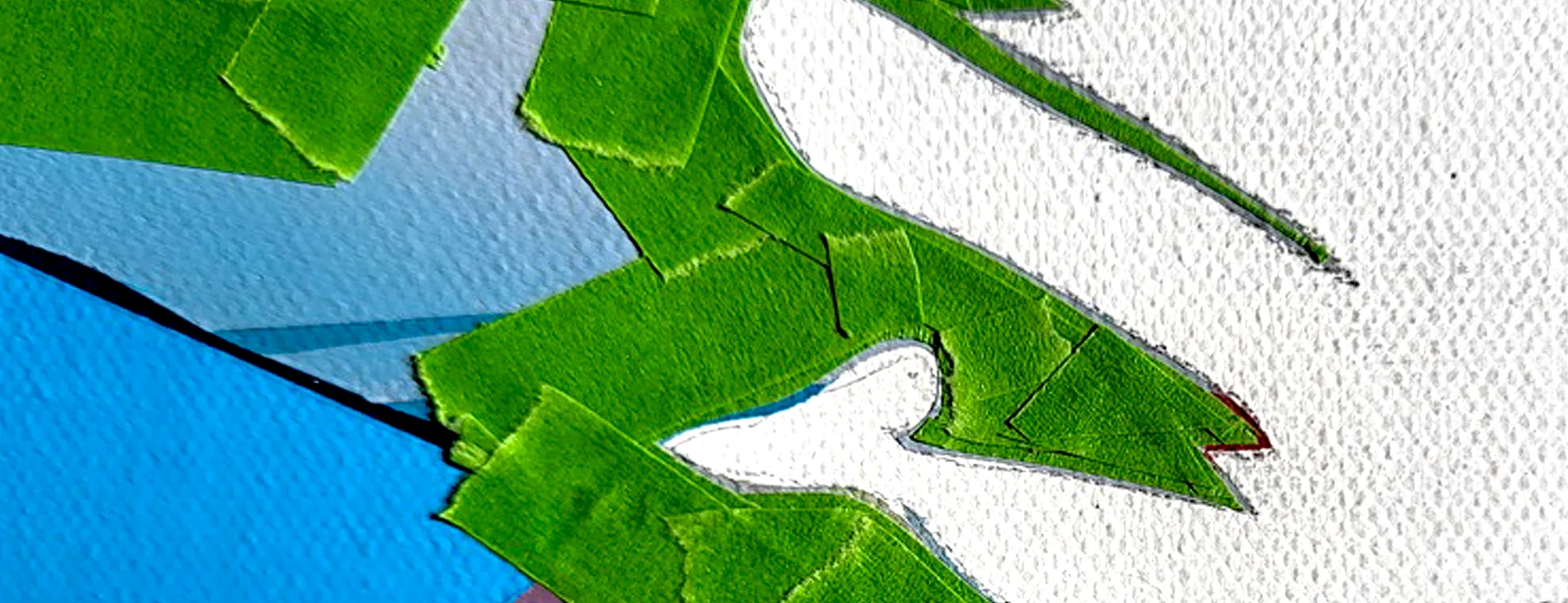
For years, masking tape has been a central part of my painting process. It creates the sharp edges and divisions that have become a recognisable feature of my work, allowing me to build paintings through layers, shapes and carefully controlled sections. If somebody asked why I use it, that was the answer I would give.
It's a practical explanation, and it's not wrong. The tape does create those visual elements. But it only explains what the tape does, not why it has become such an important part of the way I paint.
Like many artists, I occasionally find myself questioning whether there might be a faster way to work.
Art imitates life
We live in a culture that constantly encourages efficiency. Social media rewards consistency, visibility and regular output. Every platform seems to be telling us to create more, post more and stay active. Against that backdrop, spending hours applying and removing masking tape can sometimes feel frustratingly slow.
I've never seriously considered abandoning the process, but I have certainly questioned it. When a painting takes weeks to complete, it's natural to wonder whether some parts of that journey could be simplified.
At the start of 2026, I began rewriting sections of my website and what began as a fairly straightforward exercise in improving the copy soon became something more reflective. Trying to explain my work clearly forced me to think carefully about what the paintings are about and why I make them the way I do.
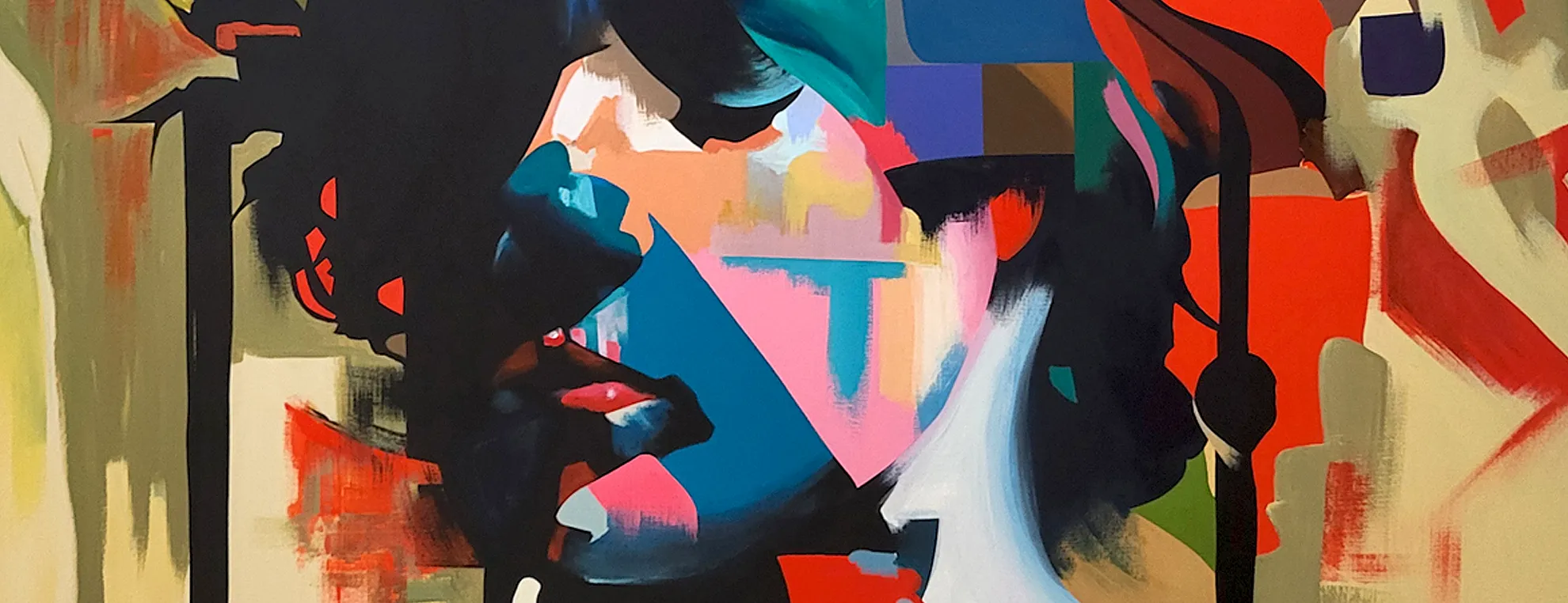
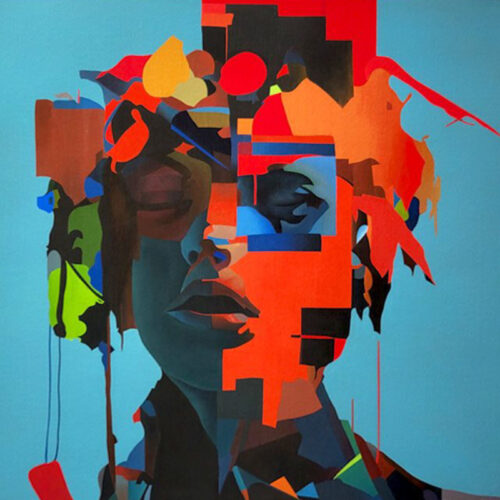
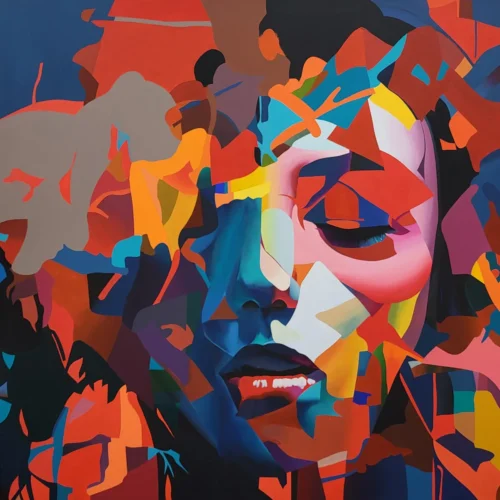
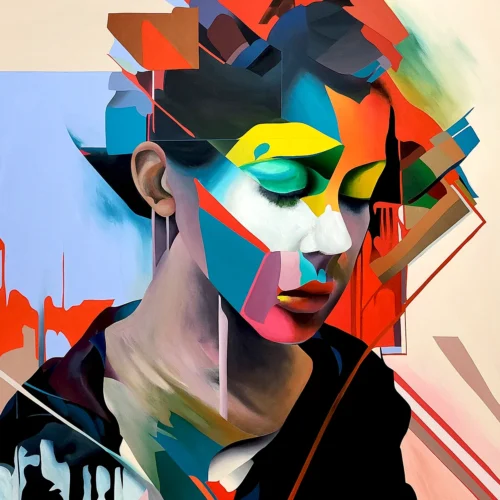
My abstract portrait paintings explore themes of pressure, uncertainty, resilience and the often-complicated experience of being human. The faces at the centre of the work are fragmented and abstracted, and the ideas behind them are often rooted in very familiar experiences. Feeling overwhelmed. Carrying too much. Trying to move forward despite not having all the answers. Finding ways to keep going when life feels messy or uncertain.
As I was writing about these ideas, I found myself thinking about the actual process behind the paintings.
Breaking things down
When I start a new piece, I don't approach the canvas as one enormous problem that needs solving all at once. Instead, I break it down into smaller parts. One section is taped off. A shape is painted. A colour is introduced. A decision is made. Then another. And another. Eventually those individual parts begin to connect and the painting starts to reveal itself.
Likewise, most of us don't deal with difficult situations by solving everything in a single moment. When life becomes overwhelming, we tend to do what I do when I start a painting. We focus on the next decision. The next conversation. The next task. We break things down into manageable pieces because looking at the whole picture can sometimes feel impossible.
My process also relies on a balance between structure and uncertainty.. It creates boundaries and provides a framework within which I can work. Yet despite all that planning, there is still a huge amount I cannot predict. Colours interact in unexpected ways. New ideas emerge halfway through a piece. Sections that looked promising suddenly stop working and need to be rethought. No matter how carefully the painting is planned, uncertainty always finds its way in.
In many ways, that isn't so different from life itself. We create routines, plans and structures to help us navigate the world, but much of what shapes our experiences remains outside our control. There is a constant tension between order and unpredictability, and that tension exists both within the paintings and within the process used to create them.
What surprised me wasn't the existence of these connections, it was how long it took me to recognise them.
Not just a technique
I had always viewed masking tape primarily as a technique. A tool. A method for achieving a particular visual language. It never occurred to me that the process itself might be connected to the ideas I was exploring through the finished work.
Once I recognised that relationship, my perspective on the process began to shift.
The aspects of painting that I sometimes found frustrating suddenly felt more meaningful. The slowness wasn't simply an obstacle standing between me and a finished painting. The careful layering, the repetition and the gradual building of the image all became part of the conversation the work was having. The process wasn't separate from the subject matter. It was reinforcing it.
In a culture that often encourages us to move faster and produce more, it made me question what might be lost when we focus solely on efficiency. That doesn't mean every creative decision needs a deep conceptual explanation. Sometimes a technique is simply a technique. But occasionally, if you spend enough time doing something, you discover that the choices you've been making intuitively reveal something about what matters to you and how you see the world.
For years, I thought masking tape was just a technique, a way of creating the sharp edges and divisions that had become part of my visual language.
What I didn't realise was that the process itself had become connected to the ideas I was exploring through the work.
It just took me a while to notice.
Related Articles
Why I Paint Abstract Portraits: Exploring Emotion Through Structure
Discover why the human face remains at the centre of my work and how abstraction helps explore complex human experiences.
Acrylic Paint vs Oil Paint: Why I Choose Speed, Versatility, and Innovation
Why acrylic paint suits the pace, layering and structure of my abstract portrait paintings.
The Strange Truth About Motivation as an Artist
Why motivation is often the result of action rather than the thing that comes before it.
Finishing Artwork on Your Terms: Why Rushing the Process Undermines Your Growth
A look at slowing down and trusting the process can matter more than forcing a painting to finish.
About Paul Kneen
I’m a UK contemporary abstract portrait artist exploring inner noise, quiet pressure and the emotional complexity of modern life through fragmented portraiture and bold colour. I create original paintings and limited edition prints, while also writing about art, exhibitions and the realities of being an artist today.