
When it comes to painting, two mediums tend to dominate the conversation: acrylic and oil.
Over the years, I’ve explored both, but I keep returning to acrylic.
Not out of habit — but because it suits the way I work.
Speed, flexibility, and the ability to adapt quickly all play a role in how my paintings develop, and acrylic allows that to happen without resistance.
Understanding the Difference
Before getting into preference, it’s worth breaking down the key differences.
Drying time
Acrylic dries quickly — often within minutes or hours. Oil can take days, sometimes weeks.
Texture and finish
Oil has a naturally rich, glossy quality. Acrylic can mimic that, but also offers a wider range of finishes.
Clean-up
Acrylic is water-based. Oil requires solvents.
Longevity
Oil has history on its side. Acrylic, while newer, has proven to be stable and durable.
Toxicity
Acrylic is generally low-risk. Oils often involve harsher materials.
Acrylic vs Oil paint: Why Acrylic Fits the Way I Work
For me, the decision comes down to process.
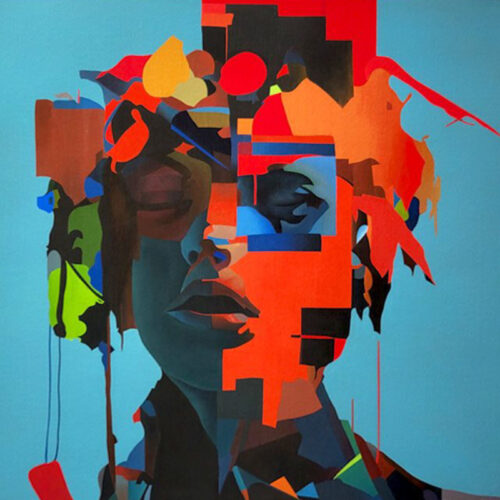
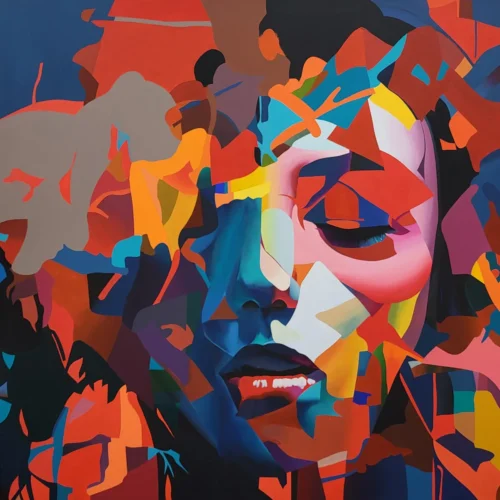
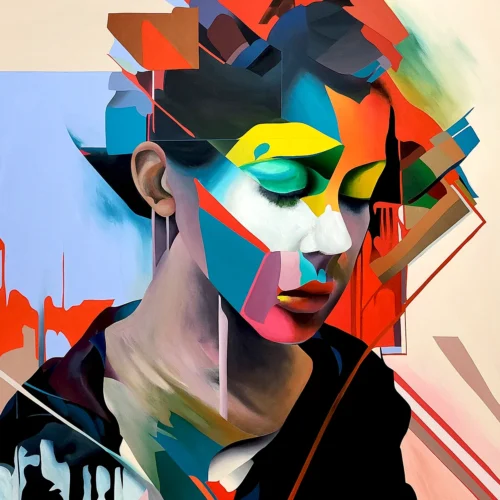
The work I create — particularly my abstract portrait paintings — relies on momentum. Layers build quickly, decisions are made instinctively, and things often shift mid-way through.
That kind of approach doesn’t sit well with long drying times.
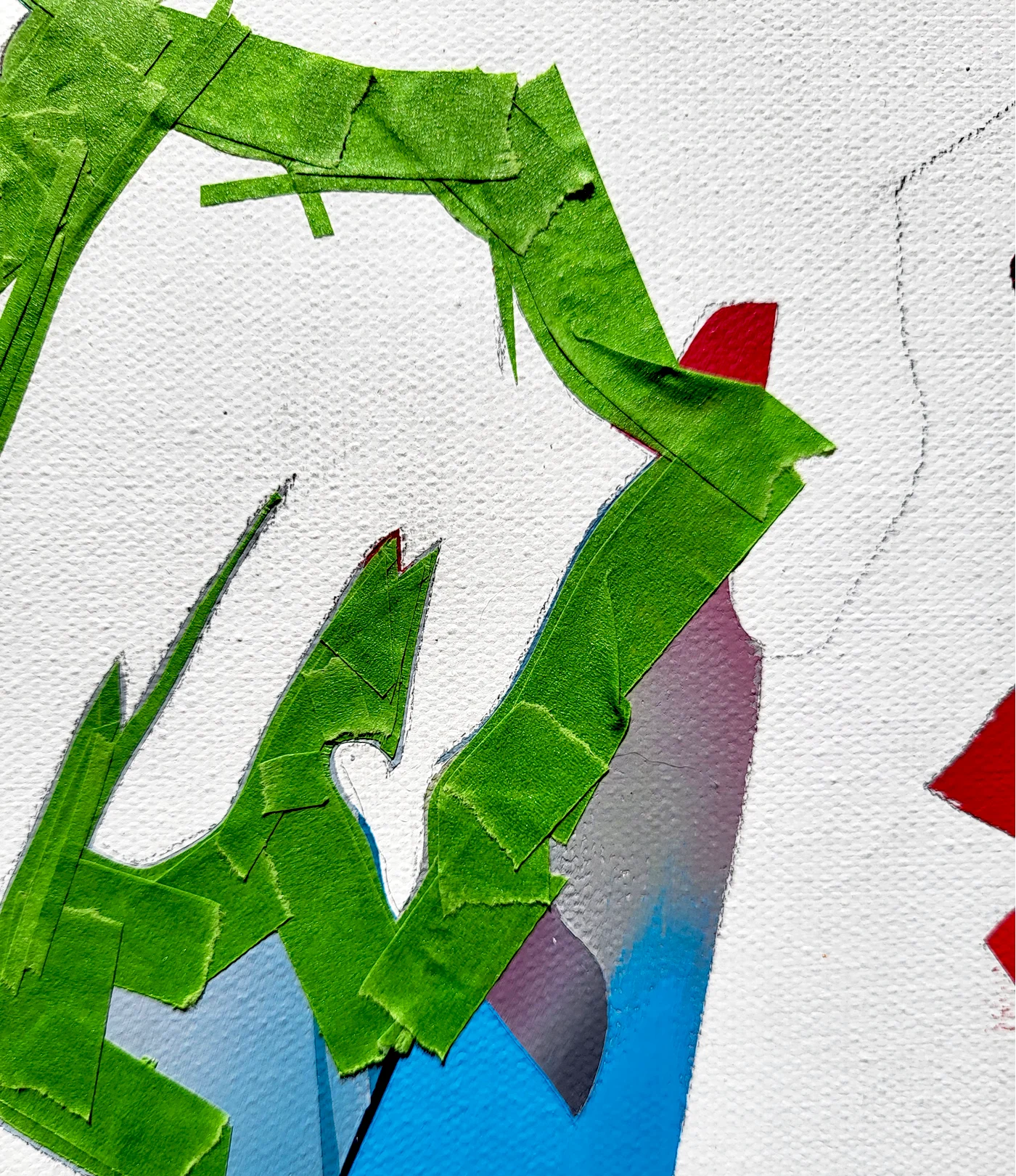
Masking allows for fast, precise layering — something that suits the way I work with acrylic
Acrylic allows me to move at the same pace as the ideas.
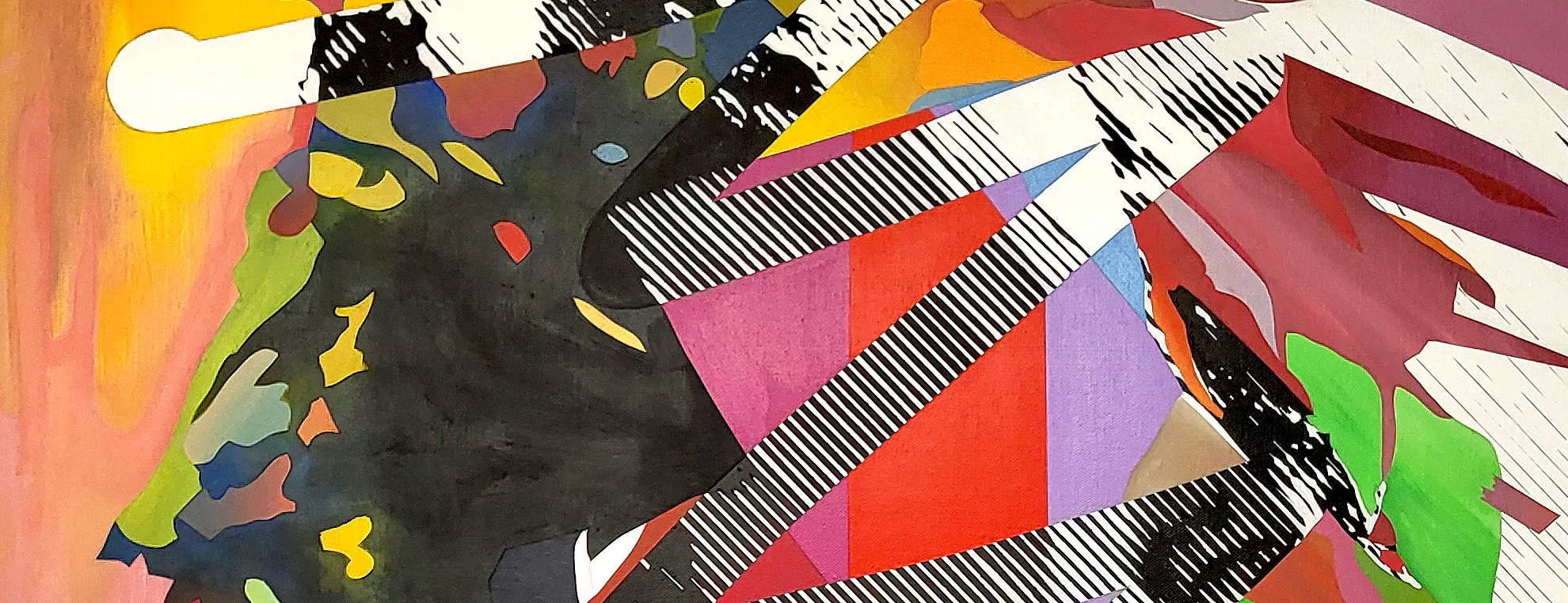
Some of the pieces that come out of this process can be seen across my available work, where that layering and immediacy becomes part of the final result within the paintings themselves.
Speed and Responsiveness
The fast drying time isn’t just convenient — it changes how you think.
You can:
- layer quickly
- adjust immediately
- revisit areas without delay
There’s no waiting for the paint to “catch up” with you.
That keeps the process fluid.
A Medium That Has Evolved
Acrylic today is very different to what it once was.
There are now:
- slow-drying variants
- heavy body paints
- fluid acrylics
- a wide range of mediums to adjust finish and texture
That flexibility makes it incredibly adaptable.
Whether I want something flat and controlled or textured and expressive, it’s all achievable within the same medium.
The Perception Problem
There’s still a lingering idea that oil is the “serious” medium.
That acrylic somehow sits a step below.
It’s outdated.
Yes, oil has history. But that doesn’t make it inherently better — just older.
Many contemporary artists have used acrylic to produce significant, widely recognised work. The medium has more than proven itself.
And ultimately, the value of a painting isn’t determined by what it’s made with.
It’s determined by what it communicates.
Health and Environment
There’s also a practical side to it.
Working with oils often involves solvents — something that changes the working environment completely.
Acrylic removes that.
No fumes. No specialist ventilation. No complicated clean-up.
That simplicity matters, especially when painting regularly or for long periods.
Longevity and Durability
Acrylic may not have the same historical track record as oil, but it’s no longer an unknown.
Modern testing has shown that it holds up extremely well over time.
It doesn’t yellow in the same way. It remains flexible. It resists cracking.
With the right materials and preparation, there’s no reason it won’t last.
Freedom to Experiment
More than anything, acrylic gives me room to explore.
It allows for:
- mixed media
- layering
- quick adjustments
- reworking without hesitation
That freedom feeds directly into how the work develops.
And it’s something that continues to shape both my process and the direction the work takes over time — something you can also see across the exhibitions I’ve been part of through my exhibition work.
Where It Lands
The question of acrylic vs oil often comes down to preference.
But for the way I work, acrylic makes sense.
It removes friction from the process.
It keeps things moving.
And it allows the work to evolve naturally, without waiting for the medium to catch up.
Related Articles
Why I Still Use Masking Tape in My Paintings
Discover how the process behind my paintings became connected to the ideas they explore.
Finishing Artwork on Your Terms: Why Rushing the Process Undermines Your Growth
Why slowing down and trusting the process can matter more than forcing a painting to finish.
Why I Paint Abstract Portraits: Exploring Emotion Through Structure
Discover why the human face remains at the centre of my work and how abstraction helps explore complex human experiences.
My Art Studio Is Now Fully Operational
Why having a dedicated studio changed the rhythm, focus and seriousness of my creative practice.
Priority Studio Access
I share new paintings, limited edition prints, exhibition news, articles and upcoming projects with subscribers first.
Get updates direct from my studio →
About Paul Kneen
I’m a UK contemporary abstract portrait artist exploring inner noise, quiet pressure and the emotional complexity of modern life through fragmented portraiture and bold colour. I create original paintings and limited edition prints, while also writing about art, exhibitions and the realities of being an artist today. I also share work in progress and life in the studio on Instagram @paulkneenart.



 No spam. Unsubscribe anytime.
