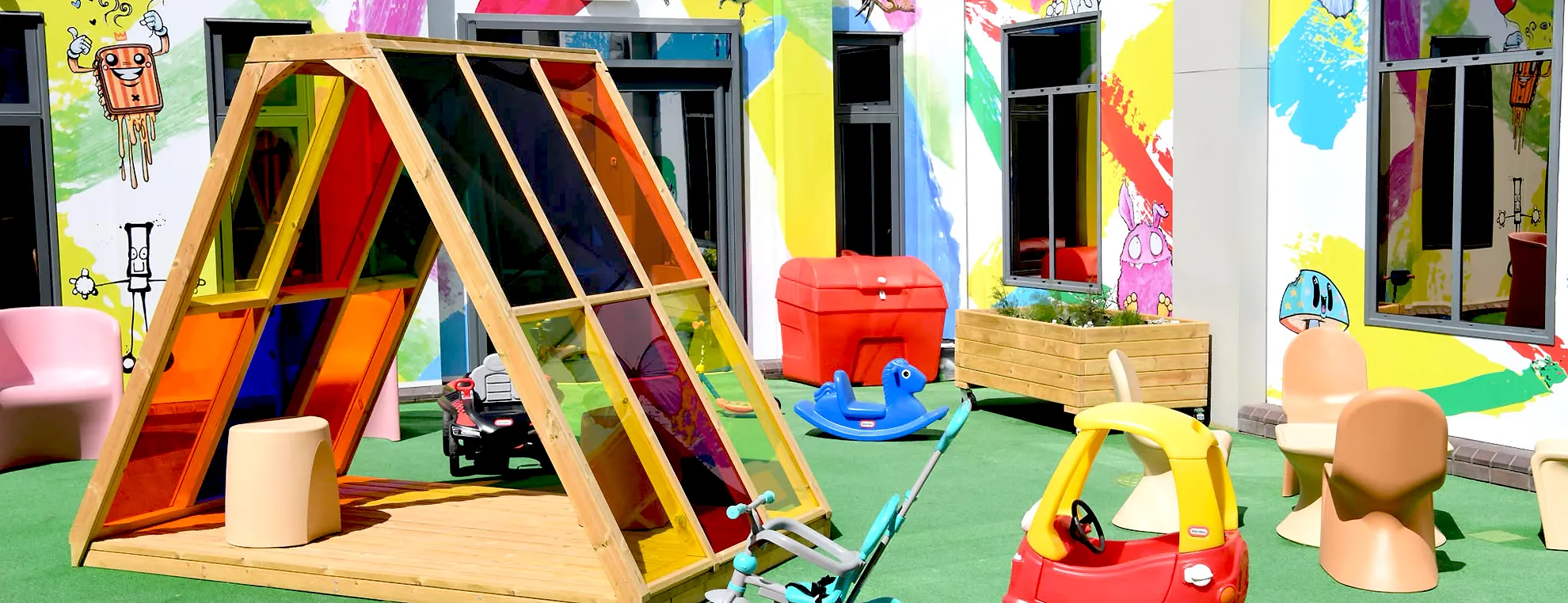
How more than 750 artists came together to create something that will help families for years to come
Back in 2020, during lockdown, I contacted Nathan Jones about an art project he had started with his son Noah — now better known to many by his alter ego, Background Bob.
Nathan was looking for ways to keep Noah entertained, and together they began painting colourful abstract backgrounds on scraps of cardboard. The paintings were then sent to artist friends who had agreed to collaborate with Noah by adding their own artistic flair.
At the time, there was no grand plan beyond a creative father-and-son activity during a difficult period — but sometimes the smallest ideas quietly take on a life of their own.
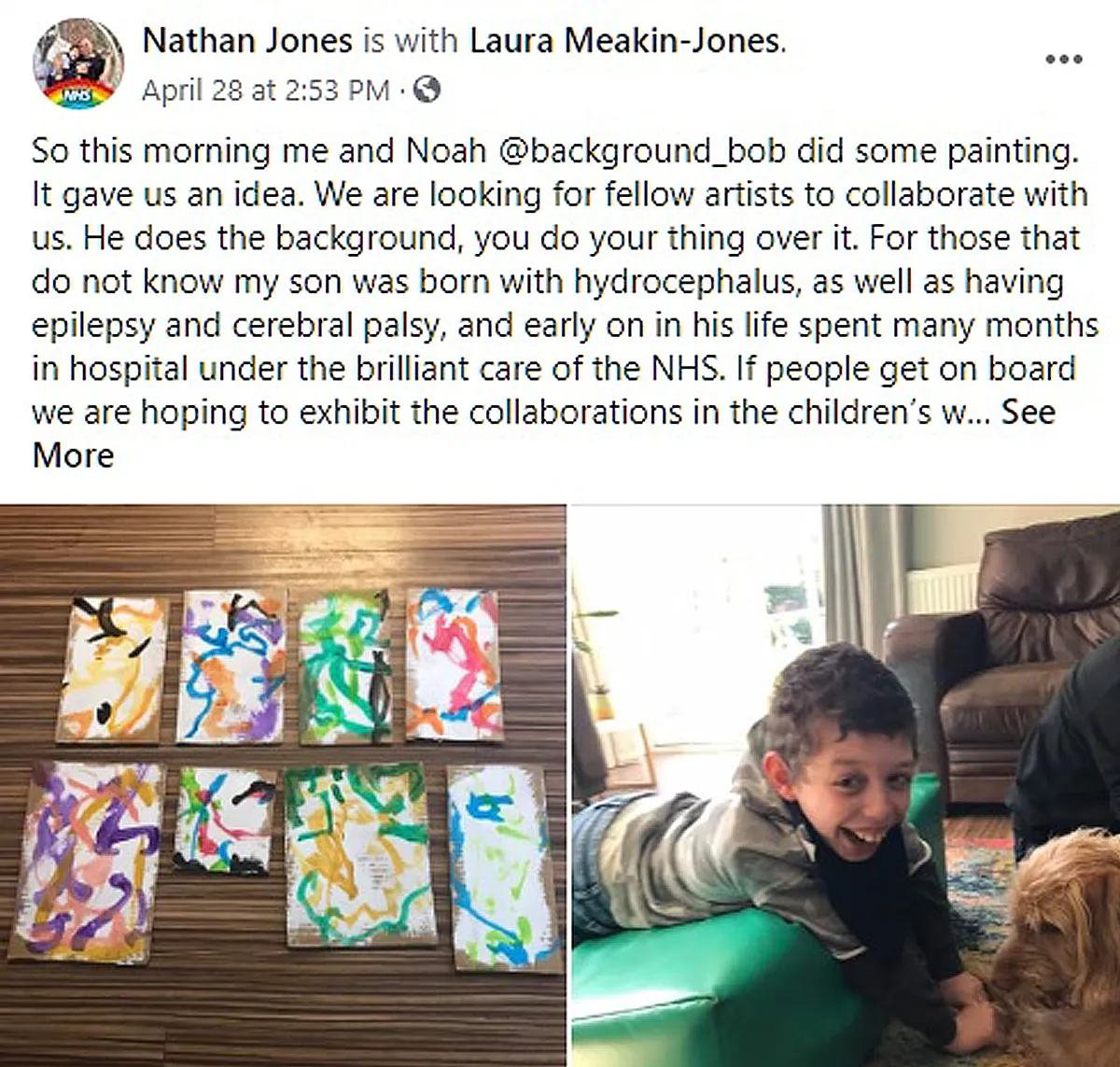
The original post that introduced Background Bob to the world — inviting artists to collaborate with Noah during lockdown.
As finished collaborations began appearing online, more artists got involved. Then more again. In the end, over 750 artists from around the world would volunteer their time, materials and creativity to become part of something that simply felt worth saying yes to.
Artists continued to say yes
Like so many industries, the art world had been turned upside down by lockdown. Galleries had closed, exhibitions disappeared overnight and many artists suddenly found themselves questioning what the future looked like. For some, it brought financial worries. For others, the uncertainty and loss of creative outlets had begun taking its toll mentally.
Yet despite all of that, artists continued to say yes, because Background Bob offered something positive during a difficult period — a creative and meaningful outlet at a time when opportunities felt increasingly limited.
And what made the project feel even more special was the complete absence of hierarchy.
Artists of all levels became involved. Established names like Shepard Fairey and Grayson Perry contributed alongside street artists, emerging artists and even musicians like Ed Sheeran. Somehow, it became a level playing field where lesser-known artists found themselves exhibiting alongside internationally recognised names, all contributing equally to the same cause.
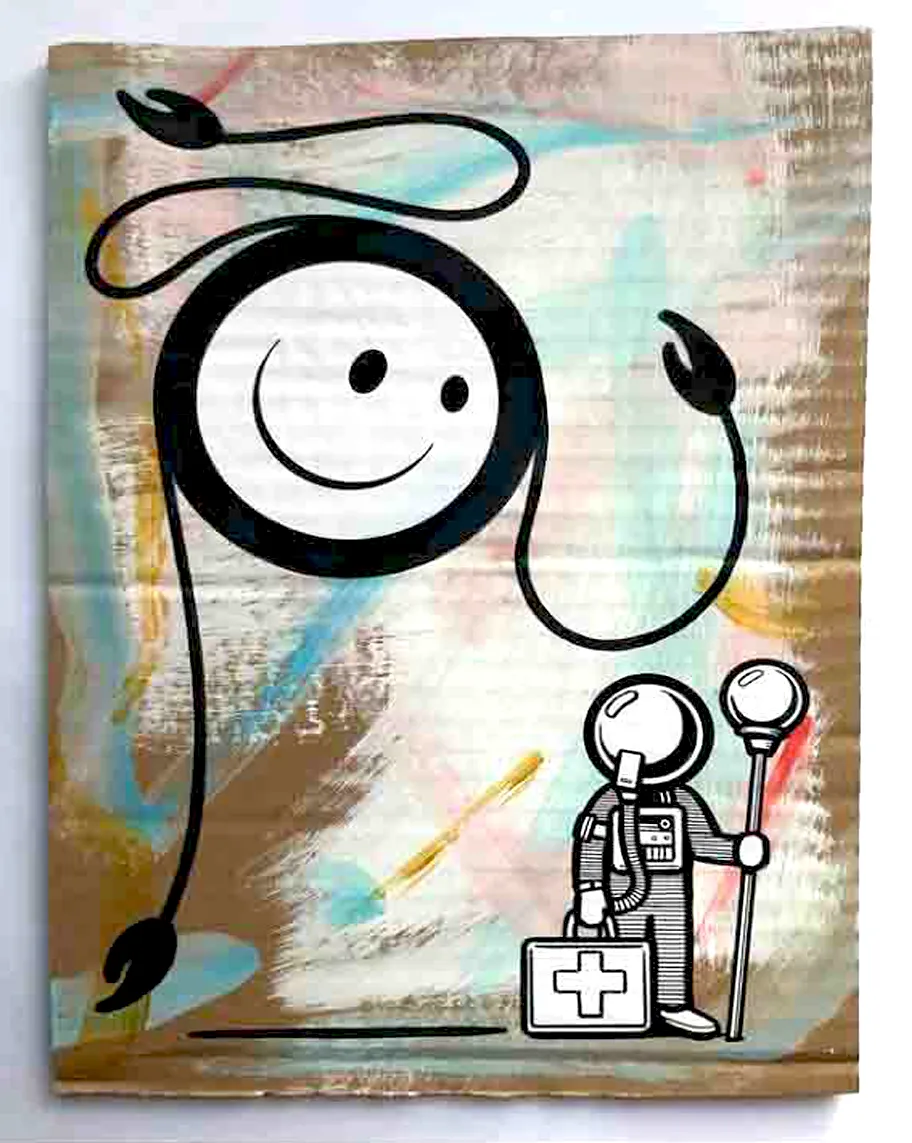
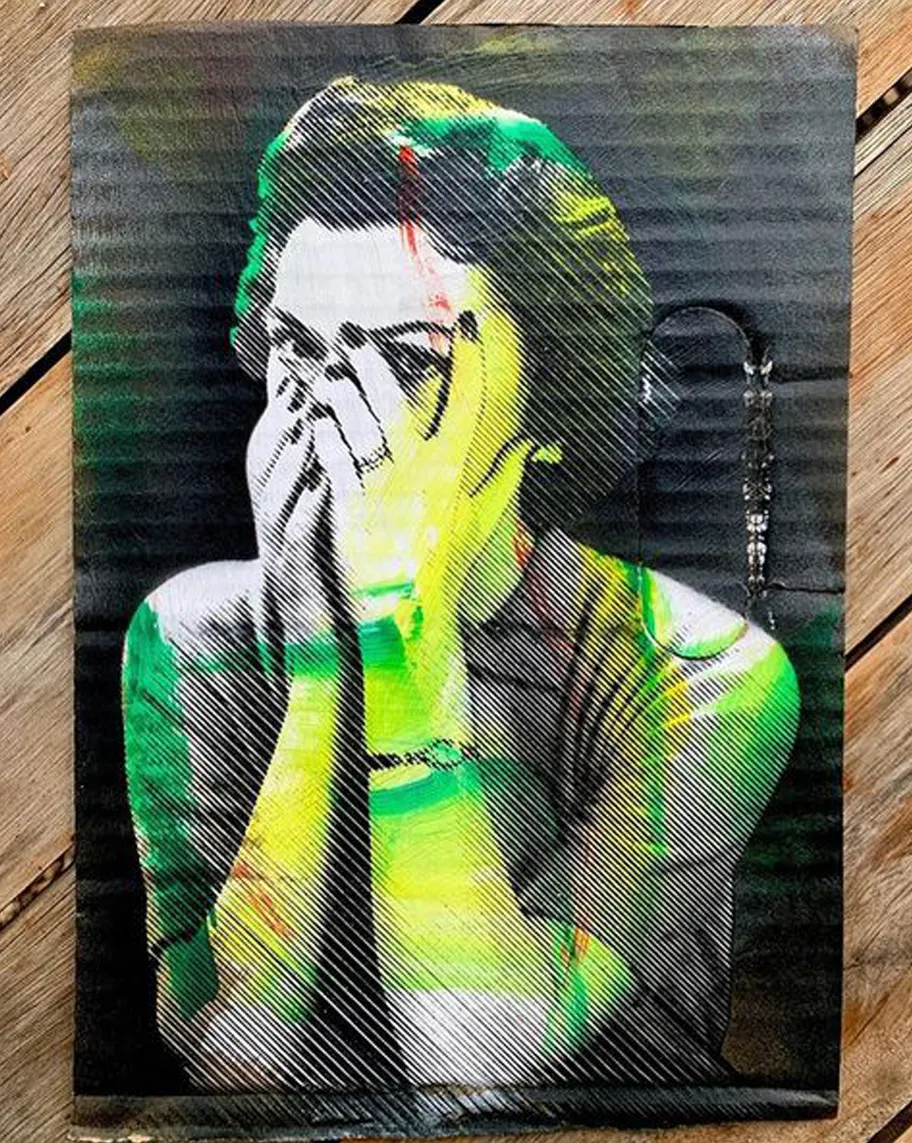
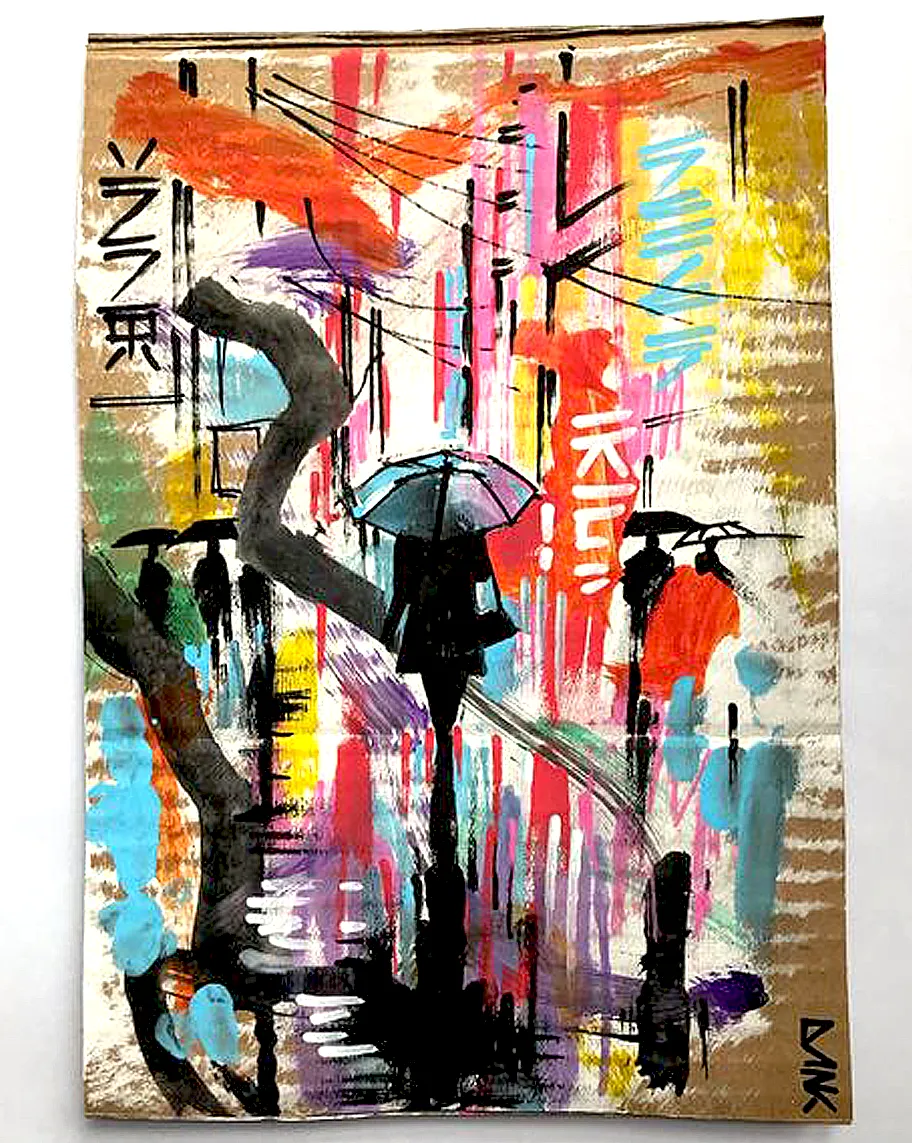
From internationally recognised names to lesser-known creatives, Background Bob became a
level playing field where artists of all styles came together to collaborate with Noah.
Across three Background Bob projects including books , exhibitions and auctions an astonishing £250,000 was raised for Colchester Hospital.
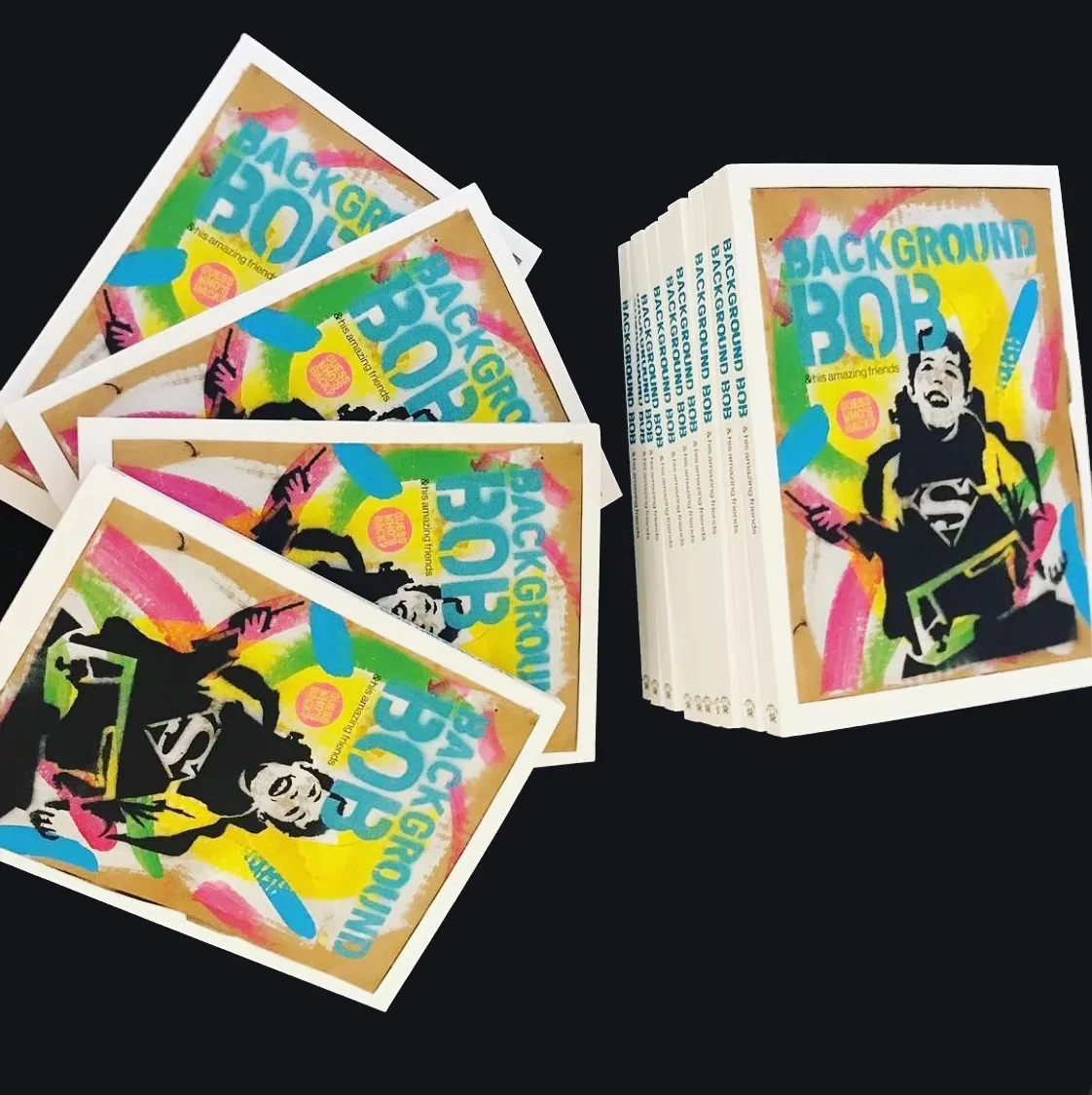
Three Background Bob books helped document the extraordinary community that formed around Noah —
preserving hundreds of collaborations created by artists from around the world.
For the Jones-Meakin family, that hospital had long been a huge part of life. Noah had Hydrocephalus, Epilepsy and Cerebral Palsy, meaning years spent in and out of hospital receiving treatment… but the story didn’t stop there.
Witnessing the result of something special
Last Friday, standing outside Colchester Hospital waiting to be shown a brand-new sensory garden and room, it suddenly hit me just how far the Background Bob story had travelled.
What had begun as a lockdown art project had become something tangible — something that would now quietly help children and families during some of the most difficult moments of their lives.
As we gathered near the hospital entrance, there was a quiet sense that the day carried more weight than a typical unveiling. Artists who had contributed over the years stood alongside hospital staff, designers, local media and people who had supported the project from the beginning. Some knew each other well, others only through social media and the shared experience of Background Bob, but everyone understood they were about to witness the result of something special.
A welcoming and uplifting space
Walking into the space. the first thing that struck me was how uplifting it felt.
The sunshine somehow arrived at exactly the right moment, pouring into the enclosed sensory garden and bringing the colours to life. Hospitals, especially children’s wards, can understandably feel clinical and intimidating places, but this immediately felt different. Warm, welcoming and thoughtfully designed.
The walls, created by Tony Stiles — who also designed all three Background Bob books — featured the broad colourful brush strokes of Background Bob layered with artwork from artists who had collaborated with Noah over the years. Everywhere you looked there were thoughtful details that quietly told the story of how many people had helped shape this moment.
One detail that particularly stayed with me was a butterfly created by Noah’s grandma, carefully worked into the design. It felt like such a thoughtful inclusion and somehow captured what Background Bob had always been about: family, community, creativity and love.
Watching Nathan and Laura walk into the completed garden and room was incredibly moving. The emotion on their faces was immediate and completely understandable. What stood in front of them wasn’t simply a new hospital facility. It was the culmination of six years of creativity, generosity and a community of people rallying around something that mattered.
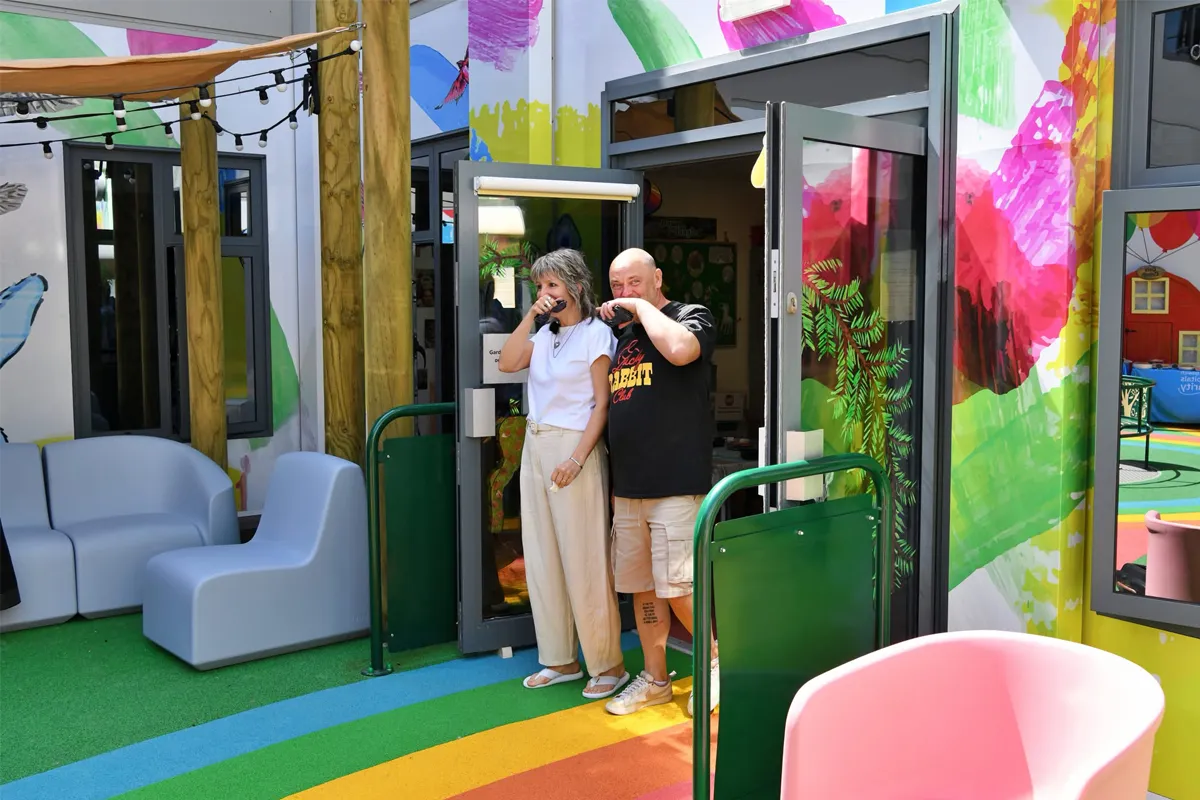
Nathan and Laura seeing the completed sensory garden for the first time — a moment six years in the making
Yet throughout the day, we all knew someone important at the heart of the Background Bob story was missing.
Noah — the teenager whose paintings had brought so many people together — sadly passed away in November 2023.
It felt strange not seeing his huge smile there in person. Over the years, so much of the Background Bob story had been wrapped up in Noah’s humour, excitement and infectious personality. Yet despite his absence, he somehow still felt deeply present — in the artwork, in the colours surrounding the space and in the conversations taking place between people who had travelled from different parts of the country to be there.
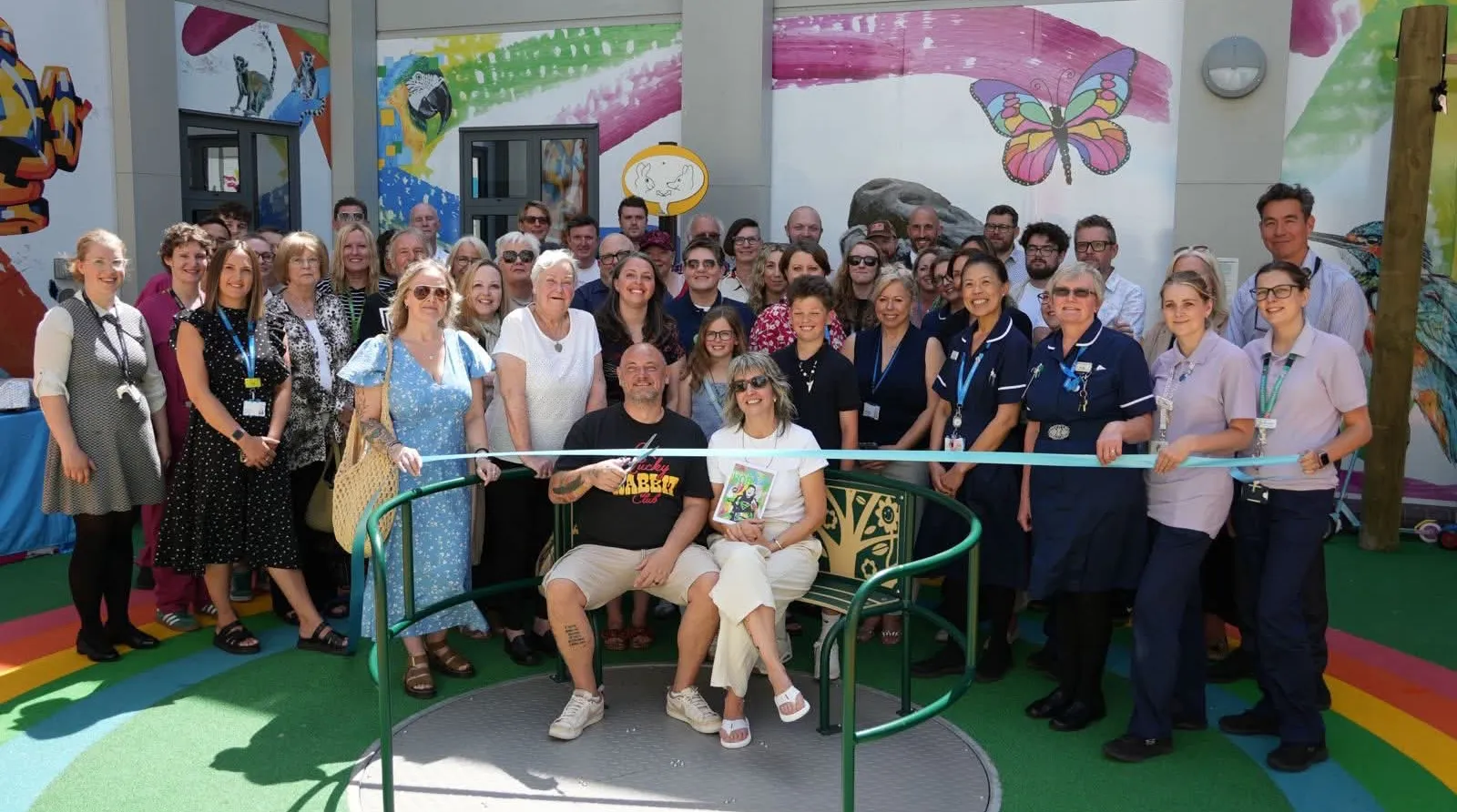
A moment of celebration shared by the many people who helped bring Noah’s legacy to life —
with his grandma’s butterfly quietly watching over the day in the background.
Speeches from members of the hospital team, spoke about the difference the new facilities will make to families needing somewhere calm to gather themselves during difficult moments.
Standing beside Noah’s mum Laura, Nathan’s speech was understandably difficult for him to get through. The emotion of the day, combined with the reality that Noah wasn’t physically there to see what he had helped create, felt enormous.
In the end, words almost felt unnecessary. Unable to say much more, Nathan simply smiled, shouted “Background Bob” and stepped away.
It somehow felt completely fitting.
The perfect legacy
Later reflecting on the day, Nathan described the new space as Noah’s “legacy going forward” — something born from what had started as “a simple idea six years ago to keep my son Noah occupied and have a little fun.”
For Nathan and Laura, the importance of the new facilities stretches far beyond what they physically look like.
“These much-needed facilities will help ease the emotional stress and worry whilst having a child in hospital,” Nathan explained. “They allow a quiet space to gather thoughts, take a break, get some fresh air and just get off the ward for a while.”
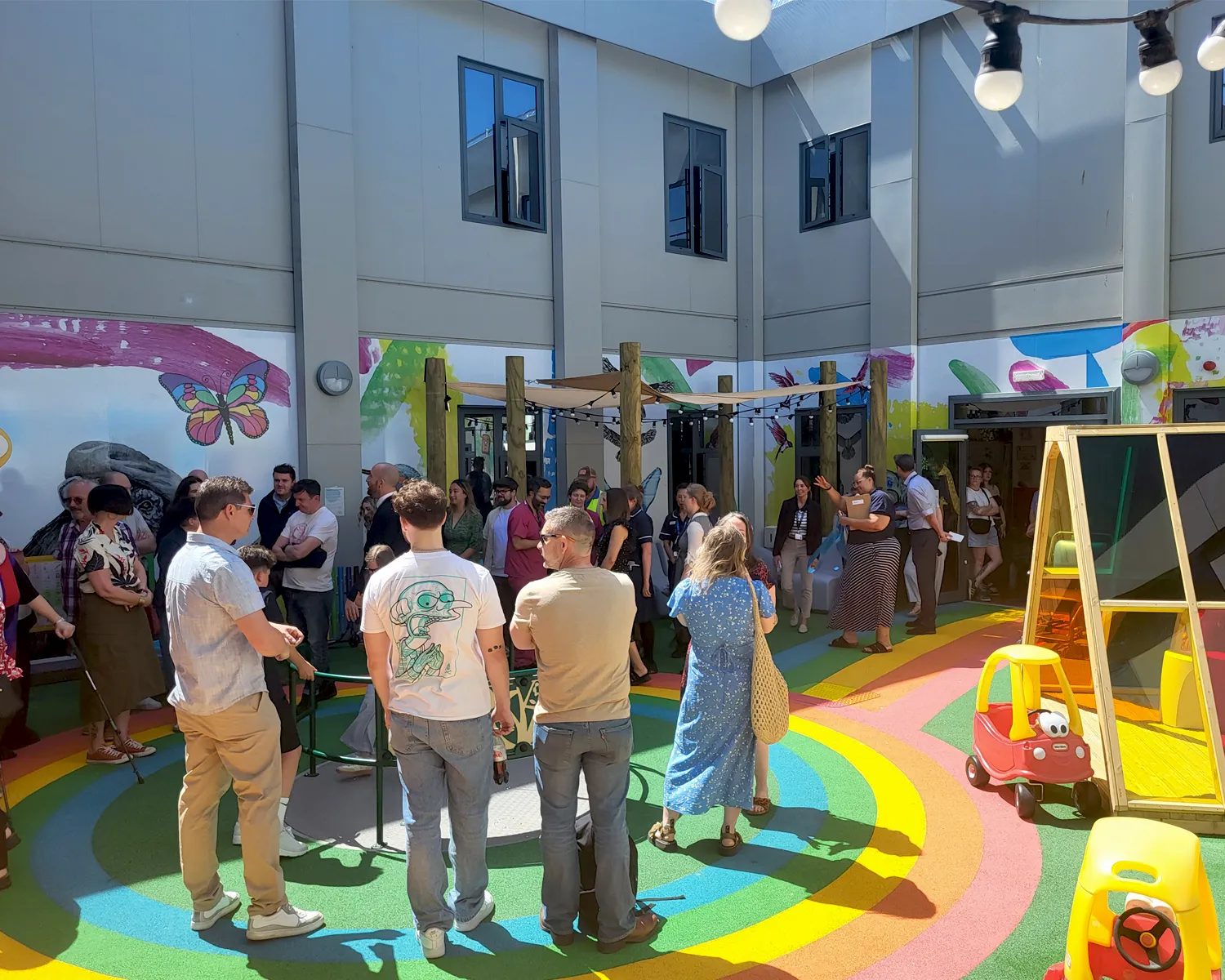
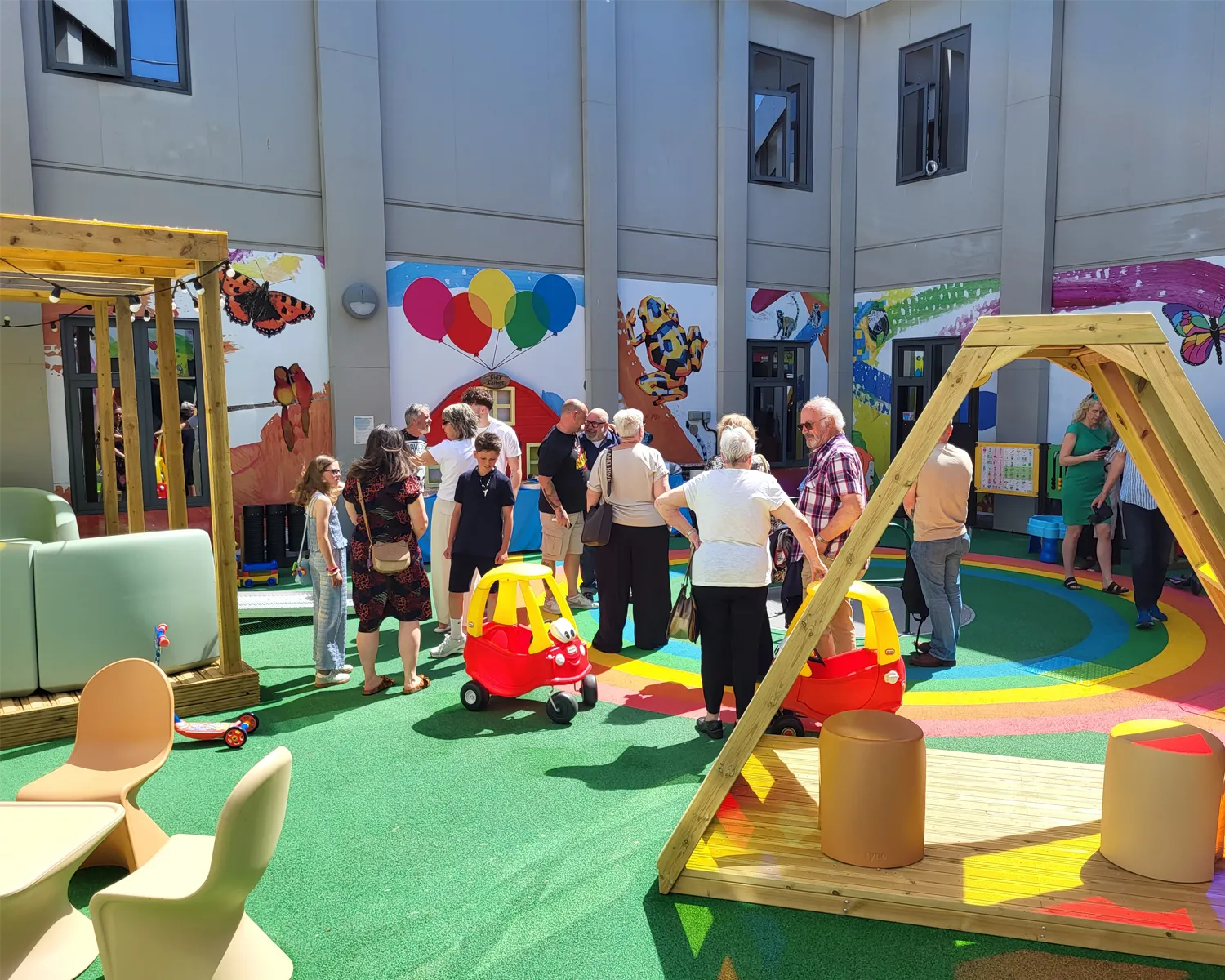
More than just a garden, the space now offers children and families somewhere calm to gather
themselves, take a break and momentarily step away from the realities of hospital life.
He also spoke movingly about what the Background Bob community has come to mean to them since Noah’s passing.
“The community that was built from this project and the friendships that were made have helped us through some very sad times since his passing,” he said. “But our boy will live on in all of you.”
It’s difficult not to feel the weight of those words.
To have played even a very small role in the story felt incredibly special. I had the privilege of participating in Background Bob projects one and three, while also writing the introductions for all three books. Yet perhaps the strangest part of the day was reflecting on how unlikely all of this felt.
From small acorns…
Six years ago, Nathan and Laura were strangers to me. Last week, I found myself standing beside people I’m proud to call genuine friends.
The train journey home gave me time to process the day a little more and to be honest, I think I felt a bit of everything — pride to have witnessed the finished space first-hand, gratitude to have somehow played a small role and emotional exhaustion from the sheer weight of what the day represented.
But perhaps more than anything, I felt perspective.
Choosing a creative path rarely feels straightforward. It can feel uncertain, frustrating and full of moments where you question whether any of it is really leading anywhere at all. Yet every now and again, something happens that reminds you why you keep going.
Back in 2020, I couldn’t have imagined that messaging Nathan about a small lockdown art project involving cardboard offcuts would one day lead to standing in a sensory space inside Colchester Hospital witnessing something so meaningful.
Nor could I have imagined that the same project would bring together more than 750 artists, raise £250,000 and create something that will now quietly help families for years to come.
Noah’s story is heartbreaking, but his legacy is extraordinary.
If there’s one thing the day reminded me of, it’s that sometimes the things that change lives begin quietly. A small idea. A simple act of kindness. A group of people choosing to show up for one another.
And every now and again, those small things grow into something far bigger than anyone could have imagined.
Related Articles
It’s Time to ‘Shine’ – A Group Exhibition, Cambridge
A reflection on showing work alongside others and the quieter impact exhibitions can have.
From the Studio to Discovery Art Fair Cologne
What happens when artwork leaves the studio and enters the unpredictable world beyond the artist’s control.
Solo Exhibition at BOXPARK, Shoreditch, London
A look at taking art work into a public space and what remains after the event ends.
Selling a Painting Is Just the Beginning
Why an artwork’s story often becomes more interesting after it leaves the studio.
Priority Studio Access
I share new paintings, limited edition prints, exhibition news, articles and upcoming projects with subscribers first.
Get updates direct from my studio →
About Paul Kneen
I’m a UK contemporary abstract portrait artist exploring inner noise, quiet pressure and the emotional complexity of modern life through fragmented portraiture and bold colour. I create original paintings and limited edition prints, while also writing about art, exhibitions and the realities of being an artist today. I also share work in progress and life in the studio on Instagram @paulkneenart.



 No spam. Unsubscribe anytime.
