Hyper-realism has always blown me away.
The technical skill is astounding. The hours spent creating these masterpieces, the years of practice, the patience, discipline and dedication required to capture every tiny detail perfectly are genuinely admirable. To create a painting that feels almost indistinguishable from a photograph takes an extraordinary level of commitment.
And yet, as I’ve continued with my own art practice, I’ve increasingly found myself wrestling with a thought that might sound slightly controversial:
Why not just take a photograph?
Now, I know that sounds a bit rude — and I really don’t mean it to be.
Because, although I genuinely admire the technical skill involved, a painting, in my opinion, shouldn’t simply be about replication. It should contains choices, atmosphere, interpretation and countless human decisions that photography alone cannot recreate.
But the longer I’ve sat with this thought, the more I’ve realised that what I’m looking for in a painting has gradually shifted.
I’ve found myself wondering whether abstract portraits can sometimes feel more real than realism — not visually, but emotionally.
Rather than asking whether a painting looks exactly like someone, I’m more interested in whether it feels emotionally true.
Does it capture tension, uncertainty, resilience or contradiction? Does it reveal something beneath the surface that realism can sometimes find harder to express?
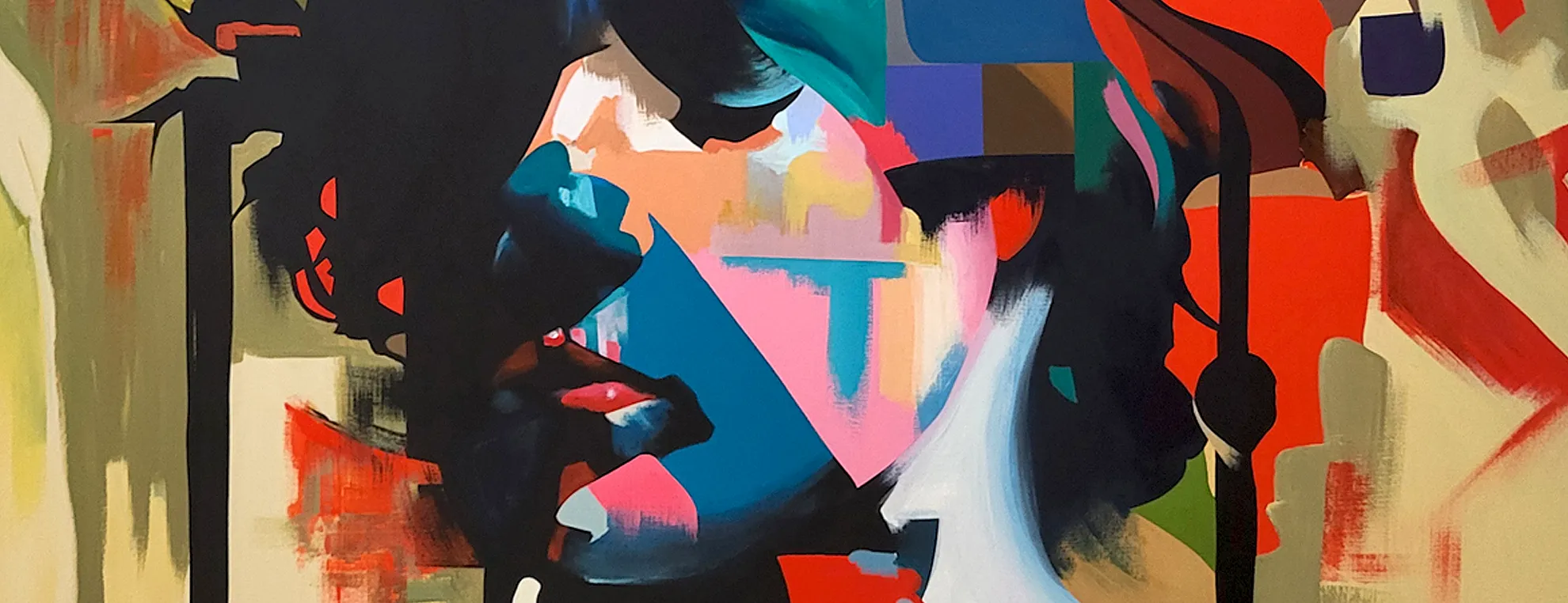
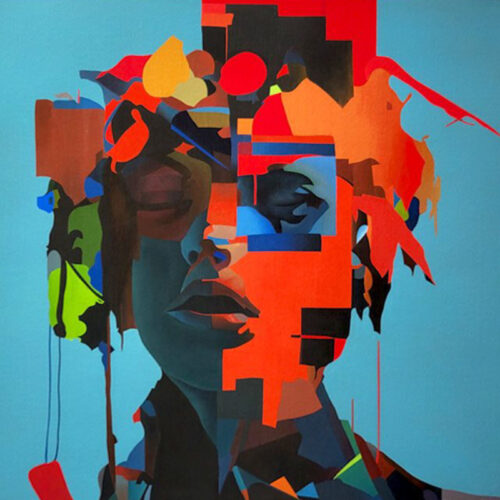
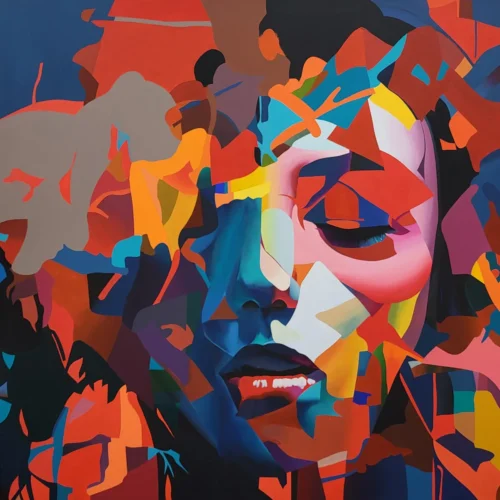
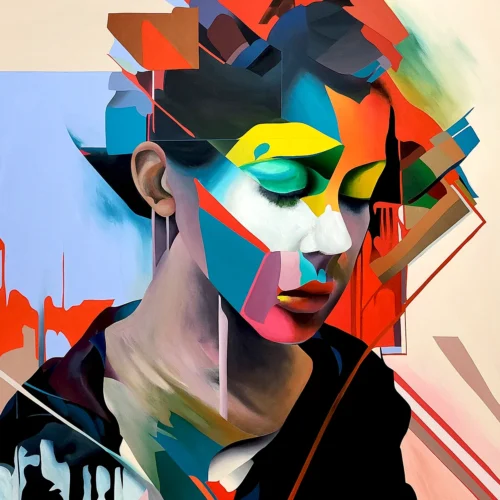
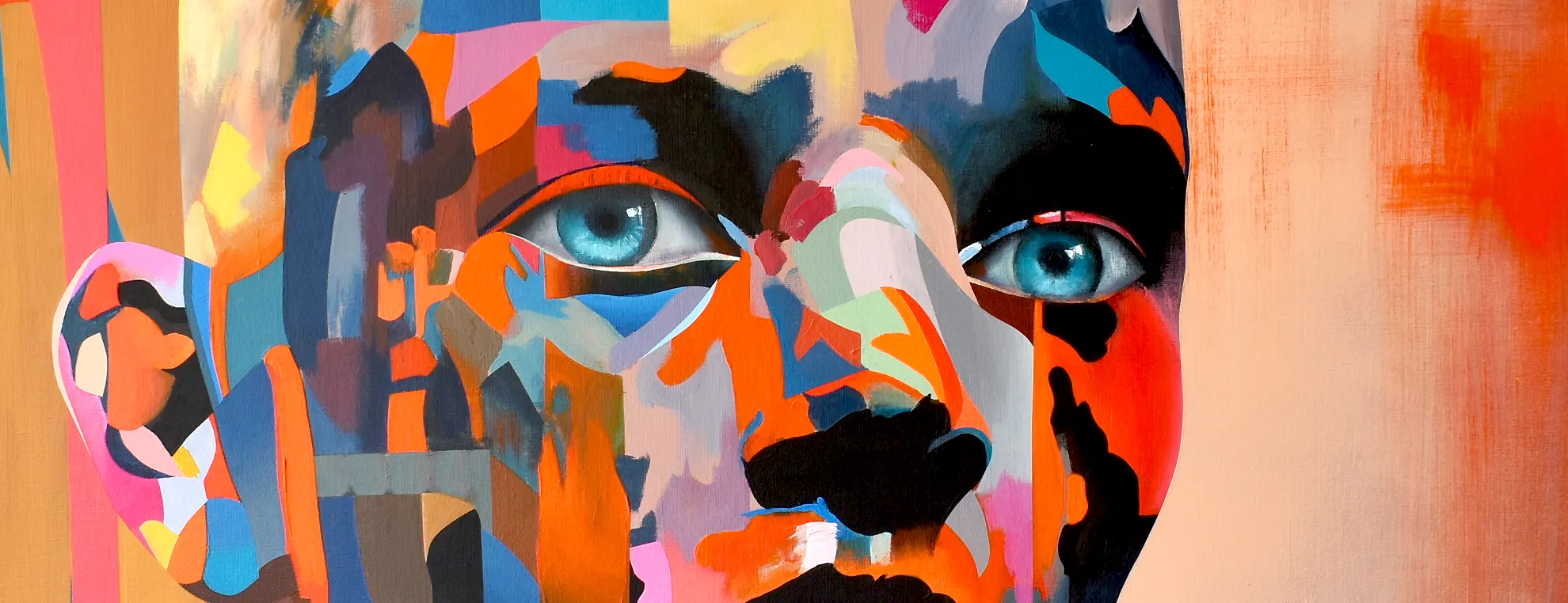
Perhaps without fully realising it, this is what my own abstract portraits have gradually become.
They are still about creating people, but perhaps not in the traditional sense. I’m less interested in whether someone looks convincingly real and more interested in whether a viewer feels something in response.
When we look at a realistic portrait, part of the admiration often comes from recognition — whether that is recognising a real person, appreciating the accuracy of likeness, or simply believing in the reality of the face in front of us.
But with my own work, I’m more interested in a different kind of recognition.
The quieter moment where someone pauses and thinks:
“I know that feeling.”
For me, that feels like a deeper connection — one based less on visual recognition and more on emotional recognition.
The paintings are not trying to recreate a specific individual, but perhaps something more universal — the quiet pressures, contradictions, doubts, resilience and emotions that all of us carry at moments in our lives.
When People Asked Who My Paintings Were Based On
During my solo exhibition at Peterborough Museum & Art Gallery, one question came up repeatedly.
People would stand in front of the paintings and ask:
“Who are they based on?”
When I explained that the people in my paintings were entirely imagined — there was often a moment of surprise.
To be honest, I completely understood the question. It is perfectly natural to assume the people in a portrait are based on someone real.
But it did make me reflect on something.
Because the people in my paintings are imagined, I’m not tied to likeness in the same way. I’m not worrying about whether someone’s nose looks right or whether their family would recognise them. Instead, I find myself thinking more about emotion, tension, feeling and what the painting is communicating.
And interestingly, the emotional connection still seems to happen anyway.
People still bring their own experiences to the work. They still recognise something in the paintings — not necessarily the person, but perhaps the feeling, or mood that they feel themselves.
Likeness vs Feeling
Having painted real people in the past — particularly recognisable figures — I know firsthand that the focus shifts towards likeness.
If something feels slightly off, people notice immediately. A feature slightly out of place, an expression that does not quite land, proportions that feel unfamiliar — when someone already knows the face, accuracy becomes the most important aspect of the painting journey.
And there is absolutely nothing wrong with that… but because the people in my paintings are imagined, my focus naturally shifts elsewhere.
Rather than asking:
Does this look exactly right?
I find myself asking:
What does this painting feel like?
This is why my portraits become disrupted by geometry, fractured sections and blocks of colour. Not because I am trying to obscure the person, but because, in many ways, this is what being human can feel like.
We may appear whole on the outside, but internally we are made up of fragments — competing thoughts, emotions, pressures, hopes, fears and contradictions that do not always sit comfortably alongside one another.
Human beings have always carried emotion
Fear, uncertainty, hope, anxiety and resilience are hardly new. We have probably been wrestling with these things since we first appeared on this floating ball in space.
But I do sometimes wonder whether modern life, shaped so heavily by technology, has intensified these feelings.
Not because technology itself is the problem, but because we now live in a constant stream of information. We are permanently connected, endlessly consuming news, opinions and updates, often with very little time to process them.
We are confronted with frightening headlines, uncertainty and the feeling that the world is slightly unravelling. Yet at the same time, social media can make it feel as though everyone else has things figured out — happier, more successful, somehow coping better than we are.
Perhaps that constant tension quietly amplifies feelings many of us have always carried: uncertainty, pressure, inadequacy, overwhelm or self-doubt, and perhaps this is partly why fractured faces continue to appear in my work.
Not because people are broken, but because life can sometimes leave us feeling pulled in different directions at once. Whole, but conflicted. Holding things together while different thoughts and emotions quietly battle beneath the surface.
Perhaps these disruptions are my way of trying to paint that complexity.
What I Was Drawn To at the Royal Society of Portrait Painters Exhibition
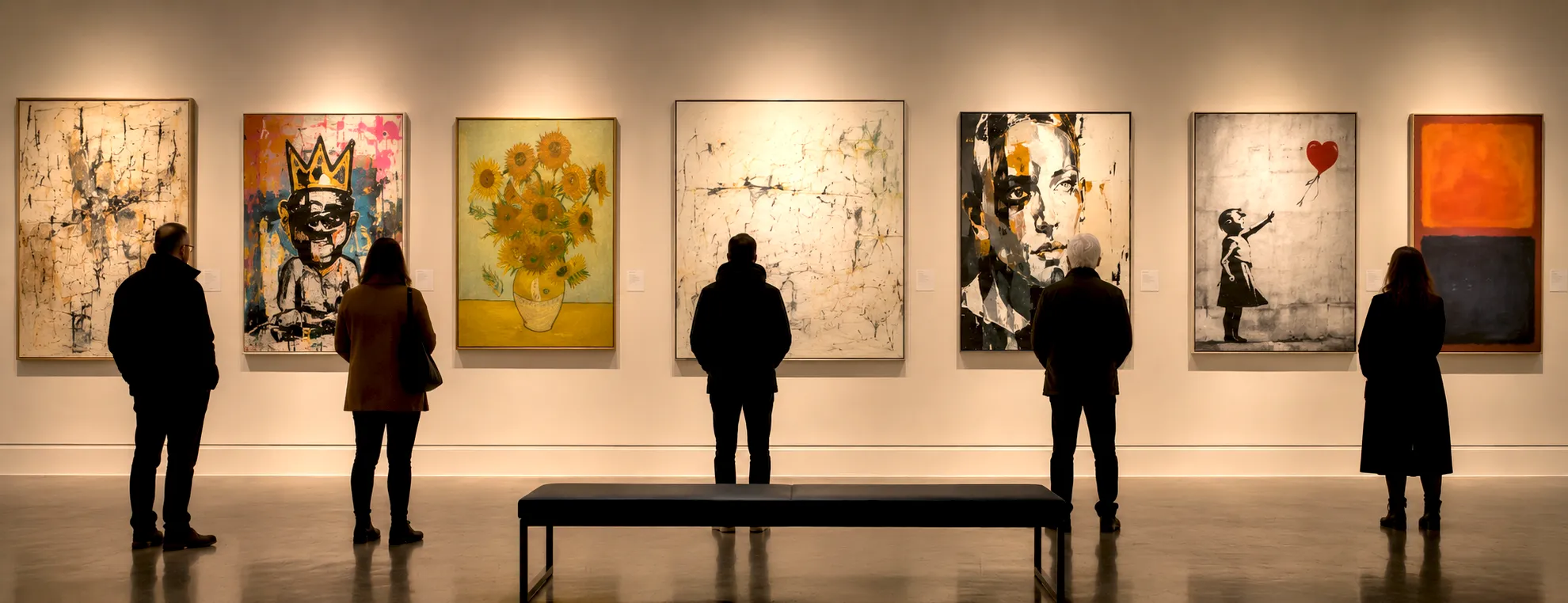
Interestingly, this question surfaced again recently while visiting the Royal Society of Portrait Painters Annual Exhibition 2026.
There were some astonishingly skilled realistic paintings on display — the kind of work that leaves you wondering how on earth someone can paint with that level of precision.
And yet, while I admired them enormously, I found myself increasingly drawn to the looser, more expressive portraits.
The paintings where brushstrokes remained visible. Where things were suggested rather than fully explained. Where emotion seemed to sit slightly closer to the surface.
For me, those works felt like they had more depth. They left room for interpretation and invited me to bring something of myself to the painting. When a work tells you everything, there can sometimes be less room to wonder, less room to feel and less opportunity for the viewer to meet the work halfway.
So, Can Abstract Portraits Feel More Real Than Realism?
I’m not suggesting abstract portraiture is somehow better than realism, nor am I suggesting realistic paintings lack emotion.
But I do find myself wondering whether abstraction sometimes has a unique ability to capture something slightly different.
Realism portraits can capture what someone looks like with incredible precision, but perhaps abstract portraits can get closer to what it feels like to be human?
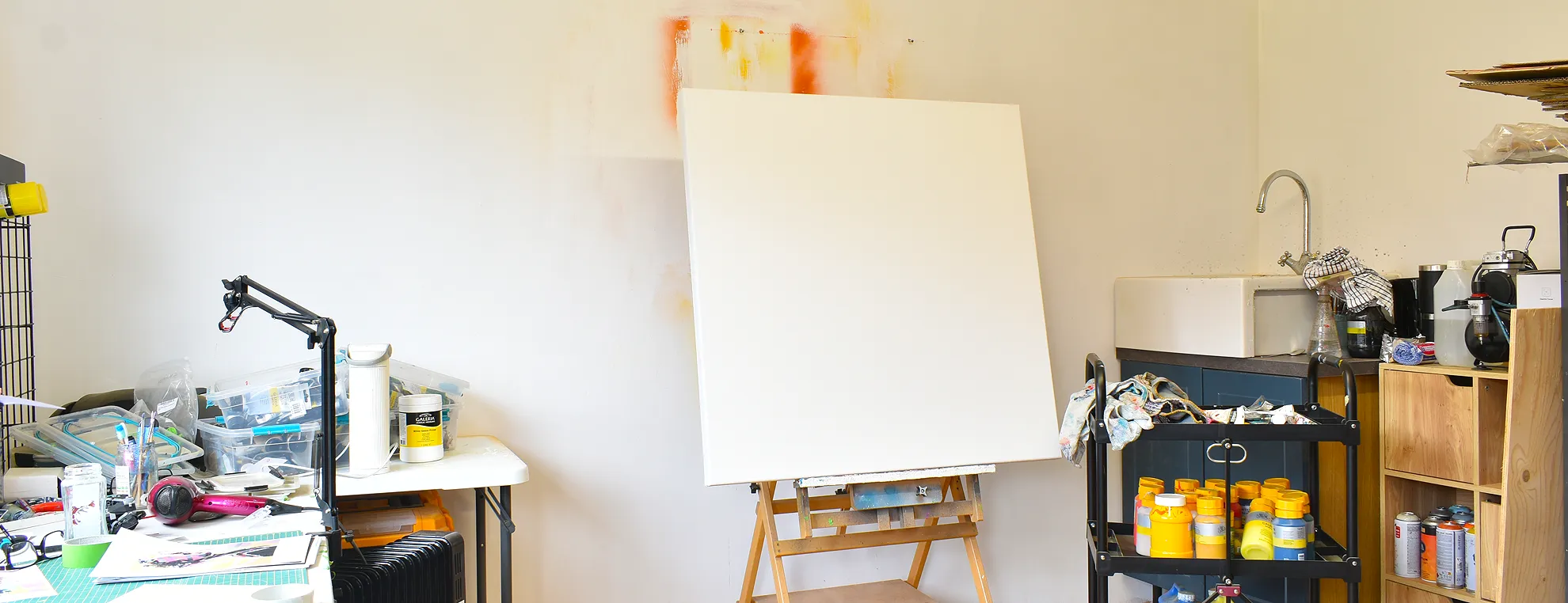
Maybe that sounds strange. I’m not entirely sure I have the answer… but as I stand in the studio, building up fractured faces and disrupted forms, I increasingly find myself thinking that perhaps we are all made up of competing thoughts, emotions, pressures, doubts, hopes and contradictions. We may appear whole, but internally things are often far messier.
Perhaps that is why I’m drawn to abstract portraiture.
Not because I want to move away from humanity, but because I’m trying to move closer to it — just in a different way.
Related Articles
Why I Paint Abstract Portraits: Exploring Emotion Through Structure
Discover why the human face remains at the centre of my work and how abstraction helps explore complex human experiences.
Why the Human Face Keeps Appearing in My Paintings
Why the face remains a powerful way to explore emotion, pressure and what it feels like to be human.
Brain Fog: Navigating the Mental Maze Through Abstract Portraiture
A reflection on overwhelm, uncertainty and trying to express what is difficult to explain.
Not Every Storm Is Loud: A New Abstract Portrait
My thoughts on quiet struggle, resilience and the battles that are not always visible.
About Paul Kneen
I’m a UK contemporary abstract portrait artist exploring inner noise, quiet pressure and the emotional complexity of modern life through fragmented portraiture and bold colour. I create original paintings and limited edition prints, while also writing about art, exhibitions and the realities of being an artist today.