What the Johnny Depp art competition made me question about talent, visibility and opportunity
Over the last few weeks, I have noticed more and more artists asking for votes in a celebrity-backed art competition associated with Johnny Depp. At first glance, it feels exciting. A substantial cash prize, exposure, recognition, and the possibility of having your work seen by someone globally recognisable. For artists trying to build a career in an increasingly crowded world, opportunities like this naturally catch attention.
Yet the more I looked into how the competition worked, the more uneasy I felt.
Not because I believe it is a scam — I do not. From what I can see, there is a genuine charity element attached, and for the eventual winner the opportunity could be genuinely meaningful. My discomfort sits somewhere else entirely. It has less to do with whether the competition is legitimate and more to do with what, exactly, it appears to reward.
And that made me wonder:
What are art competitions actually measuring today?
The appeal of celebrity
It would be naïve to pretend Johnny Depp’s involvement is not part of the attraction. Attach a celebrity of that scale to an art competition and suddenly it feels bigger, more prestigious and more exciting. Whether consciously or not, many artists will inevitably think:
What if this is the opportunity?
What if Johnny Depp actually sees my work?
What if this leads somewhere?
For people trying to make a living creatively, those thoughts are understandable. Creative careers are uncertain, recognition often feels elusive, and opportunities can seem frustratingly scarce. When something arrives carrying the promise of visibility and possibility, it becomes difficult not to dream a little.
I completely understand why artists are entering. I suspect most artists do.
The part that made me uncomfortable
The unease for me came from the voting system.
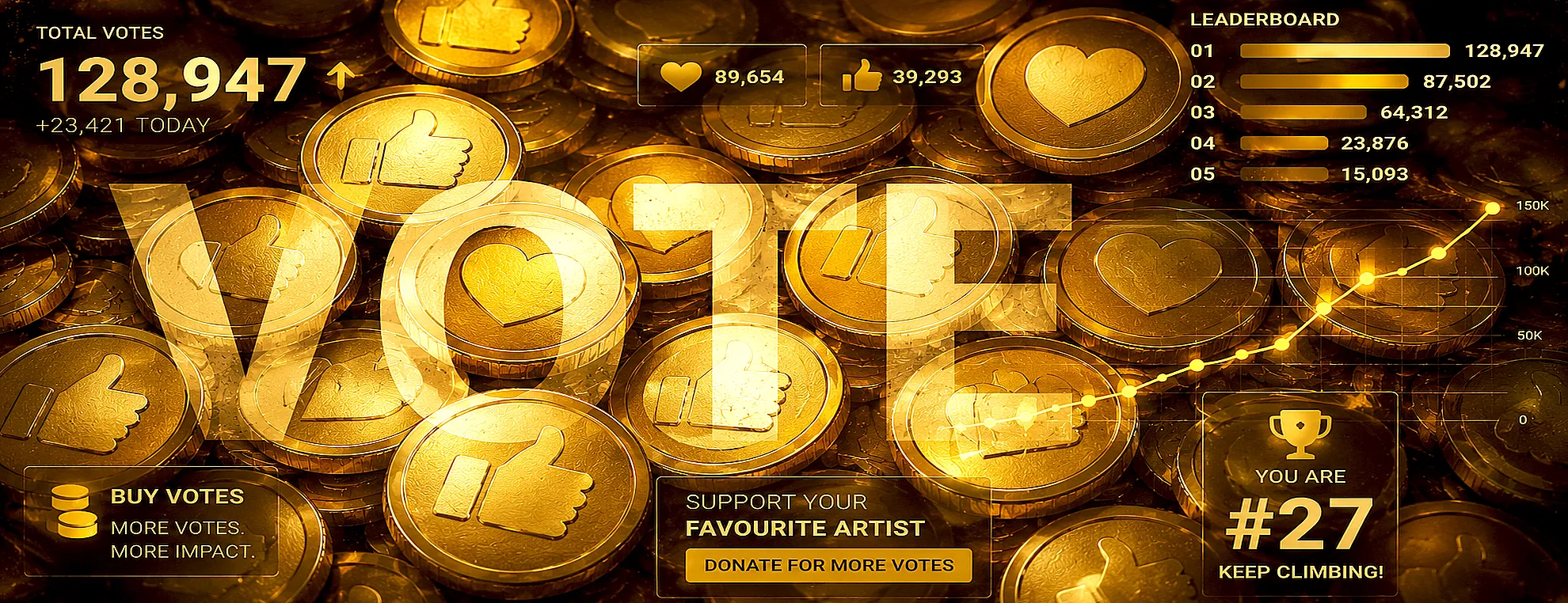
The competition includes free public voting, but also allows supporters to make donations for additional votes, with those donations linked to charity. That context matters and deserves acknowledging because it changes the conversation slightly. This is not simply a case of artists paying for themselves to win, nor do I think it is fair to dismiss the charitable element attached to the competition.
Even with that nuance, however, I found myself circling back to something that felt difficult to ignore: public voting inevitably changes the dynamics of what is being rewarded.
The question is no longer simply whether the work resonates, but also who has the reach, network or momentum to keep gathering support. And because additional votes can be gained through donations, another layer quietly enters the equation: not only who has the largest audience, but potentially whose audience is most willing — or financially able — to contribute.
That may sound uncomfortable to say out loud, but I think it is an important distinction.
After all, not everyone starts from the same place.
An artist with thousands of followers, an engaged community and people willing to vote every day may have a very different experience to someone quietly creating exceptional work in relative obscurity. Equally, if supporters are able to financially contribute toward additional votes, the outcome may begin reflecting not only artistic response, but social reach and economic support too.
And this is where my discomfort begins.
Not because I think the organisers are necessarily acting in bad faith, but because systems like this inevitably risk rewarding advantages that sit beyond the work itself. The uncomfortable question becomes whether we are genuinely discovering hidden artistic talent or amplifying those already best positioned to mobilise attention and support.
Not all competitions ask the same question
This has been on my mind even more recently because I only recently entered the CASS Art Prize myself.
That experience made me realise something important: not all art competitions are asking the same question.
Some competitions appear to ask:
Is this exceptional work?
Others seem closer to asking:
Can this artist build momentum around themselves?
Neither approach is automatically right or wrong, but they inevitably prioritise different qualities.
To be fair, one could argue that audience-building is now part of being an artist. We no longer live in a world where artists disappear into studios for years and mysteriously emerge to universal acclaim. Social media, communication and visibility all matter. In fact, I have written before about the strange relationship artists now have with platforms that ask us to be creators, marketers and content producers all at once.
Perhaps public-vote competitions simply reflect the reality of modern creative life.
Even so, I still think there is an important distinction between compelling work and strong reach. Those things can overlap, of course, but they are not necessarily the same. An artist can have extraordinary work and very little visibility, just as someone with a large audience — or financially supportive network — may naturally have an advantage in a public voting system.
It reminded me of something else
The whole thing leaves me with an uncomfortable feeling because it sits closer to conversations I have written about before around so-called “pay-to-play” opportunities in the art world than I would like it to.
Vanity galleries, expensive open calls, and opportunities where artists are encouraged to spend increasing amounts of money for the promise of exposure all tend to raise similar questions. At their best, they may offer genuine visibility. At their worst, they can feel as though they are monetising artists’ ambitions and vulnerability.
To be clear, I am not saying this competition is the same thing. I do not think it is that simple.
But there is still a familiar dynamic at play: artists being encouraged to rally support, attention and, indirectly, money in pursuit of visibility and possibility.
And that is where I start to feel uneasy.
Creative careers are hard enough already. Artists are often navigating rejection, uncertainty and the persistent feeling that they may be one opportunity away from finally being seen. Whether intentional or not, systems that tap into that vulnerability deserve scrutiny.
Because when you desperately want your work to matter, to be recognised, or simply to reach more people, it becomes much easier to overlook uncomfortable questions about what is actually being rewarded.
Why artists still enter anyway
At the same time, I think it is important to approach conversations like this with empathy.
Making a living from creativity is difficult. There is rejection, uncertainty, long stretches of silence and moments where it feels as though nobody is paying attention. You spend countless hours making work, often with very little certainty about where it might lead.
That is precisely why opportunities like this carry such emotional weight. When something appears offering visibility, validation or the possibility of a breakthrough — especially with celebrity backing attached — it becomes incredibly difficult not to wonder where it might lead.
And honestly, I get it.
Hope matters. In many ways, it is what keeps artists moving forward despite setbacks. But hope can also make artists vulnerable. When you are desperate to be seen, it becomes much easier to embrace systems that may not necessarily reward what they first appear to reward.
That is why I have absolutely no judgement toward anyone entering competitions like this or asking people to vote for them. I understand it completely.
Are we rewarding talent or reach?
The bigger question for me is not whether this competition is good or bad. That feels too simplistic.
Instead, it has made me think more broadly about how artistic value is measured in an age increasingly shaped by algorithms, followers and visibility.
If competitions reward audience size, what happens to artists quietly making extraordinary work without large online communities? Does exceptional work still rise naturally to the surface, or are we slowly building systems where visibility becomes the thing that visibility rewards? And if financial contribution can influence momentum too, how do we ensure talented artists without wealthy or extensive support networks still have a genuine chance to be seen?
Of course, there is a counterargument. Audience-building matters, communication matters, and part of being an artist today is learning how to connect with people. In that sense, perhaps competitions based around public voting are simply recognising a skillset that has become increasingly important.
Even so, I still find myself wondering whether there should remain spaces where the work itself gets to speak the loudest. Spaces where hidden talent can still surprise people and where someone without the largest audience — or deepest-pocketed supporters — has a genuine chance to be discovered.
Questions rather than answers
I do not pretend to know the perfect answer here, nor am I criticising the artists entering, the organisers, or even Johnny Depp himself. I have no idea how involved he is in the mechanics of the competition beyond lending his name and support.
What I do think, however, is that competitions like this raise important questions — not just about fairness, but about merit, visibility, access and opportunity.
Perhaps the bigger challenge for the art world is finding ways to reward both meaningful connection and genuine artistic quality, without one completely overshadowing the other.
Because hidden talent still matters. At least, I think it should.
And while I understand why competitions like this exist, I cannot shake the feeling that systems which quietly favour the loudest voices, the largest audiences, or the deepest pockets deserve to be questioned — especially in an industry already filled with talented people desperately trying to be seen.
That, for me, is where the discomfort sits.
Related Articles
What the Jake Wood AI Art Controversy Really Says About Art Today
A closer look at AI, authorship and what we believe gives artwork its value.
Why I Didn’t Write a Tribute to David Hockney
My thoughts on attention, legacy and the difference between being noticed and being remembered.
Scratching the Surface of Pricing Art
A reflection on value, perception and why pricing artwork is never just about size or materials.
Are Pay-to-Enter Art Competitions Worth It? A Shift in Perspective
A balanced look at paid competitions, opportunity, rejection and what artists are really paying for.
About Paul Kneen
I’m a UK contemporary abstract portrait artist exploring inner noise, quiet pressure and the emotional complexity of modern life through fragmented portraiture and bold colour. I create original paintings and limited edition prints, while also writing about art, exhibitions and the realities of being an artist today.