Why I Paint Abstract Portraits: Exploring Emotion Through Structure
My work has evolved from political stencil art into a series of abstract portraits exploring the emotions we often carry quietly within ourselves.
These paintings use bold colour, structured shapes and carefully layered masking techniques to explore the tension between internal chaos and the ways we try to hold ourselves together.
The shift didn’t happen overnight. It developed gradually through experimentation, reflection and a desire to create work that resonates on a more personal level.
Recently I completed a new painting titled “I need a moment.” While finishing it, I found myself reflecting on how my work arrived at this point and why these portraits have become such an important part of my practice.
From Stencil Art to Portraiture
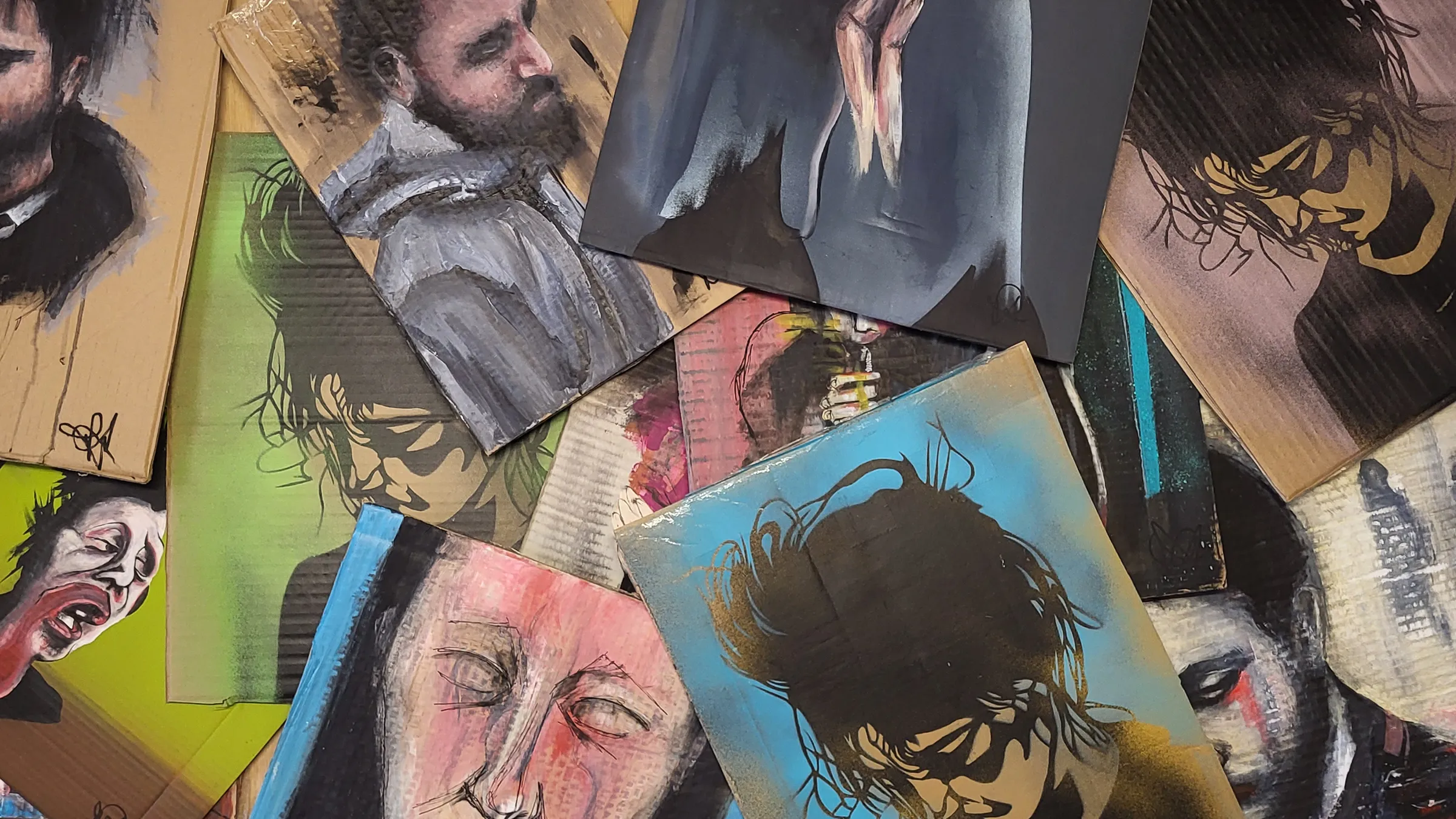
When I first began painting seriously, my work was heavily influenced by the world of stencil art and artists such as Banksy.
At that time my focus was very much on the external world.
I created pieces that commented on issues I believed needed attention — environmental destruction, political corruption and the growing divide between wealth and poverty. Each artwork functioned almost like a visual statement.
'Happy Pills'
'Cola Bear'
'Supersized'
Over time, however, I began to feel that constantly searching for the next clever way to communicate an idea was becoming exhausting. With the rise of social media and the speed at which visual commentary now travels across the internet, I also started to feel that work based purely on topical statements risked becoming part of a fast-moving stream of imagery rather than something more lasting.
That realisation led me to a different question.
Instead of asking what should I say about the world, I began to wonder:
How does the world affect us internally?
The Year That Changed My Direction
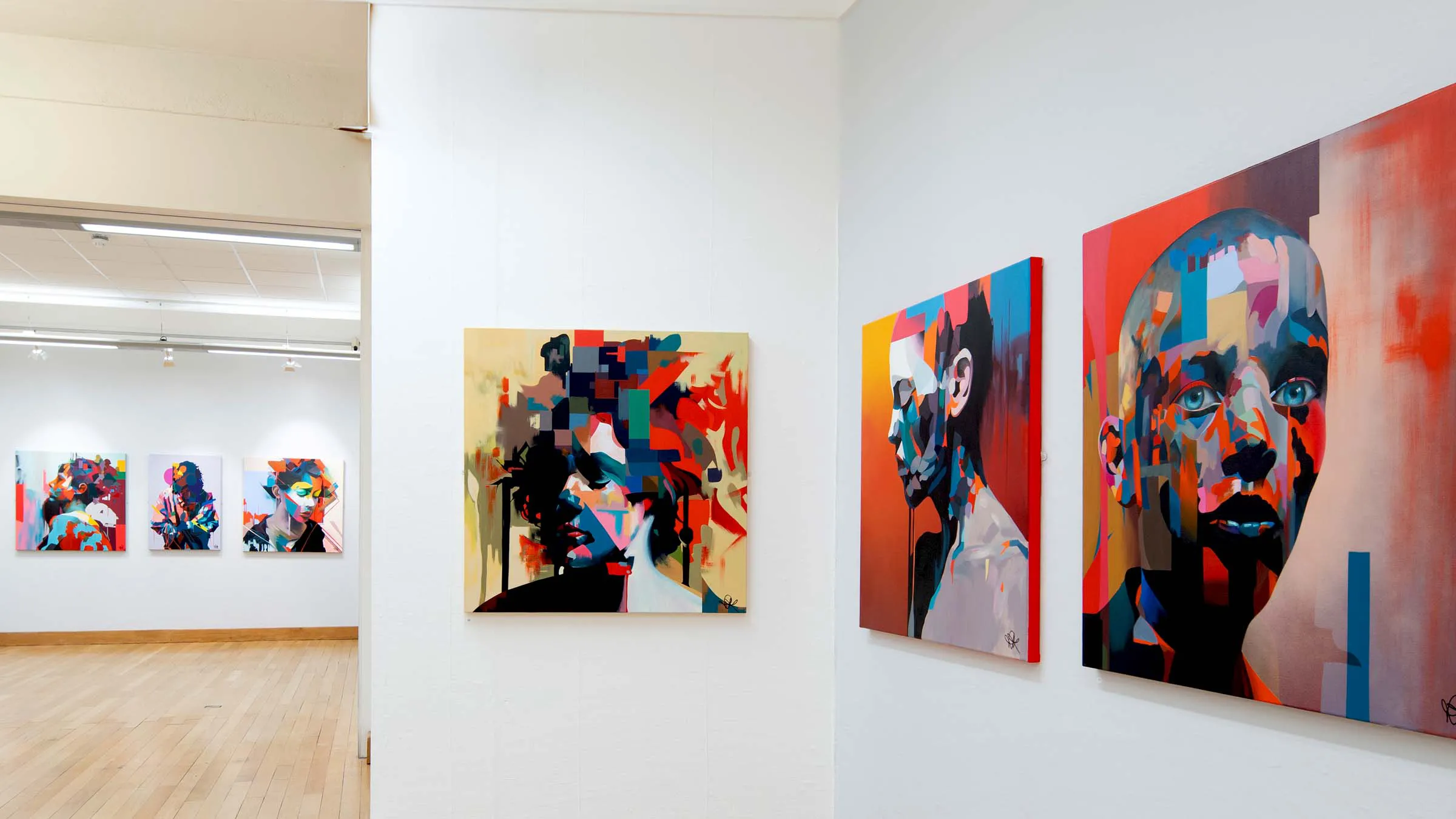
Two years ago I was offered the opportunity to stage a solo exhibition at Peterborough Museum.
The exhibition space consisted of three large rooms, and rather than simply fill them with work I had already been producing, I decided to spend a year exploring my direction and developing something more personal.
During that year I experimented with new ideas, techniques and approaches to portraiture. Slowly, the style that defines my current work began to emerge.
Instead of addressing world events directly, the paintings started to explore the internal emotional landscape those events create within us.
Stress. Frustration. Anxiety. Hope.
Emotions that are shared across cultures, backgrounds and experiences.
Why I Use Masking Tape
One of the defining elements of my paintings is the use of masking tape to construct the image.
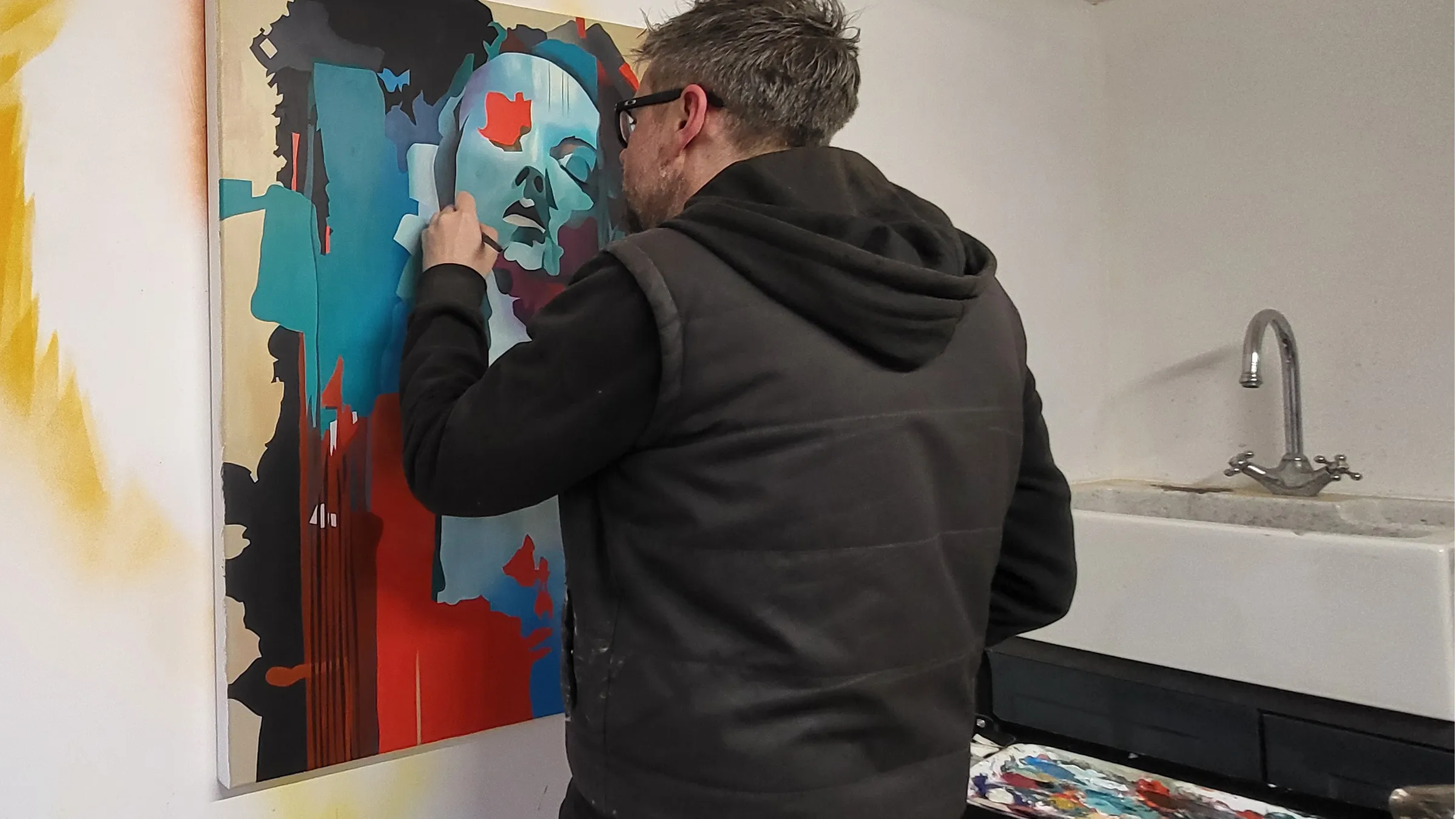
Each portrait is built gradually, with sections carefully masked off and painted before the tape is removed and the next layer begins. The process is slow and deliberate, but it plays an important role in how the paintings communicate.
Although the faces often suggest internal tension or unease, the painting itself is created through control, structure and order.
Sections are carefully masked off and painted before the tape is removed and the next layer begins
In many ways the technique reflects the way people navigate their own emotional lives.
Internally we may feel chaotic or overwhelmed, yet externally we try to organise those emotions and hold ourselves together.
The structure within the painting becomes a visual metaphor for that experience.
Structure and Emotion
While the portraits appear fragmented, they are carefully constructed compositions. Each line and shape is placed deliberately, allowing emotion to emerge through structure rather than chaos.
This tension between control and expression is something I find endlessly fascinating. In many ways it mirrors how we experience our own emotions — feelings that may be complex or overwhelming internally, yet which we attempt to organise and present to the outside world with a sense of composure.
The paintings sit somewhere between those two states: the emotional and the controlled.
“I need a moment”, acrylic on canvas — part of my ongoing abstract portrait series exploring shared emotional experiences.
Colour, Tension and Balance
Although the expressions within my portraits often contain elements of frustration or quiet tension, colour plays an equally important role in the work.
Bright colours introduce energy and life into the paintings. They prevent the work from becoming purely dark or heavy.
During my exhibition at Peterborough Museum, visitors pointed out something I had not consciously planned. The earlier rooms contained darker works, while the later portraits incorporated increasingly vibrant colour.
Despite the expressions of angst within the faces, the colour seemed to introduce a sense of hope.
That balance has remained central to my work ever since.
The paintings acknowledge that life can be difficult, but they also recognise resilience and the possibility of moving forward.
A Shared Human Experience
One of the most powerful moments during the exhibition was the conversations that happened in front of the paintings.
Visitors spoke openly about their own struggles and experiences with mental health. Some people became emotional while explaining how the work resonated with them.
What I realised in those moments was that the paintings had unintentionally created a kind of safe space.
People recognised something of themselves in the work.
And when that recognition happens, something important becomes clear:
None of us are alone in the way we feel.
Paintings That Live With You
When I create a painting, I want it to achieve two things.
First, I want it to say something meaningful about the human experience.
But equally important is the idea that the work can exist comfortably within someone’s home.
When someone chooses to live with a painting, it becomes part of their daily environment — something they encounter repeatedly, often discovering new details or meanings over time.
Art does not need to shout to have something important to say. Often the most powerful pieces are the ones that quietly continue speaking over time.
Continuing the Journey
The painting “I need a moment” is one step within this ongoing exploration.
Like many of the portraits I create, it reflects the quiet internal struggles people often carry privately.
My hope is that when someone encounters these paintings, they recognise something familiar within them — a moment of tension, reflection or understanding.
Because sometimes the most powerful thing art can do is remind us that the emotions we experience individually are, in fact, shared.
You can explore my latest paintings in the original artwork gallery on my website.
Frequently Asked Questions About My Abstract Portrait Paintings
What inspires your abstract portrait paintings?
My abstract portraits are inspired by the shared emotional experiences that many of us carry but rarely speak about openly. Feelings such as pressure, frustration, reflection and hope are all part of the human experience, and my work explores how those emotions manifest internally.
Rather than depicting specific individuals, the portraits are intended to represent emotional states that viewers may recognise within themselves.
Why do you use masking tape in your paintings?
Masking tape allows me to construct the portraits through carefully defined shapes and layers of colour. The process is slow and deliberate, but it creates the strong structural lines that have become a defining feature of my work.
Conceptually, the technique also reflects the way people often try to organise and contain their emotions — bringing structure to what can sometimes feel like internal chaos.
Are your abstract portrait paintings based on real people?
The portraits are not based on specific individuals. Instead they represent emotional states and shared human experiences.
This allows viewers to interpret the paintings in their own way and often see something of themselves reflected in the work.
Where can I see your latest paintings?
You can view my most recent work in the original paintings gallery on my website, where new pieces are added as they are completed.
About the Artist
Paul Kneen is a contemporary British artist whose work explores the shared emotional experiences that connect us all. Through a distinctive process using masking tape, colour and fragmented portraiture, his paintings examine the tension between internal chaos and the structure we create to navigate it.
His work has been exhibited at venues including Peterborough Museum, where visitors responded strongly to the emotional depth of his abstract portraits.