Why the Human Face Keeps Appearing in My Paintings
On abstraction, emotion and the strange power of the human face
There are countless subjects an artist can paint.
Landscapes.
Still life.
Pure abstraction.
And yet, throughout the history of painting, artists have repeatedly returned to the same subject: the human face.
For me, the face has always held a strange kind of power. Even when reduced to its simplest elements — a few shapes, lines or areas of colour — it still carries an emotional presence that other forms rarely achieve.
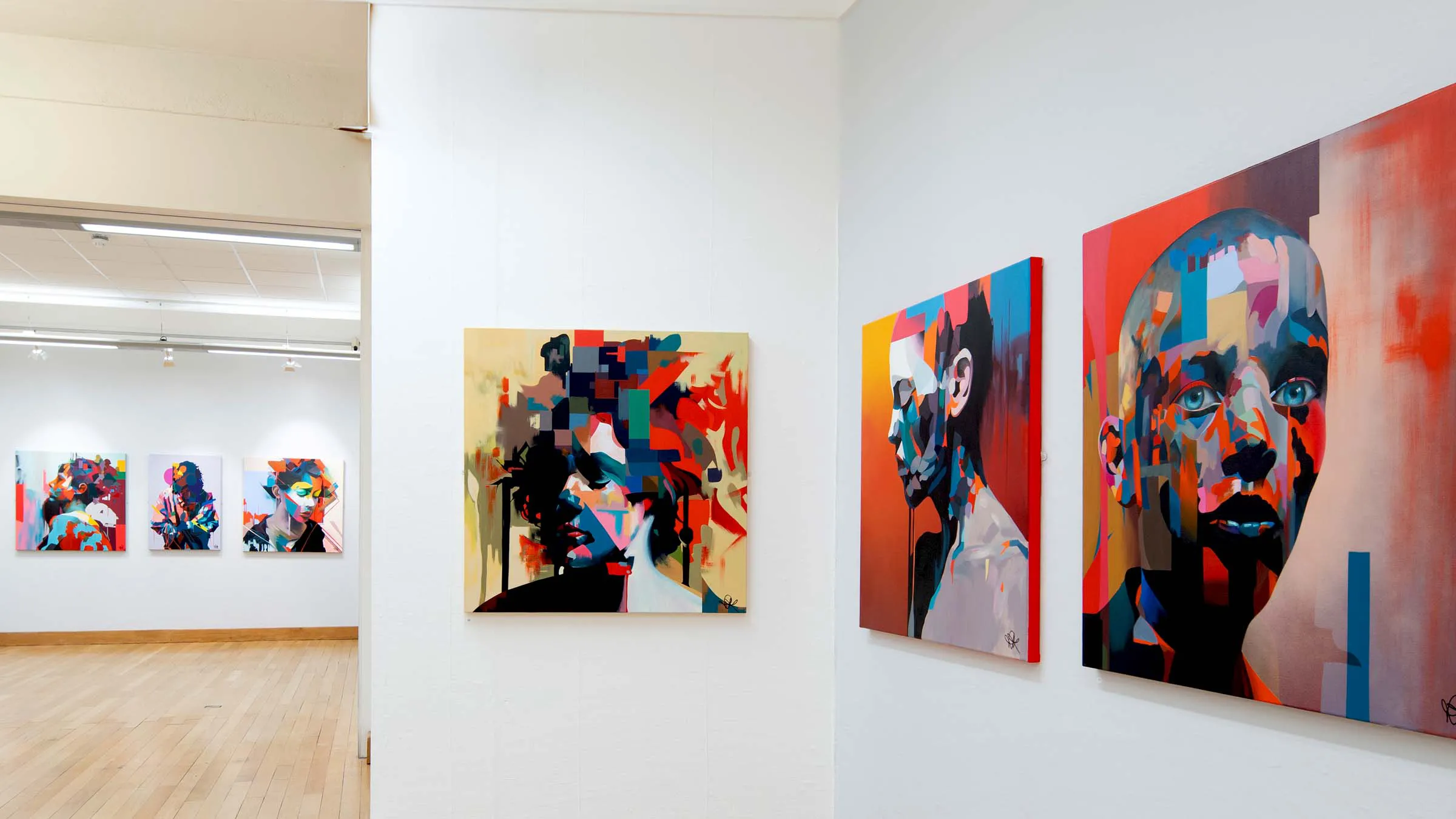
This is one of the reasons my work has gradually evolved toward abstract portrait painting. The moment a painting begins to hint at a face, something shifts. The painting is no longer simply an arrangement of shapes and colour.
It becomes something more human.
The face is the most recognisable shape we know
Humans are wired to recognise faces.
Psychologists often refer to a phenomenon called pareidolia — our tendency to see faces in clouds, shadows or everyday objects. Two dots and a line can be enough for our brain to interpret a face.
This fascinates me as a painter.
It means that a portrait does not have to be realistic in order to feel alive. A face can emerge from abstraction. Sometimes it is barely there, yet the viewer still recognises it instantly.
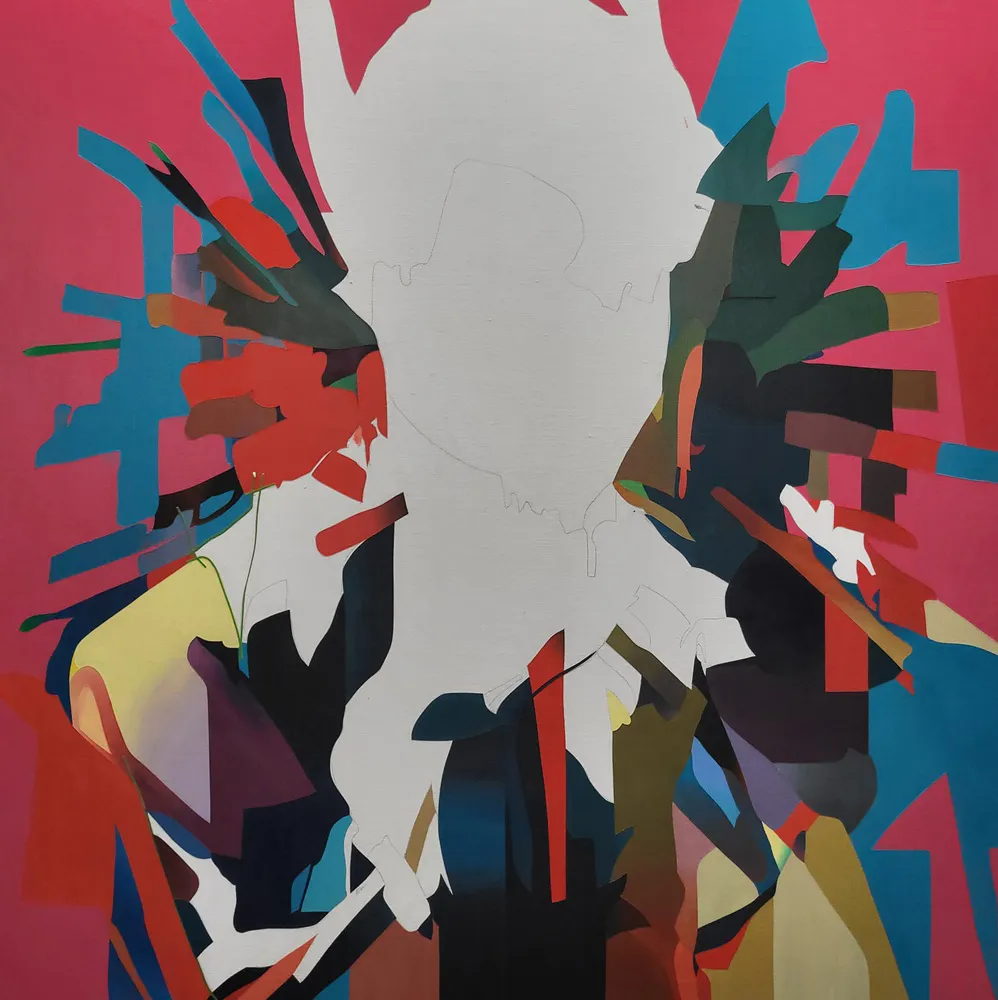
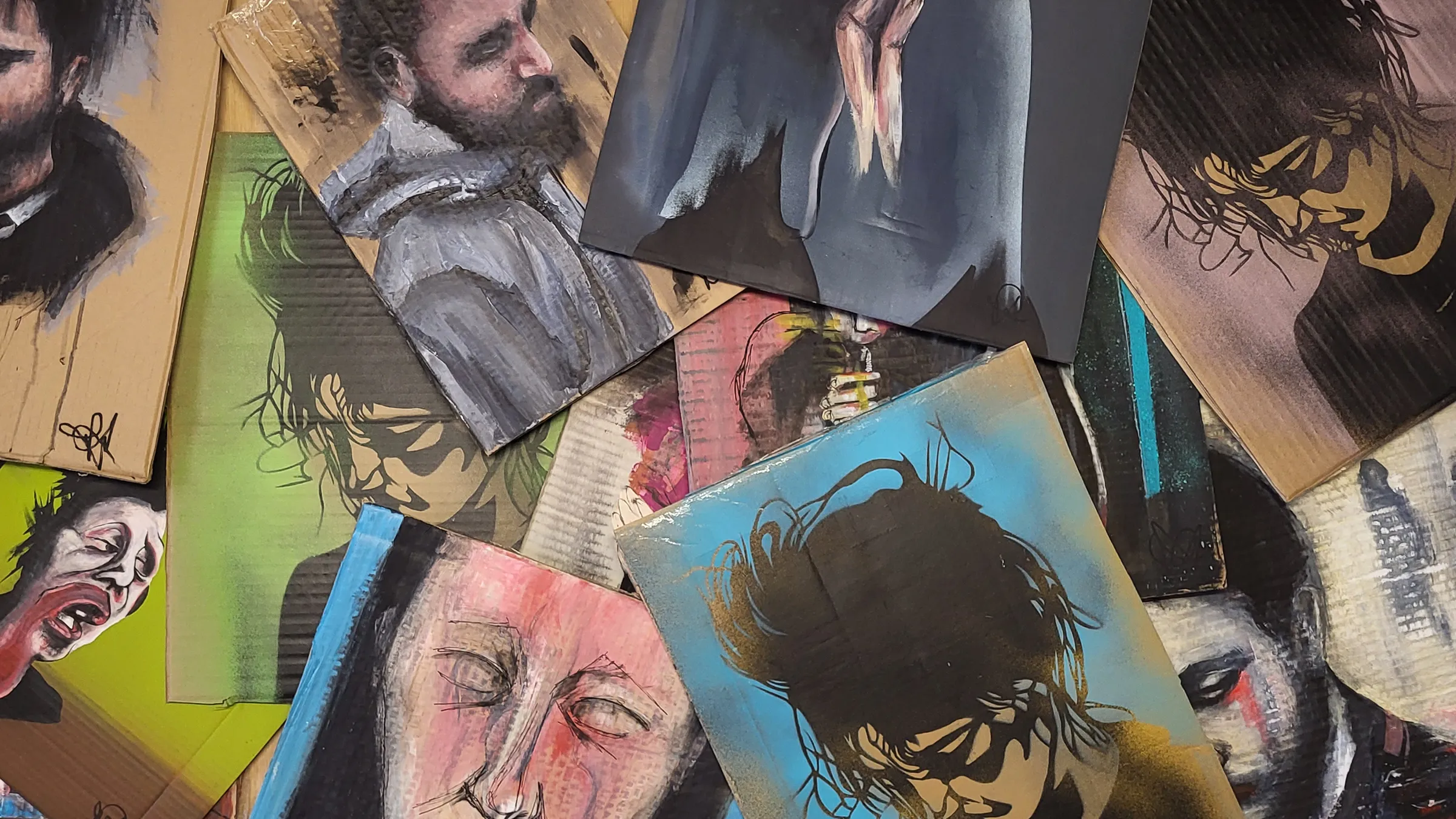
Before the face appears — structure, colour, and the suggestion of something not yet fully formed.
This is where abstract portrait art becomes particularly interesting.
The painting sits somewhere between representation and abstraction. The viewer understands they are looking at a face, but the meaning of that face remains open.
It becomes less about likeness and more about emotion.
Why I strip the face back
When painting a traditional portrait, the goal is often likeness. The artist attempts to capture the exact features of the subject.
In my work, that isn’t the intention.
Instead, I am interested in reducing the face to something simpler — shapes, colour, structure and balance.
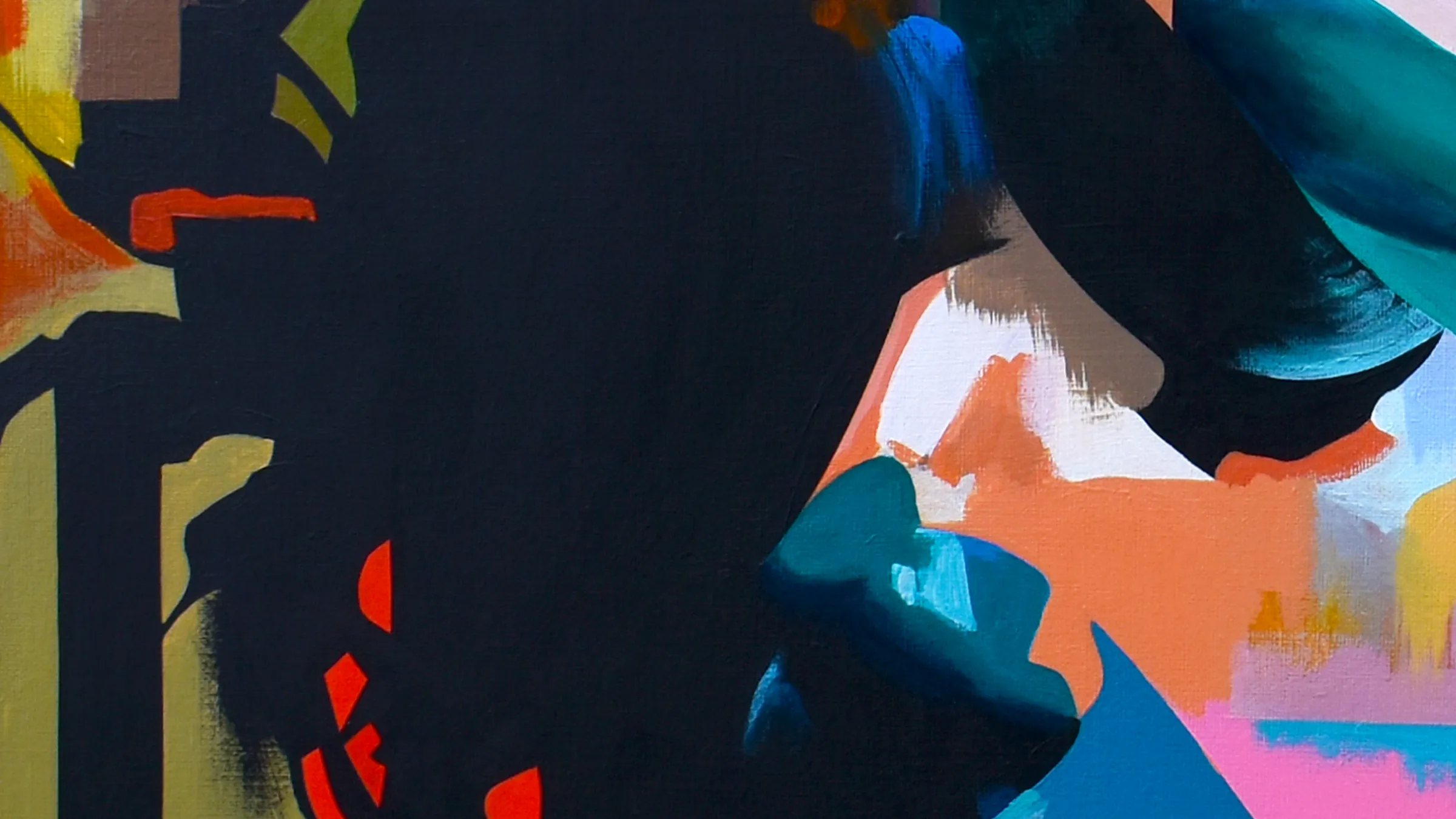
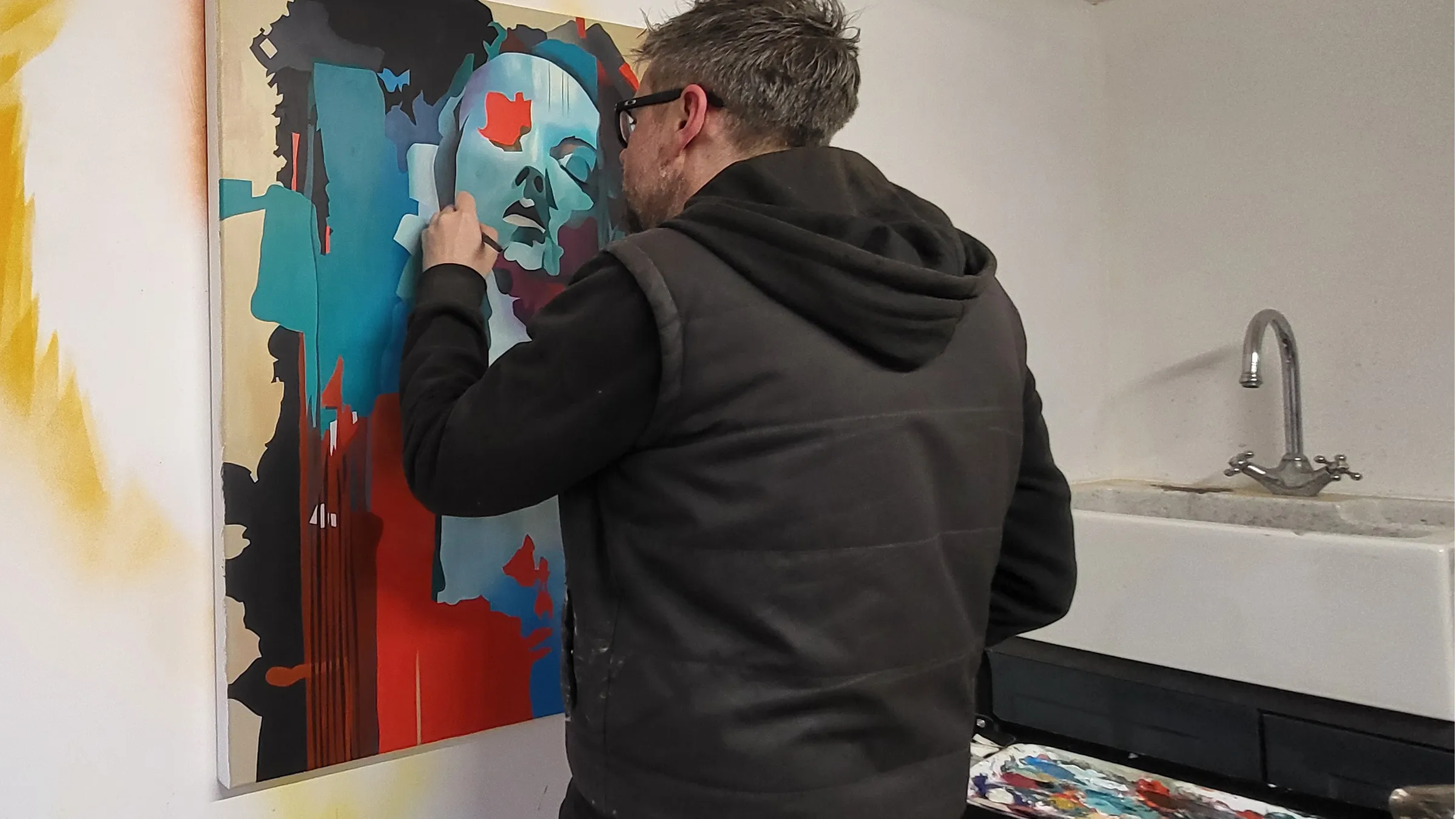
Many of my paintings begin with a structured framework. Using masking tape, I divide the canvas into sections and gradually build the composition layer by layer. The process is methodical and deliberate, almost architectural.
At first glance the structure might seem rigid, but it actually provides the foundation for something more emotional to emerge.
In many ways, the method I use to construct the painting mirrors the emotions I’m exploring. The sharp lines created by masking tape introduce a sense of control and order. Beneath that structure, colour and subtle shifts in balance introduce something far less predictable.
The faces that appear in my paintings often exist somewhere between those two forces — control and chaos.
And in many ways, that tension feels like a fairly honest reflection of modern life.
When a face becomes emotional rather than literal
One of the things abstraction allows is a shift away from literal representation.
A realistic portrait tells us exactly what we are looking at.
An abstract portrait painting, however, allows space for interpretation. The viewer brings their own experiences, emotions and memories to the work.
A slight imbalance in shape might introduce tension.
A sudden contrast in colour might suggest unease.
A calm area of balance might suggest quiet resilience.
These relationships between shapes and colours are what I spend most of my time adjusting.
Often a painting will go through several revisions. Sections are masked, repainted and refined again and again until the composition begins to settle.
It’s rarely a straightforward process.
Sometimes something feels right quickly. More often it takes time for the painting to find its balance.
The moment a painting begins to feel alive
There is usually a moment in the process when the painting shifts.
Up until that point it can feel like a collection of separate parts — shapes, colours, sections of the canvas still negotiating their place.
Then suddenly something changes.
The shapes begin to relate to one another.
The colours start to feel balanced.
The face begins to hold presence.
It’s difficult to explain exactly when or why this happens, but when it does the painting begins to feel alive.
For me, that moment often arrives when the balance between structure and emotion finally settles.
The painting stops fighting itself.
Everything begins to move in the same direction.
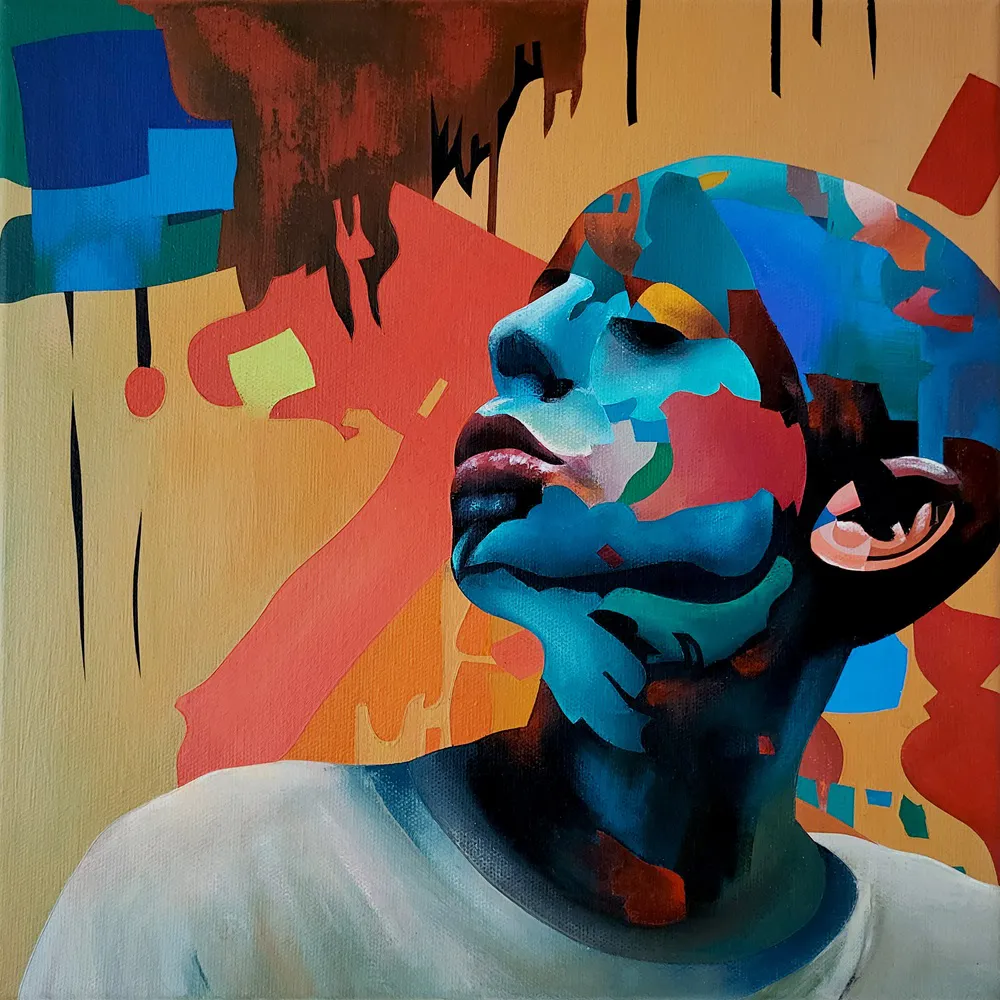
Still Standing
My most recent 30cm × 30cm painting, Still Standing, explores this idea of emotional balance.
Although smaller in scale than some of my larger canvases, the intention behind the painting remains the same. The composition is built gradually through layers of structure and colour, with sections repeatedly masked and refined until the face begins to emerge.
The title reflects a feeling many of us recognise.
A face fully formed — the moment abstraction gives way to something human.
Life can sometimes feel chaotic.
Things shift unexpectedly.
Moments of uncertainty appear without warning.
And yet, somehow, we continue.
We remain standing.
The face in the painting is not intended to represent a specific person. Instead it reflects something more universal — the quiet resilience that many of us experience in everyday life.
The painting sits somewhere between fragility and strength.
Why artists return to the face again and again
The longer I paint, the more I realise how powerful the human face is as a subject.
It carries identity, emotion and presence all at once.
Even when abstracted, it remains deeply recognisable. It draws the viewer in and encourages a human connection with the painting.
Perhaps that is why artists have returned to portraits for centuries.
And perhaps that is why faces continue to appear in my own work.
Not as literal portraits, but as emotional structures emerging through abstraction.
A continuing exploration
Every painting feels like another step in the same ongoing exploration.
How little information is needed for a face to exist?
How far can abstraction go before the face disappears entirely?
And what happens in the space between those two points?
These are the questions that continue to guide my work as an abstract portrait artist.
Each painting becomes an attempt to balance structure and emotion.
And somewhere within that balance, the face inevitably returns.
If you’d like to explore these ideas further, you can view my latest abstract portrait paintings on the originals page of my website.