Like many artists, I often look at work online. We scroll, we zoom, we screenshot. But there is something irreplaceable about standing in front of a painting in real life. Harrington is one of those artists whose work simply cannot be understood fully through a screen. Seeing it in the flesh is something else entirely.
Why Conor Harrington’s Work Resonates With Me
Conor Harrington has long been one of my favourite artists. What draws me to his work is the balance — that delicate, deliberate tension between abstraction and realism.
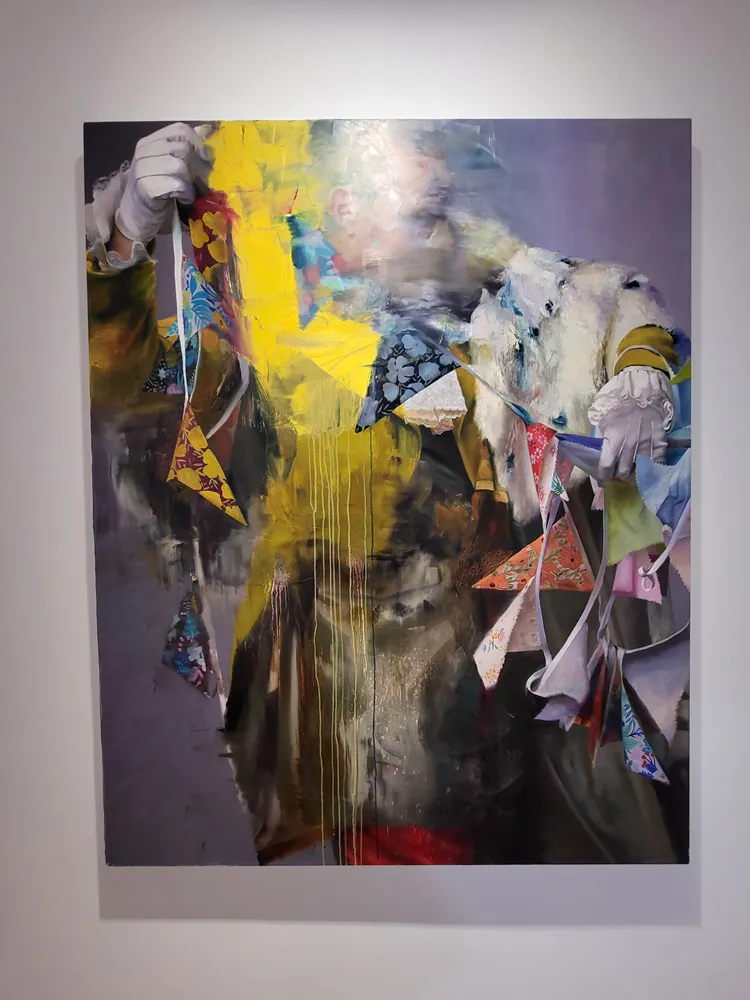
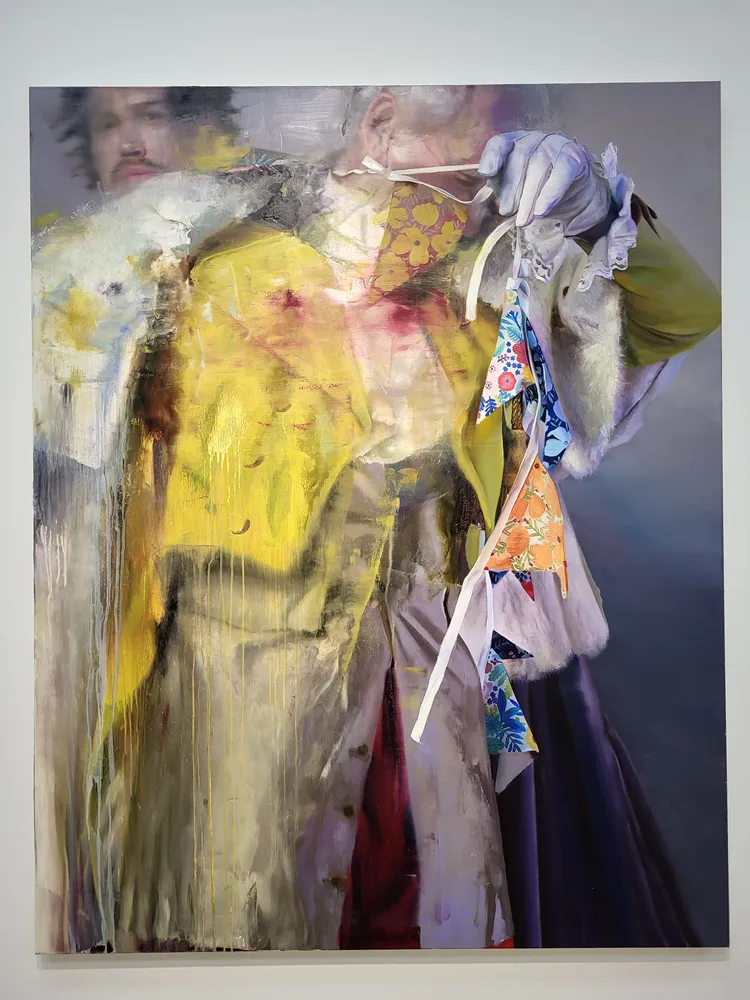
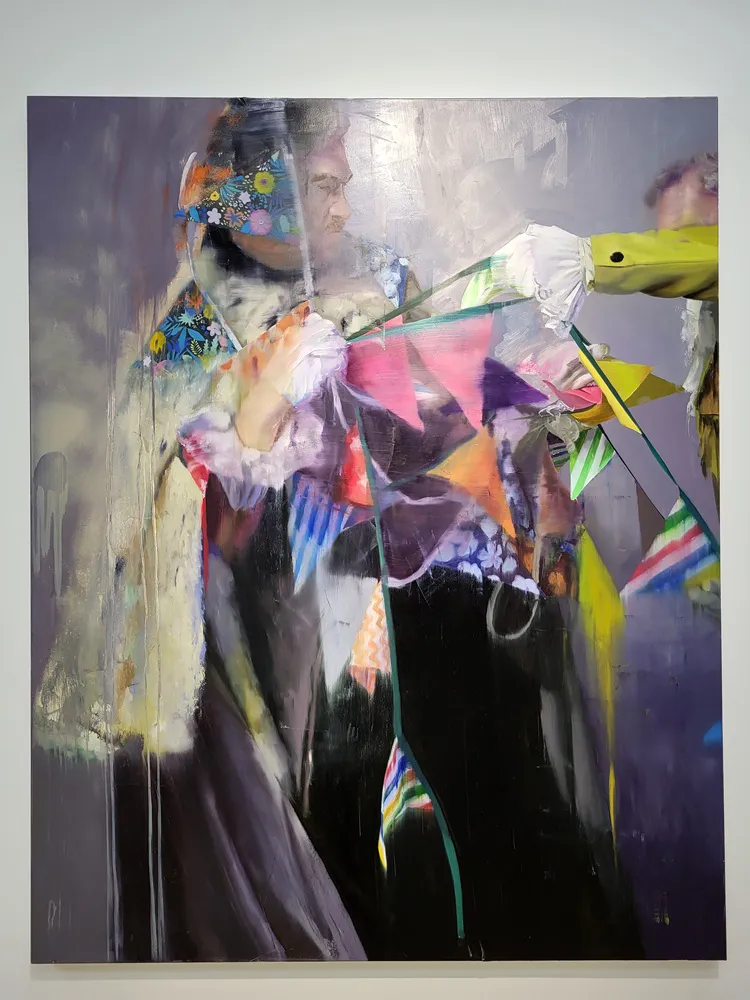
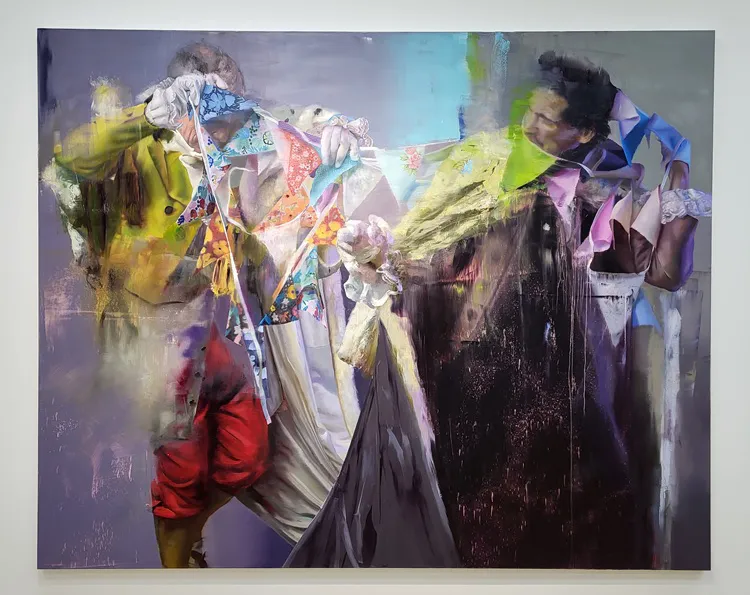
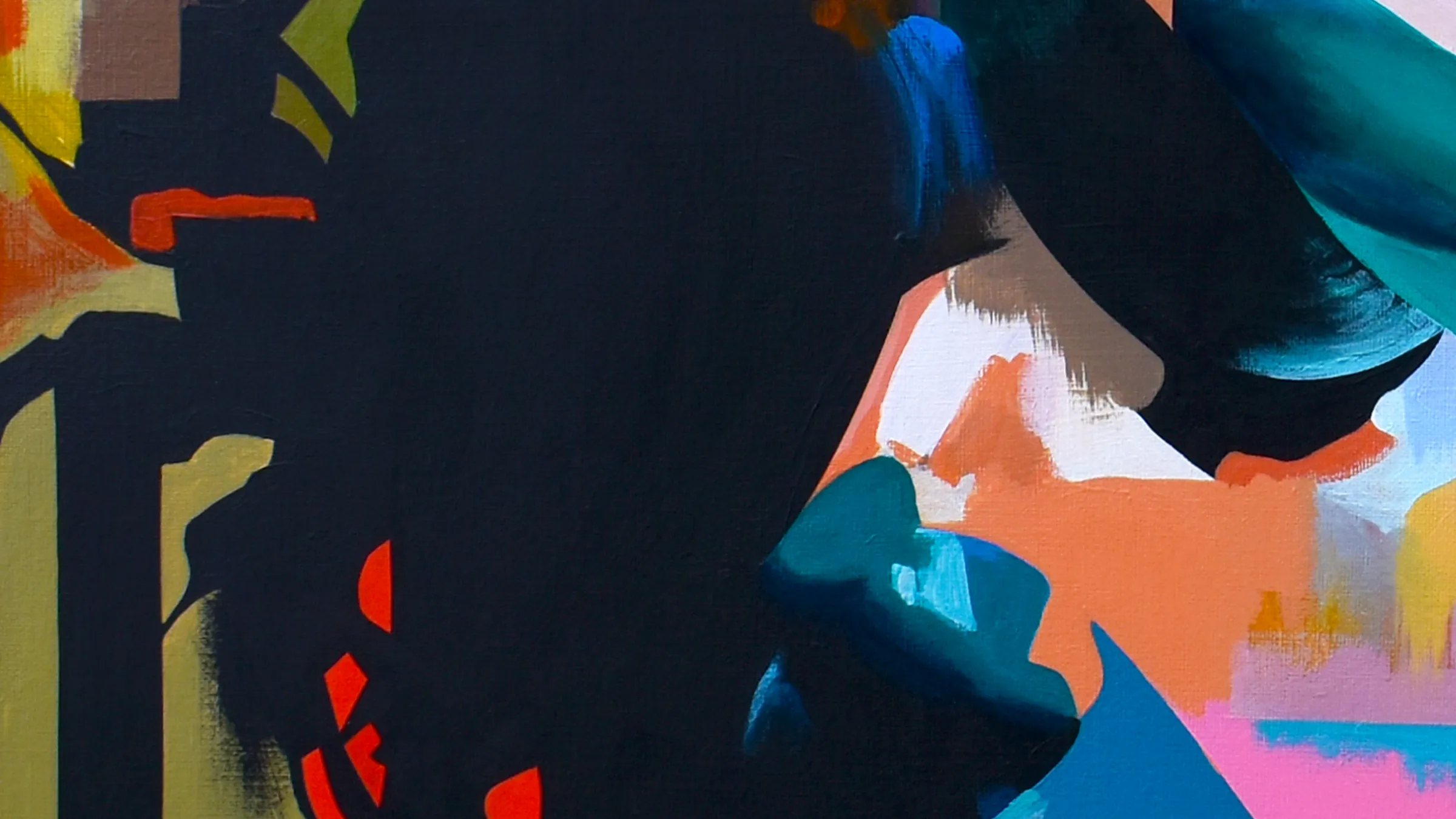
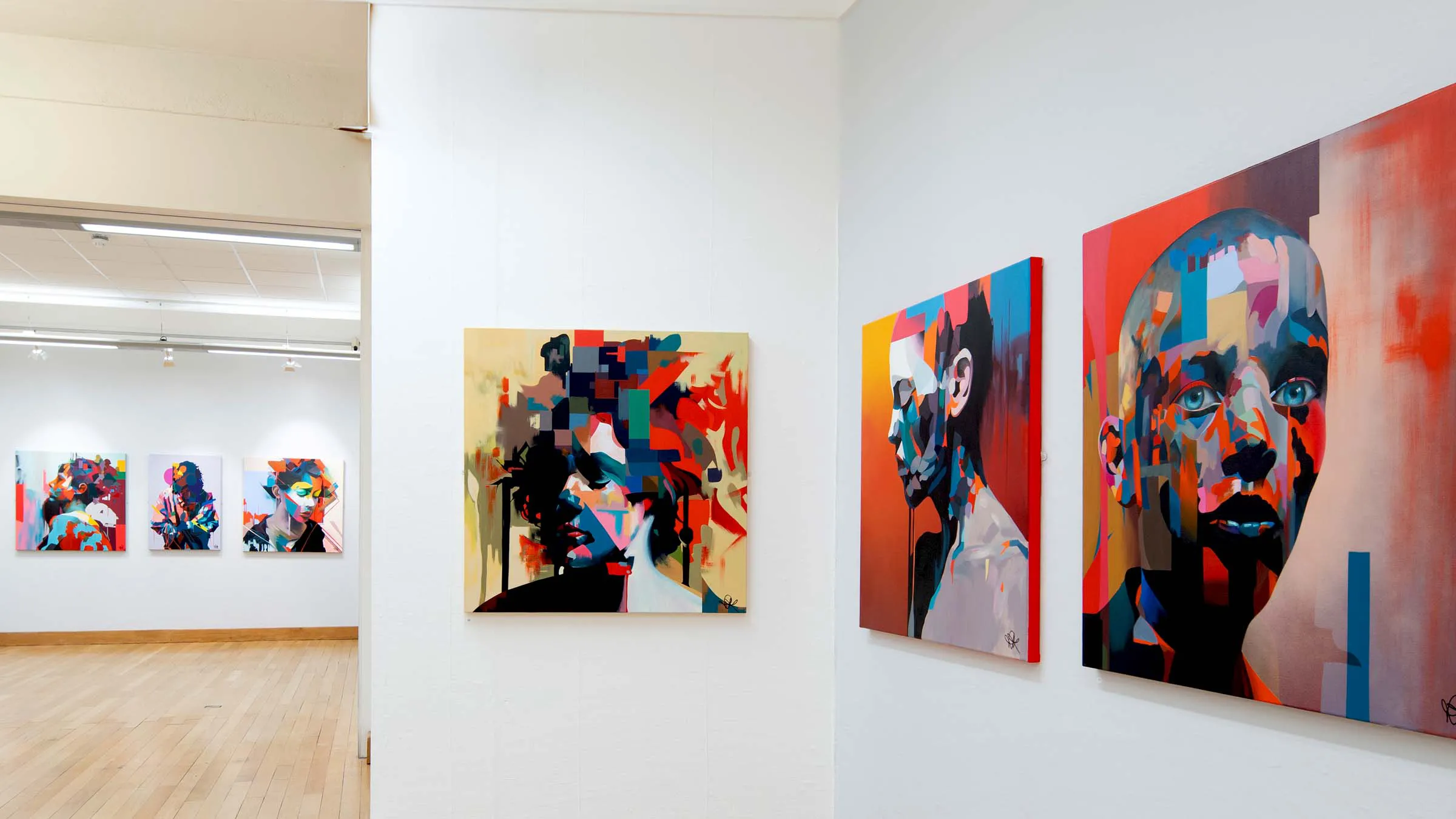
On one level, you see classically rendered figures. There is a painterly confidence in his handling of anatomy, fabric, gesture. But then the structure dissolves. Paint drips. Backgrounds fracture. Faces blur into violent sweeps of colour. What appears controlled becomes disrupted.
As someone whose own work sits in the abstract portrait space, I’m always fascinated by how artists manage that equilibrium. Too much realism and the work becomes illustrative. Too much abstraction and it can lose its emotional anchor. Harrington walks that line masterfully.
The perfect balance between realism and abstraction can be seen in Conor Harrington's work
There is also a deeply rooted political undercurrent in his work. The figures often feel historical — almost militaristic — yet fragmented, destabilised. They appear to be both emerging and disintegrating at the same time. Power and vulnerability co-exist within the same composition.
And yet, despite the classical references and political tension, there remains a street art sensibility. The drips, splashes and raw textures keep the work alive. It never feels overly polished. There’s movement. There’s rebellion.
Experiencing Pallium at Ben Brown Fine Arts, Chelsea
The setting of Ben Brown Fine Arts in Chelsea creates an interesting contrast. The clean, refined gallery space frames work that feels explosive and emotionally charged.
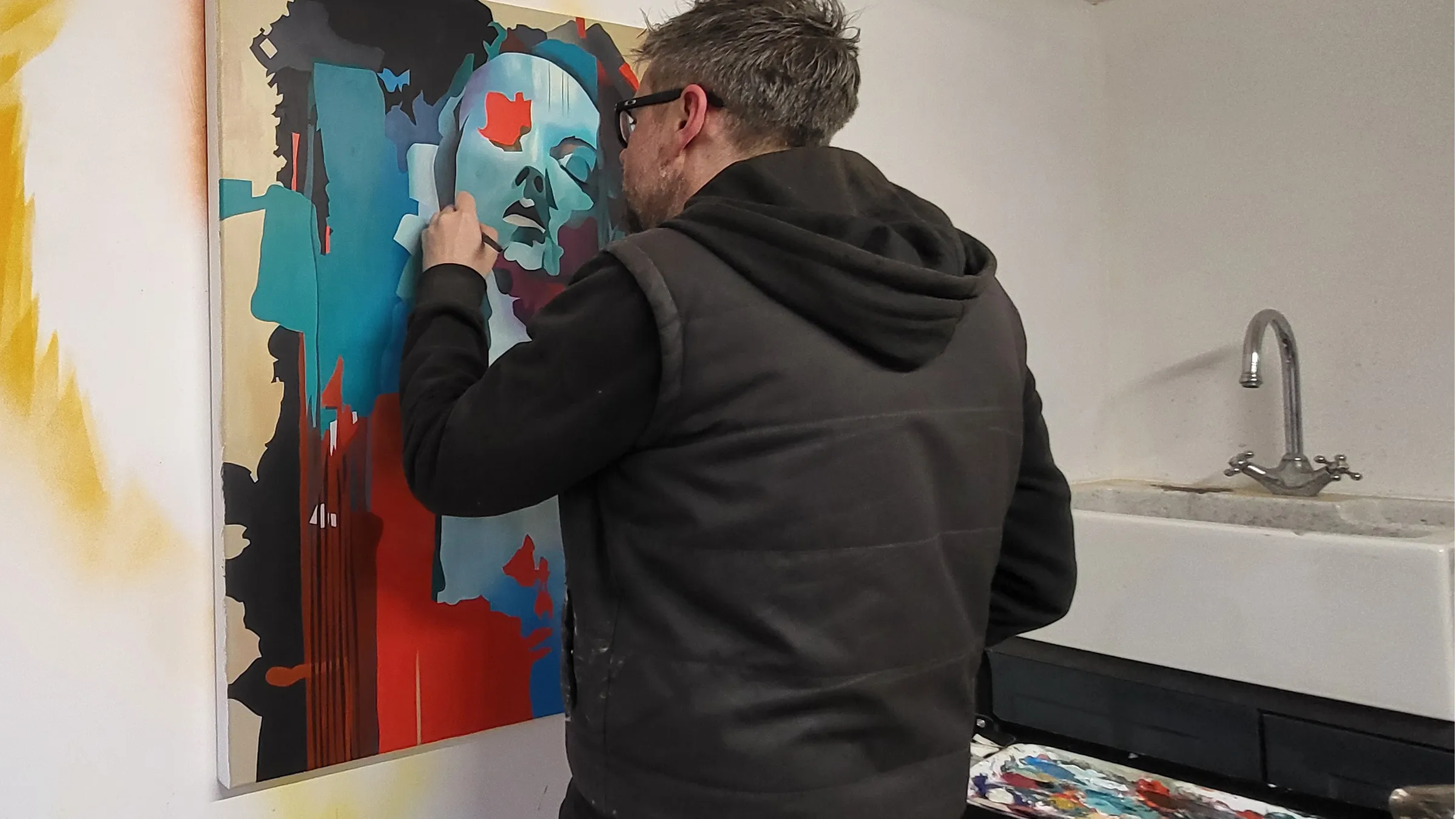
Pallium — the title itself referencing a garment associated historically with authority and status — feels fitting. Many of the figures carry a sense of ceremony or power, yet they are caught mid-collapse. Cloth twists. Bodies turn. Paint tears across the canvas like wind.
What struck me immediately was the scale and physicality of the work. Online images flatten everything. In person, you see the layering. The depth. The aggression in certain brushstrokes. You notice areas where paint has been dragged back, reworked, almost wrestled with.
The figures carry a sense of ceremony or power, yet they are caught mid-collapse
There is an undeniable energy in Harrington’s paintings. They do not sit still. Even in quieter moments, there is tension beneath the surface. It’s as if the canvas is holding something volatile just beneath the paint.
Standing in front of the work, I found myself stepping closer, then further back, then closer again. Up close, you see abstraction — loose marks, splatters, gestures. From a distance, it resolves into a powerful figurative presence.
That constant shift between chaos and control is something I deeply appreciate. It mirrors, in many ways, the internal push and pull many of us experience — order versus disorder, composure versus disruption.
The Importance of Seeing Art in Real Life
One of the biggest takeaways from the trip was a reminder of how much work goes into pieces like these.
When you see high-resolution images online, it’s easy to forget the scale of the physical labour involved. The layers. The revisions. The risk. In real life, you notice the thickness of paint in certain areas, the fragility in others.
When you see high-resolution images online, it’s easy to forget the scale of the physical labour involved. The layers. The revisions. The risk. In real life, you notice the thickness of paint in certain areas, the fragility in others.
You realise that what might look effortless is anything but.
As artists, we sometimes compare ourselves unfairly to what we see on screens. But standing in front of a painting like those in Pallium, you are reminded that great work takes time. It takes physical commitment. It takes confidence to let parts of the painting fall apart.
That’s something I always come away inspired by.
From Chelsea to Covent Garden: Edit Gallery and Mister Samo
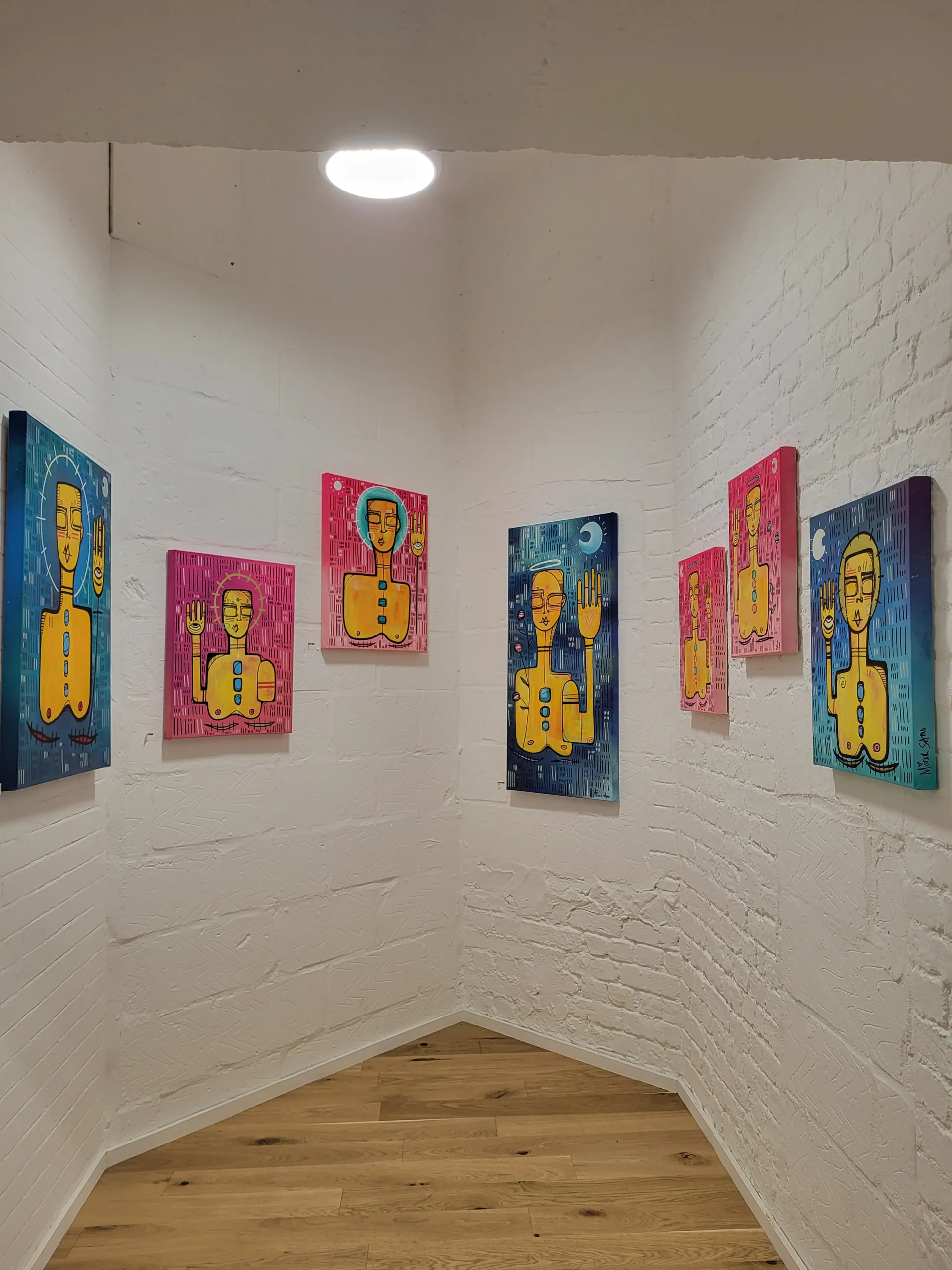
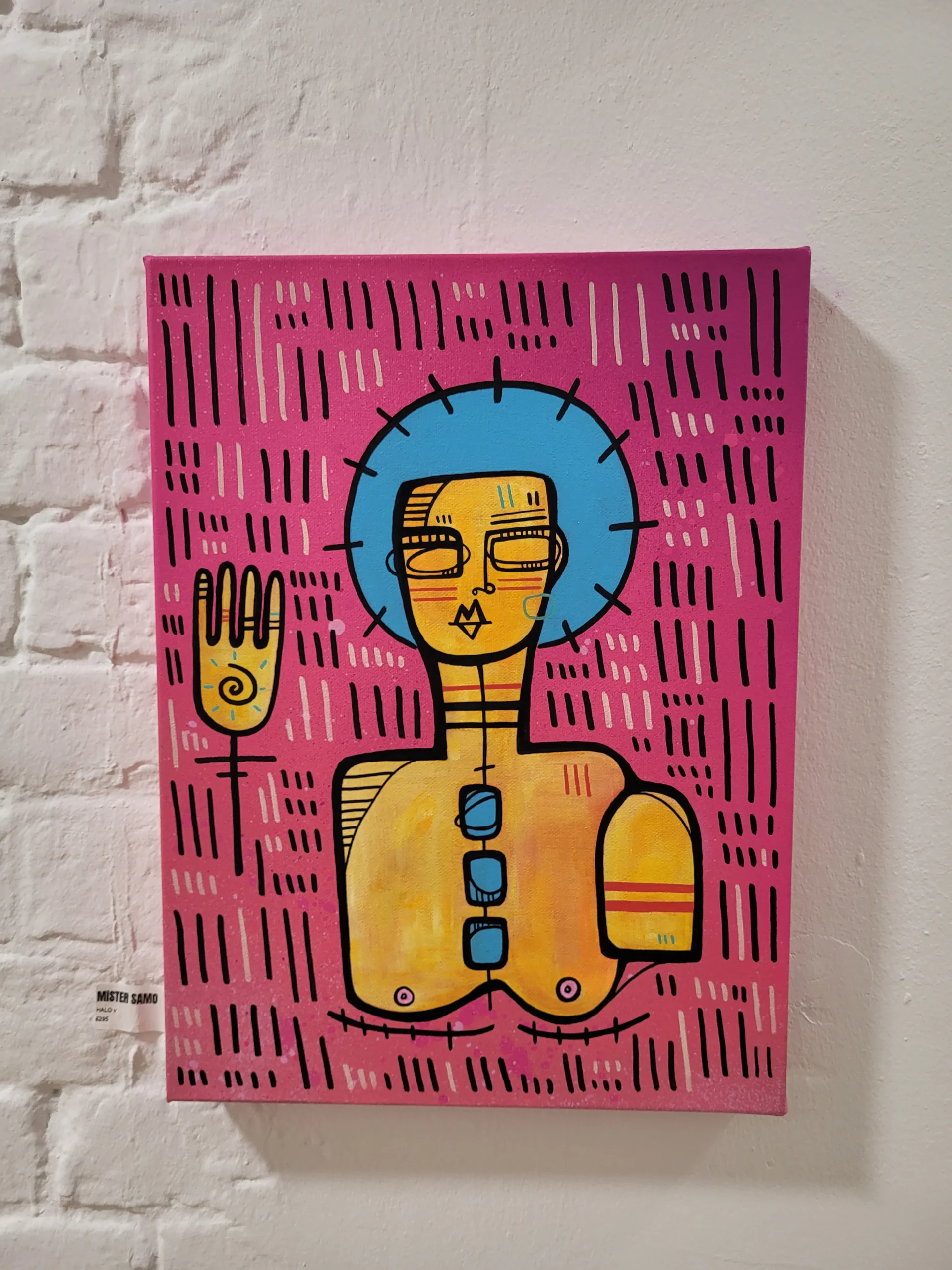
After visiting Ben Brown Fine Arts, I made my way across London to Covent Garden to visit Edit Gallery and see the current exhibition by Mister Samo.
Covent Garden has a very different energy to Chelsea. It’s louder. Busier. There’s a constant movement of people. In many ways, it feels closer to the street culture that influences much of contemporary urban art.
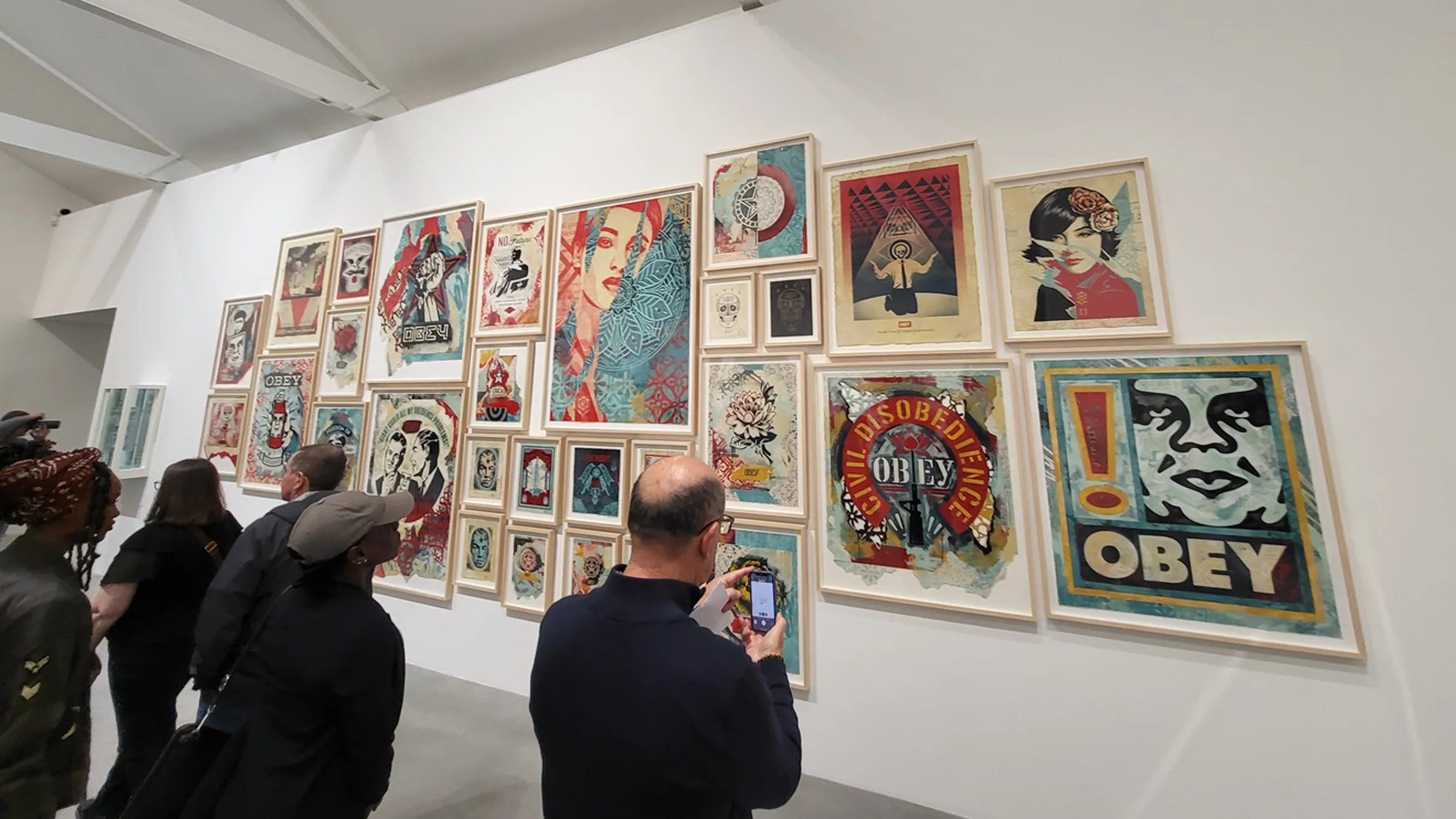
Mister Samo’s work sits comfortably within that environment. There’s a graphic boldness to his pieces. Strong colour palettes. Clear iconography. Work that feels immediate and impactful.
Where Harrington’s work leans into painterly tension and historical references, Mister Samo’s pieces feel direct and culturally current. They carry attitude. Confidence. A sense of commentary wrapped in accessible visuals.
I enjoy seeing that contrast in one day — the refined political drama of Pallium alongside the vibrant, urban aesthetic of Mister Samo’s exhibition.
It reinforces the breadth within contemporary street art today. It’s no longer confined to walls and alleyways. It occupies respected gallery spaces. It crosses into fine art territory while retaining its edge.
What I Took Away From the Day
Trips like this are important.
As artists, especially when working alone in a studio, it’s easy to become isolated in your own world. Your own process. Your own concerns. Visiting exhibitions reminds you that you are part of something larger — a wider conversation in contemporary art.
Seeing Harrington’s work reaffirmed the power of balance. The ability to combine realism with abstraction without one overpowering the other. The courage to allow imperfection to coexist with control.
Seeing Mister Samo’s exhibition reinforced the importance of clarity. Strong visual language. Work that communicates immediately without losing depth.
It also reminded me why I continue to explore emotion through abstract portraiture in my own practice. That tension between control and chaos is something that fascinates me endlessly. Watching how other artists navigate that territory only strengthens my commitment to it.
Why London Remains a Vital Hub for Contemporary Art
London continues to be one of the most exciting cities for contemporary art exhibitions.
Within a single day you can experience politically charged figurative painting in Chelsea and urban-influenced contemporary work in Covent Garden. The diversity of galleries, styles and voices is remarkable.
For artists based outside the capital, making the trip is always worthwhile. It resets your perspective. It challenges you. It inspires you.
And sometimes, it simply reminds you why you started creating in the first place.
Yesterday did exactly that.
Standing in front of Conor Harrington’s Pallium, watching figures dissolve and reassemble through paint, I felt that familiar spark — the one that pushes you back into the studio with renewed focus.
That, more than anything, is why days like this matter.