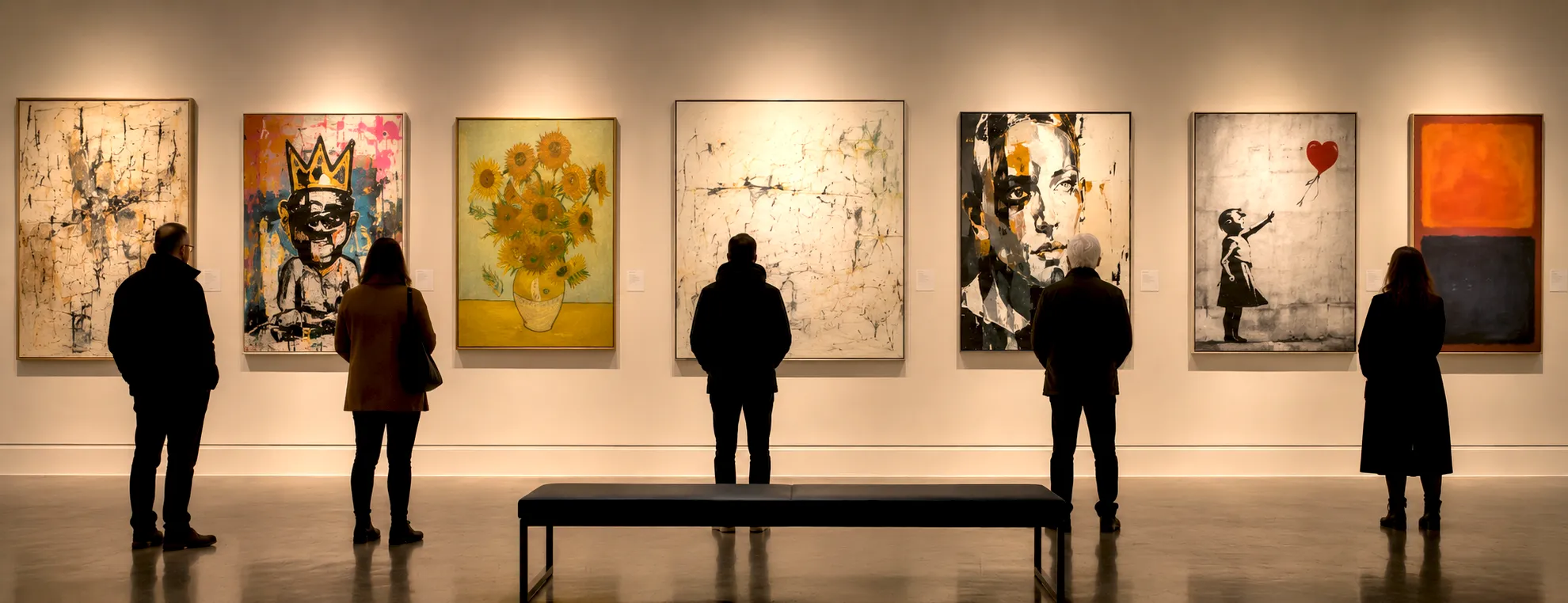
Every year, the Royal Society of Portrait Painters Annual Exhibition offers a snapshot of where contemporary portraiture currently stands. Held at the Mall Galleries in London, the exhibition brings together a wide range of artists, approaches and interpretations, all connected by one thing: the human face.
What makes exhibitions like this interesting is not simply the level of technical ability on display, but the variety of ways artists continue to approach portraiture today. Some works lean towards realism and precision, while others move into something more expressive, fragmented or emotionally driven. Together, they reflect how broad portrait painting has become.
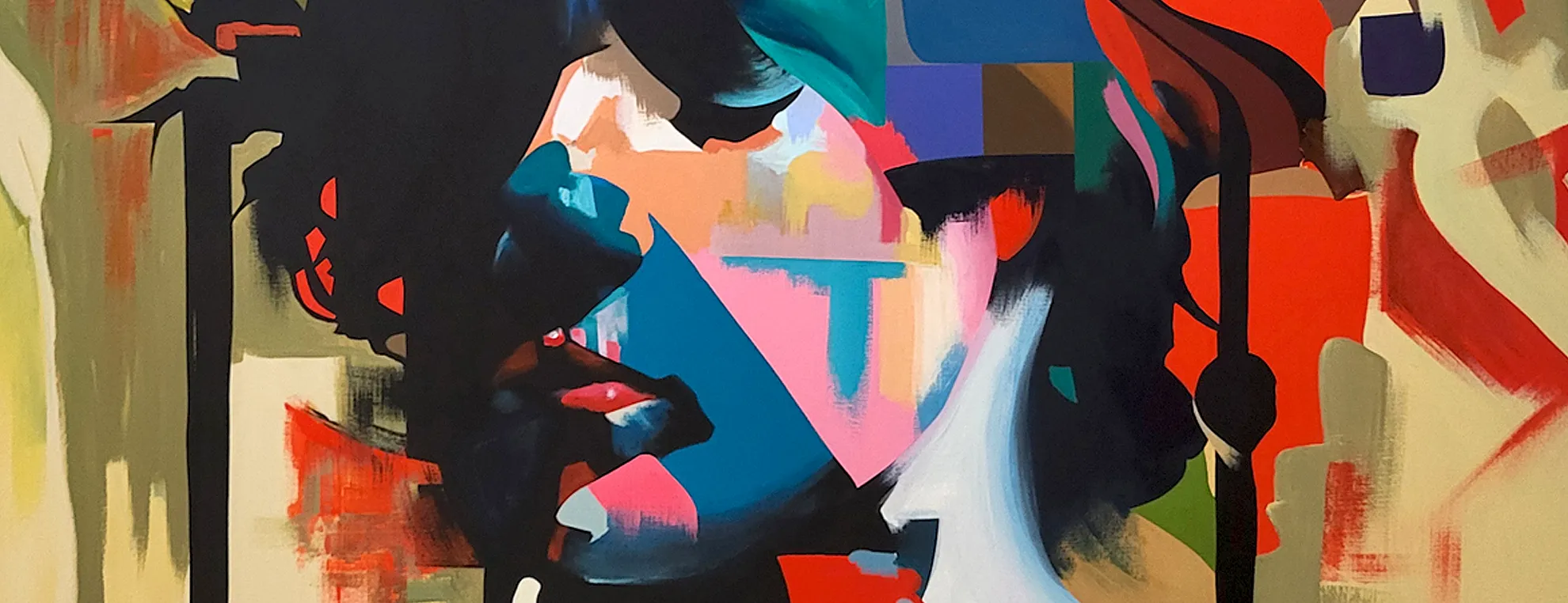
As someone whose own work sits somewhere between portraiture and abstraction, that range is something I always find compelling.
Portraiture Has Never Been Just About Likeness
For many people, portraiture is still associated with resemblance. Capturing a face accurately has long been viewed as the central purpose of portrait painting. But contemporary portraiture often feels less concerned with documenting appearance and more interested in communicating something internal.
That shift is part of what makes portraiture feel so relevant today.
Some paintings in exhibitions like this hold onto realism while introducing subtle emotional tension through colour, composition or atmosphere. Others move further away from direct representation entirely, using distortion, texture or abstraction to suggest mood, memory or psychological presence rather than exact likeness.
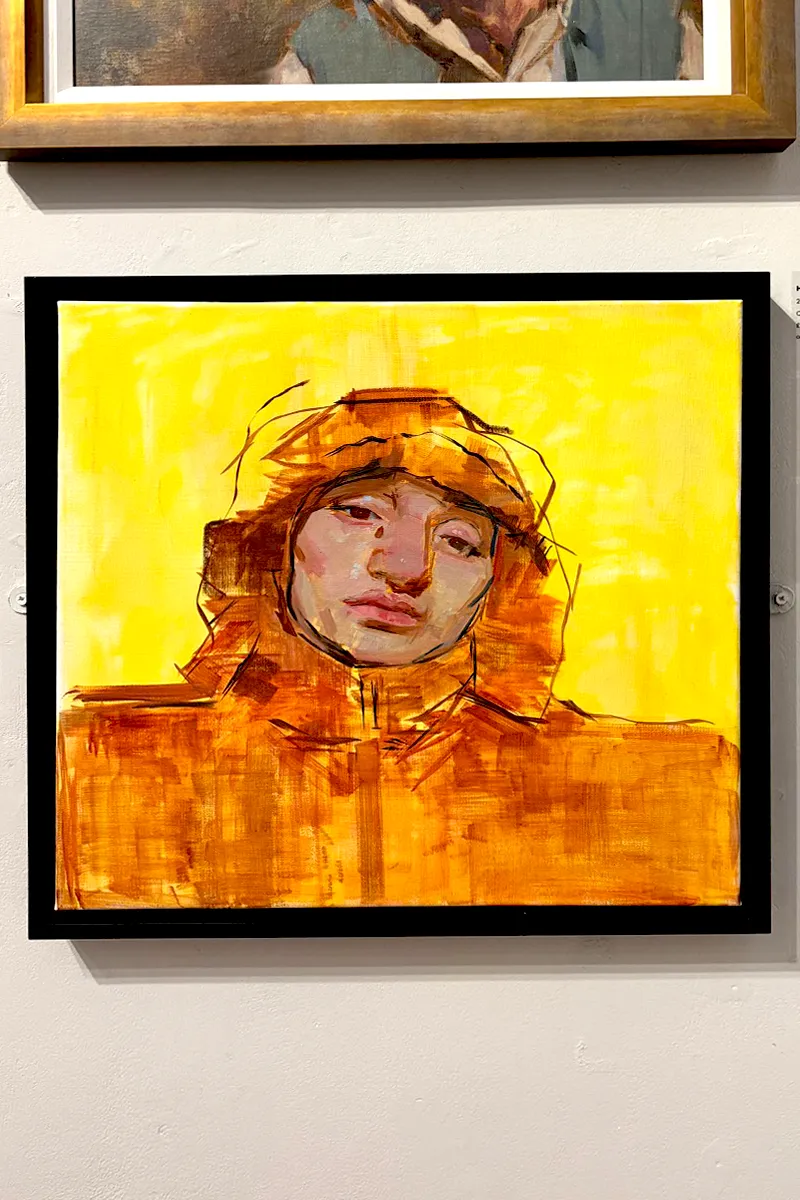
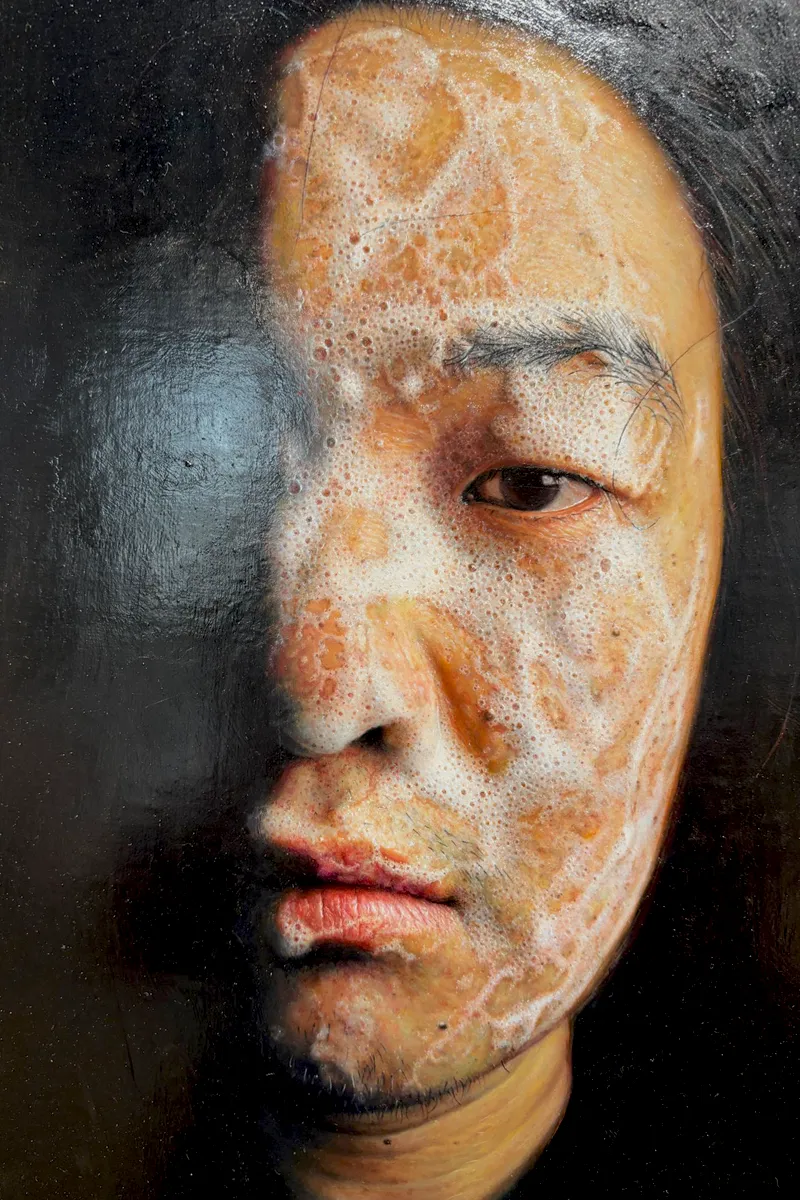
'Aimee' by Hillary Butterworth and 'Self portrait with foam' by Siyuan Pan
illustrate the different approaches to portrait painting
Even when the face becomes fragmented or partially obscured, we still search for connection within it.
I think that instinct says a lot about why portraiture continues to resonate. We are naturally drawn to faces. We look for emotion, familiarity and meaning, even when only fragments are presented to us.
The Space Between Recognition and Interpretation
One of the things I’m most drawn to in contemporary portrait painting is the balance between clarity and ambiguity.
Some of the strongest works don’t explain everything immediately. They leave room for interpretation. They allow the viewer to bring their own experiences, emotions and assumptions into the work rather than delivering a fixed message.
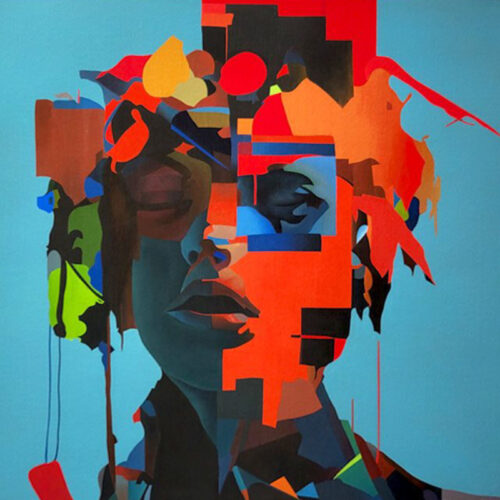
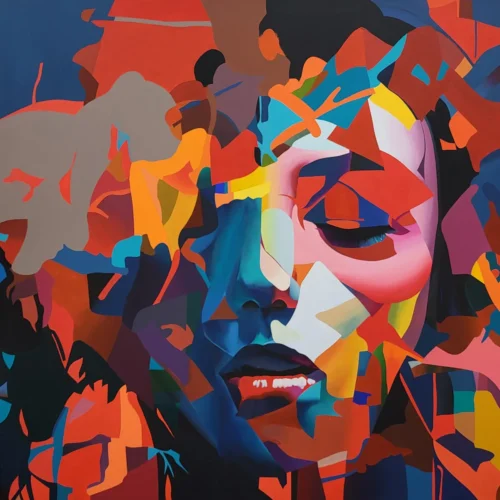
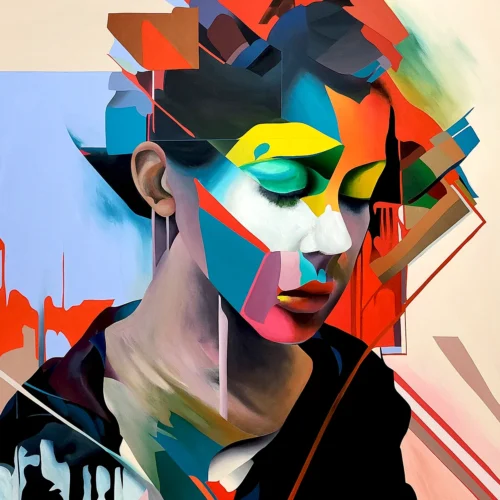
That space between recognition and abstraction is something I explore in my own paintings as well.
By breaking up facial forms through structure, colour and layered geometry, I’m often interested in the tension between what is visible and what feels disrupted underneath. The face remains present, but not entirely settled. Familiar, but fractured.
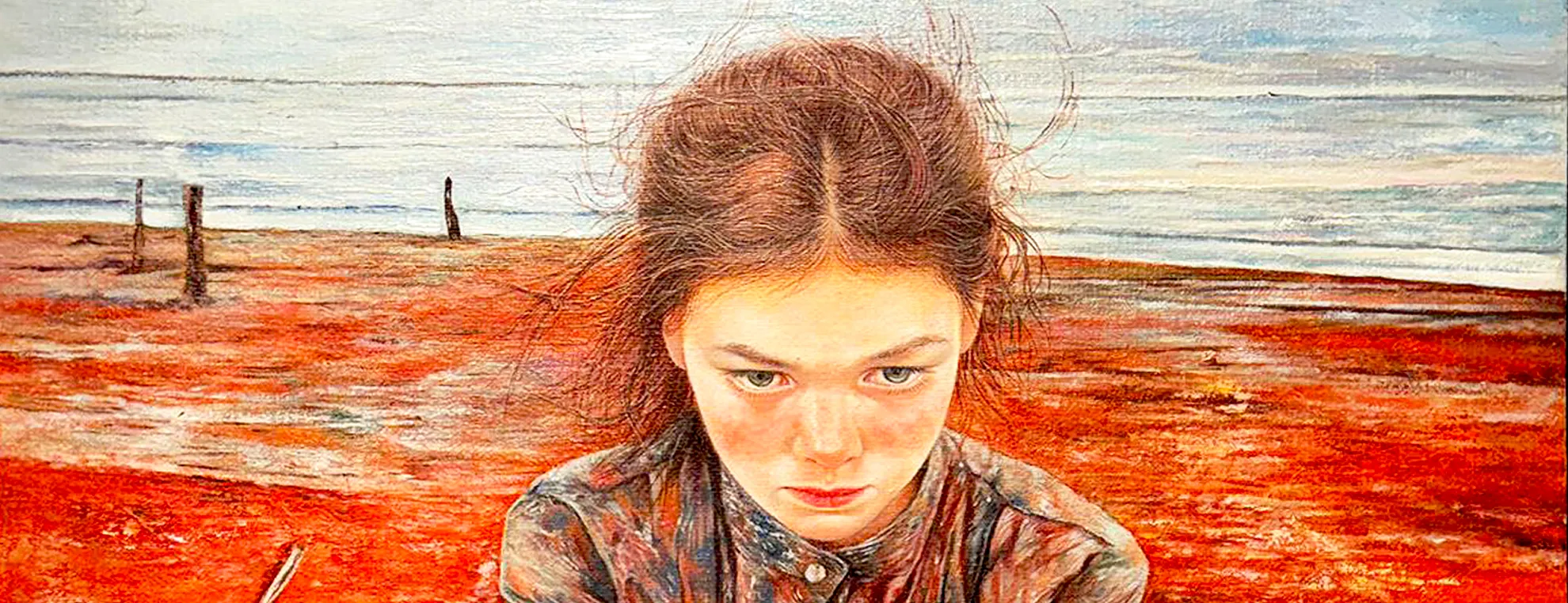
What also stood out to me while looking through this year’s exhibition was how varied portraiture can feel in terms of scale and presence. A friend of mine, portrait artist Ange Bell, has work included in the exhibition, and her paintings operate very differently to my own. While I tend to work on larger canvasses that physically occupy space, her small-scale portrait paintings draw you in through intimacy and beautiful detail whilst still balancing artistic freedom perfectly.
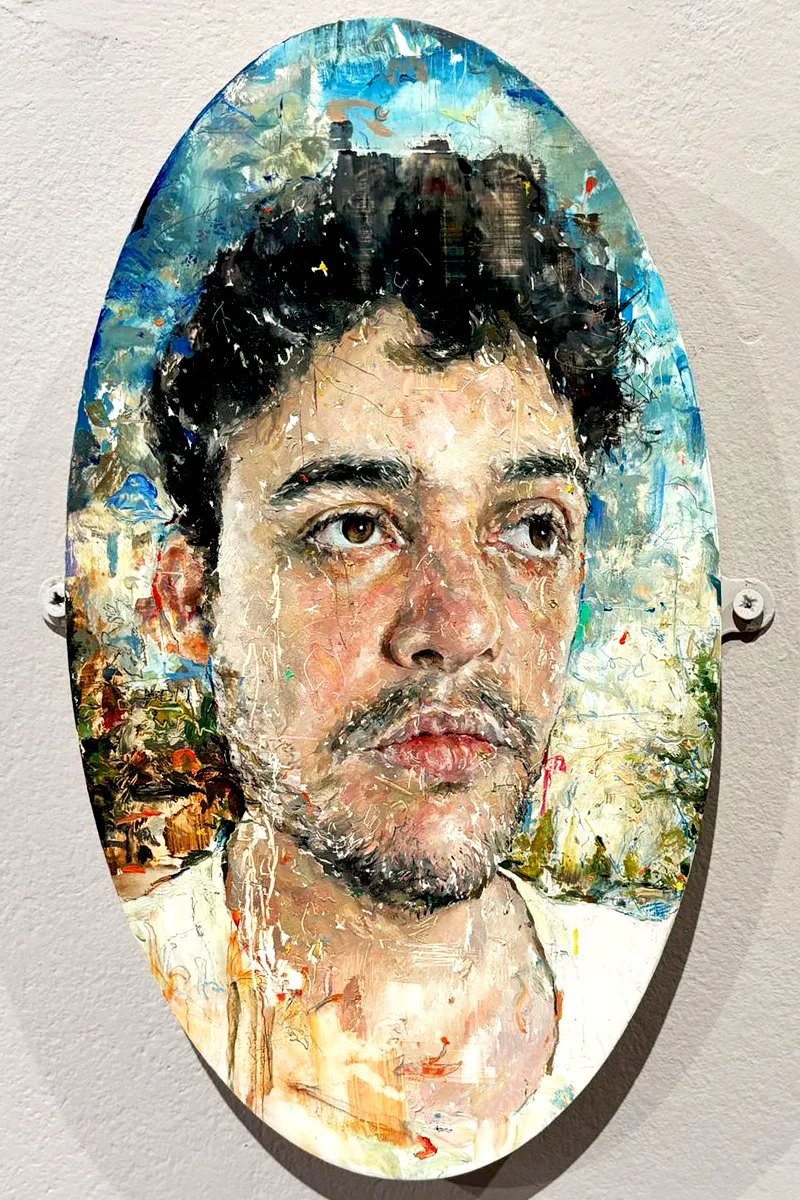
Ange Bell's oil and coloured pencil painting 'Gabriel's Journey'
I find that contrast fascinating because it shows how portraiture doesn’t rely on scale to create emotional connection. Some works command attention through size and fragmentation, while others hold it quietly through detail, atmosphere and closeness.
That range is part of what makes contemporary portraiture feel so open and alive at the moment.
Why Exhibitions Like This Still Matter
At a time when so much art is experienced through screens and social media, seeing portraiture brought together physically still feels important.
Scale changes things. Texture changes things. Presence changes things.
A painting experienced in person carries a different kind of weight than an image viewed online for a few seconds while scrolling. You notice surfaces, decisions, layers and details that photography often flattens or loses completely.
Exhibitions like the Royal Society of Portrait Painters Annual Exhibition also remind people that portraiture itself continues to evolve. It isn’t limited to traditional expectations or historical conventions. It can be quiet, expressive, abstract, unsettling, reflective or deeply personal.
And perhaps that’s why portraiture continues to endure. No matter how styles change, we are still drawn towards human presence and the emotional complexity that comes with it.
Portraiture Continues to Evolve
What stands out most about exhibitions like this is not that every artist approaches portraiture in the same way, but that the genre is broad enough to hold many different interpretations at once.
From realism to abstraction, from precise observation to emotional suggestion, contemporary portraiture continues to expand beyond simple likeness into something far more layered and human.
That ongoing evolution is what keeps portrait painting interesting — both as an artist and as a viewer.
Visiting the Exhibition
The Royal Society of Portrait Painters Annual Exhibition 2026 is currently showing at the Mall Galleries in London until 19 May 2026.
Venue:
Mall Galleries
The Mall
London SW1Y 5BD
Dates:
7 May – 19 May 2026
Opening Times:
10am – 5pm daily
(Closed Tuesday 12 May)
Admission:
£7 admission
Free for under 25s and Friends of Mall Galleries
Concessions available
The exhibition features a wide range of contemporary portrait painting from both established and emerging artists, offering an interesting snapshot of portraiture today.
For more information, visit the official Royal Society of Portrait Painters exhibition page:
Royal Society of Portrait Painters Annual Exhibition 2026
Related Articles
Why the Human Face Keeps Appearing in My Paintings
Why the face remains a powerful way to explore emotion, pressure and what it feels like to be human.
Conor Harrington Pallium Exhibition Visit
Exploring identity, masculinity and storytelling through a powerful contemporary painting exhibition.
Can Abstract Portraits Feel More Real Than Realism?
A look at how abstraction can sometimes reveal more emotional truth than visual accuracy.
Why I Paint Abstract Portraits: Exploring Emotion Through Structure
Discover why the human face remains at the centre of my work and how abstraction helps explore complex human experiences.
About Paul Kneen
I’m a UK contemporary abstract portrait artist exploring inner noise, quiet pressure and the emotional complexity of modern life through fragmented portraiture and bold colour. I create original paintings and limited edition prints, while also writing about art, exhibitions and the realities of being an artist today.